
Every year, the Ukraїner expedition covers tens of thousands kilometres around Ukraine discovering the most fascinating locations and heroes from the east to the west and from the south to the north. In 2019, the team has travelled more than ever before because this year we managed to divide into separate crews working on special projects. Over the year, the team visited four regions: Zakarpattia, Bessarabia, Polissia, and Pryazovia. Also, at Ukraїner, we have published a series of success stories about the Amalgamated Territorial Communities (Hromadas), a series of documentaries about the National Minorities, and a new show format the Ambassadors. Besides, we made a feature film Ukraїner. The Movie and published the book Ukraїner. Ukrainian Іnsider in Ukrainian and in English. And while you are reading this list, we’ve nearly finished raising one million hryvnias in a year to support the project.
A lot of stuff, isn’t it? This year, our photographers took tens of thousands of shots, and we chose 100 best ones among them. What does the Ukraine you know and see every day look like? In these photos, we’ll try and show it you from a slightly different perspective.
Also, don’t forget to check out 100 Photos of Ukraine – 2018 and 100 Photos of Ukraine – 2017!
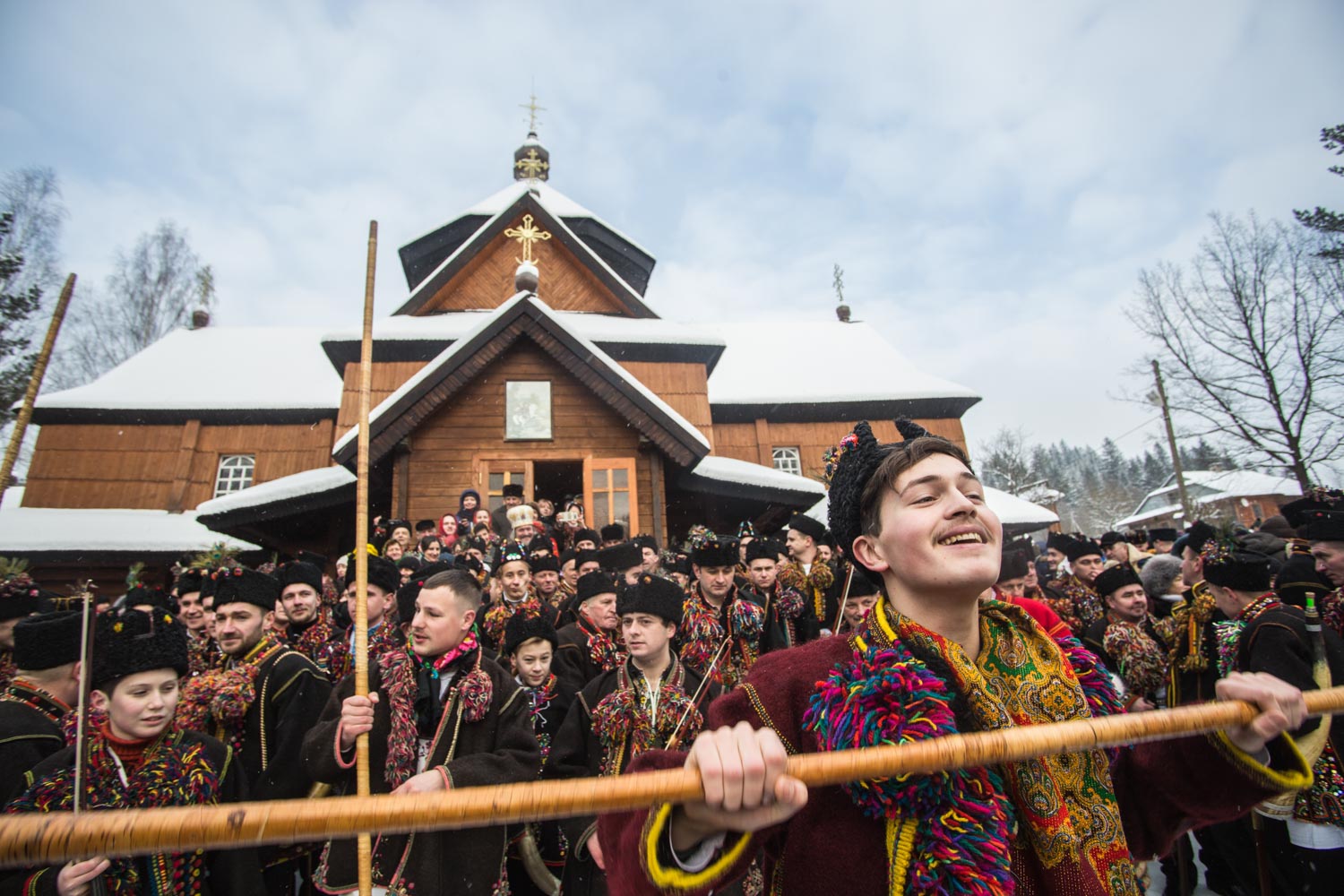
Carolers have gathered near the church of the Nativity of the Blessed Virgin Mary in the Hutsul village of Kryvorivnia. 7 January 2019. Photo: Oleksandr Khomenko.
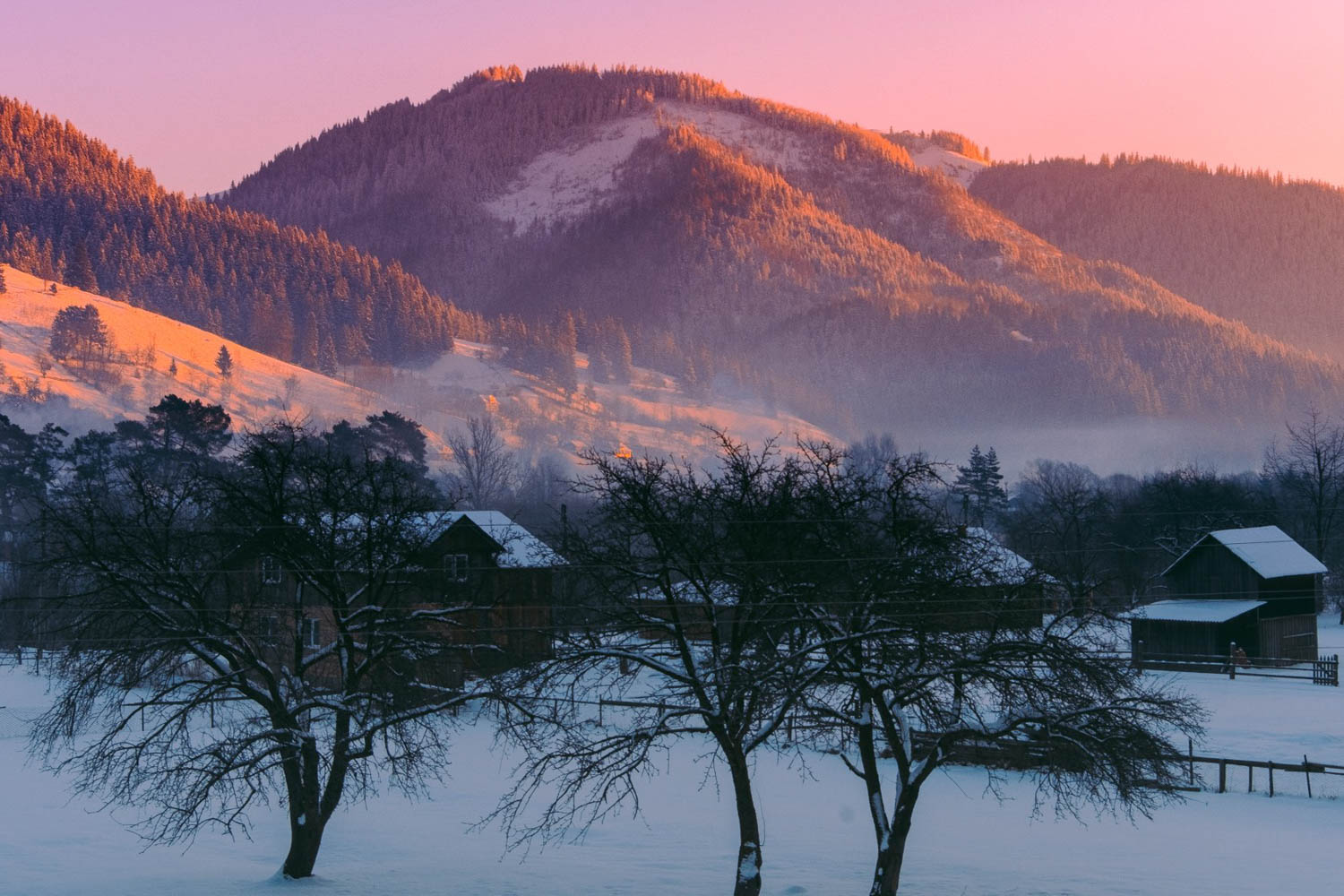
Sunrise in the village of Kryvorivnia in the Carpathians. 8 January 2019. Photo: Maksym Zavallia.
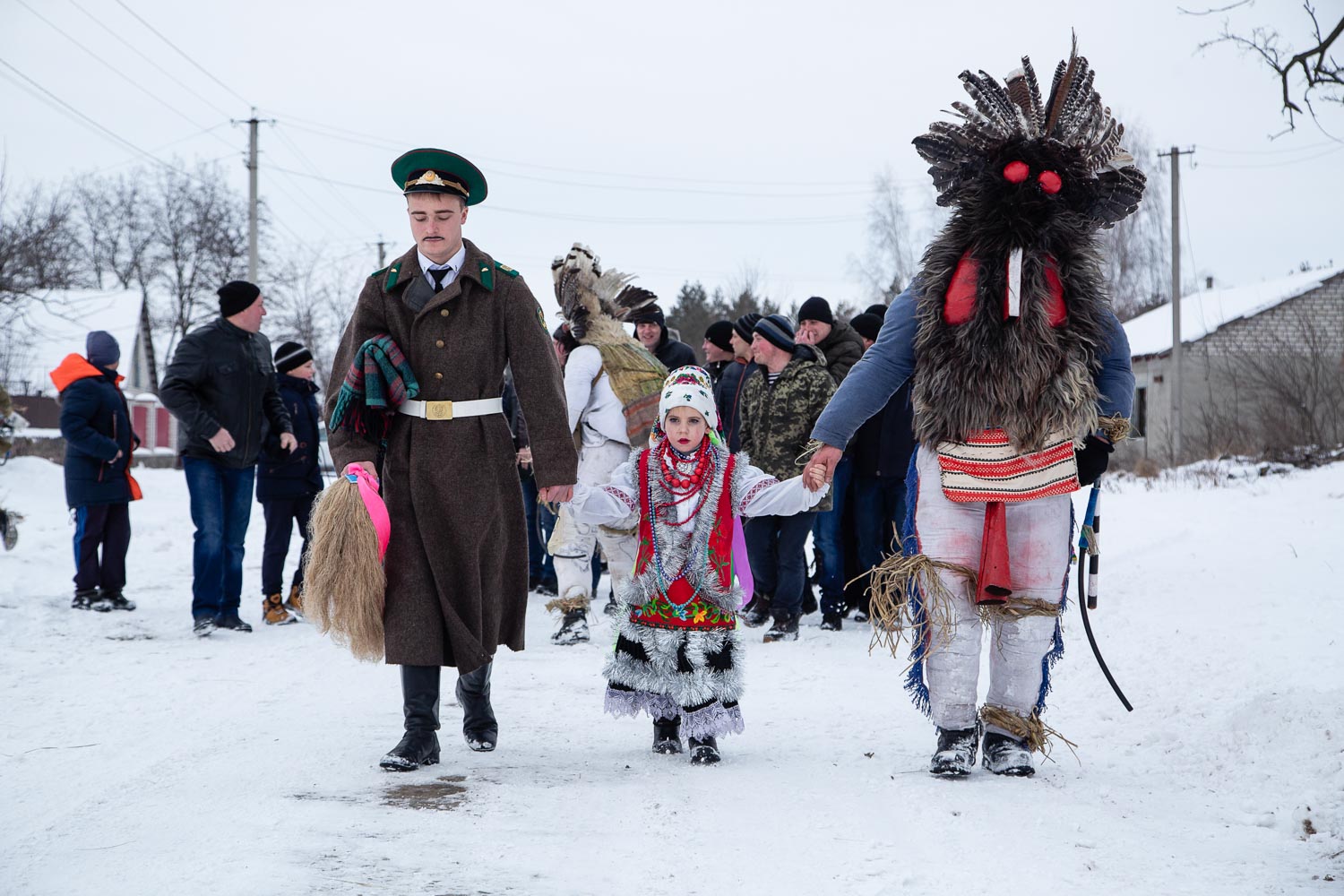
Malanka carnival procession moves along the street in the village of Osychky in Eastern Podillia. 13 January 2019. Photo: Dmytro Bartosh.
Traditionally, the main characters of the carnival in Osychky are Malanka (four- to seven-year-old boys dressed up as girls), Cossack (dressed up in military uniform of the Soviet times, he accompanies Malanka), carolers (they sing carols near each house), didky (mystical characters who protect Malanka). They rampage and play tricks.
Only two districts in Osychky celebrate: Bondarivka and Kempa.
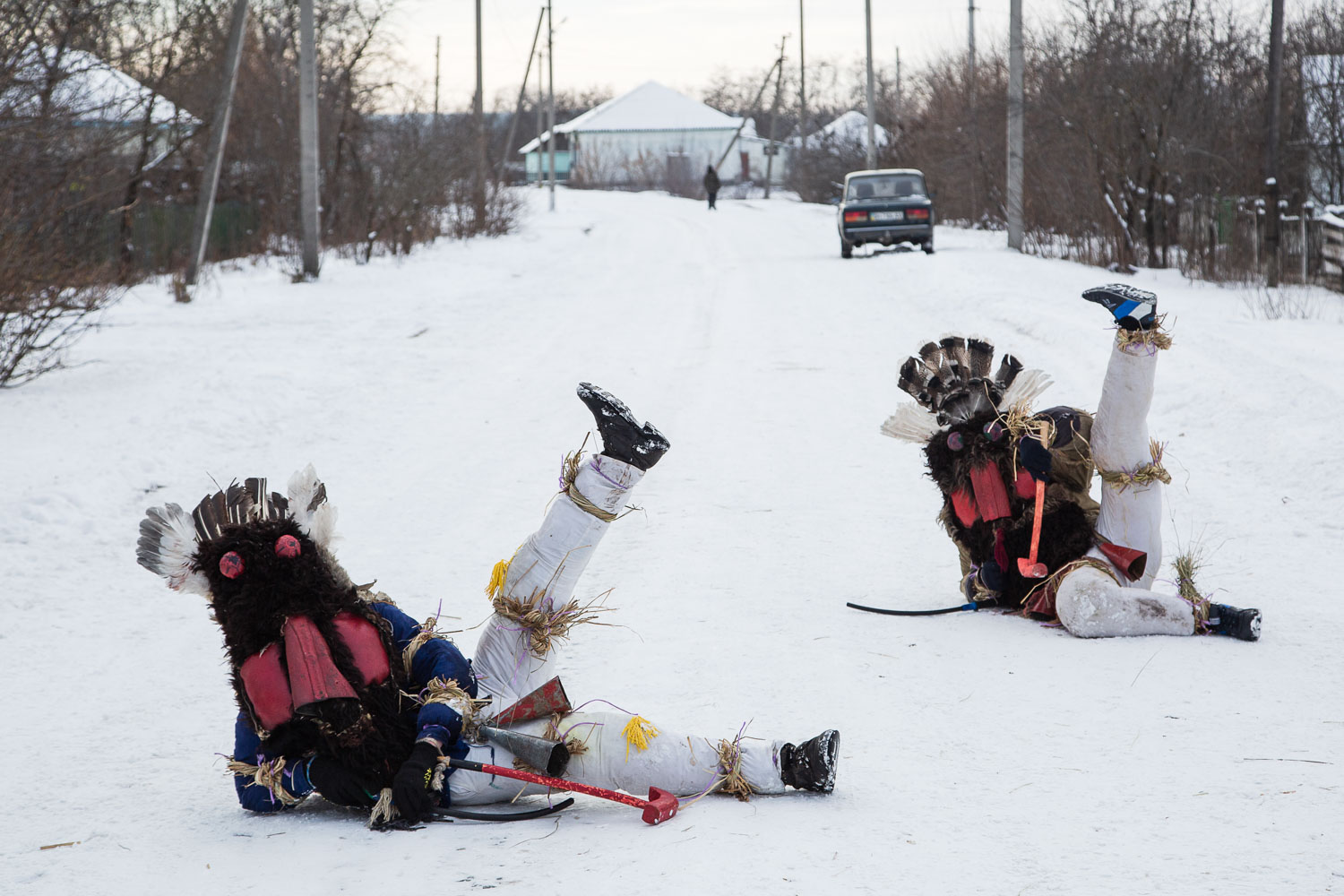
Malanka carnival characters pose for photographs on the snow in the village of Osychky in Eastern Podillia. 13 January 2019. Photo: Dmytro Bartosh.
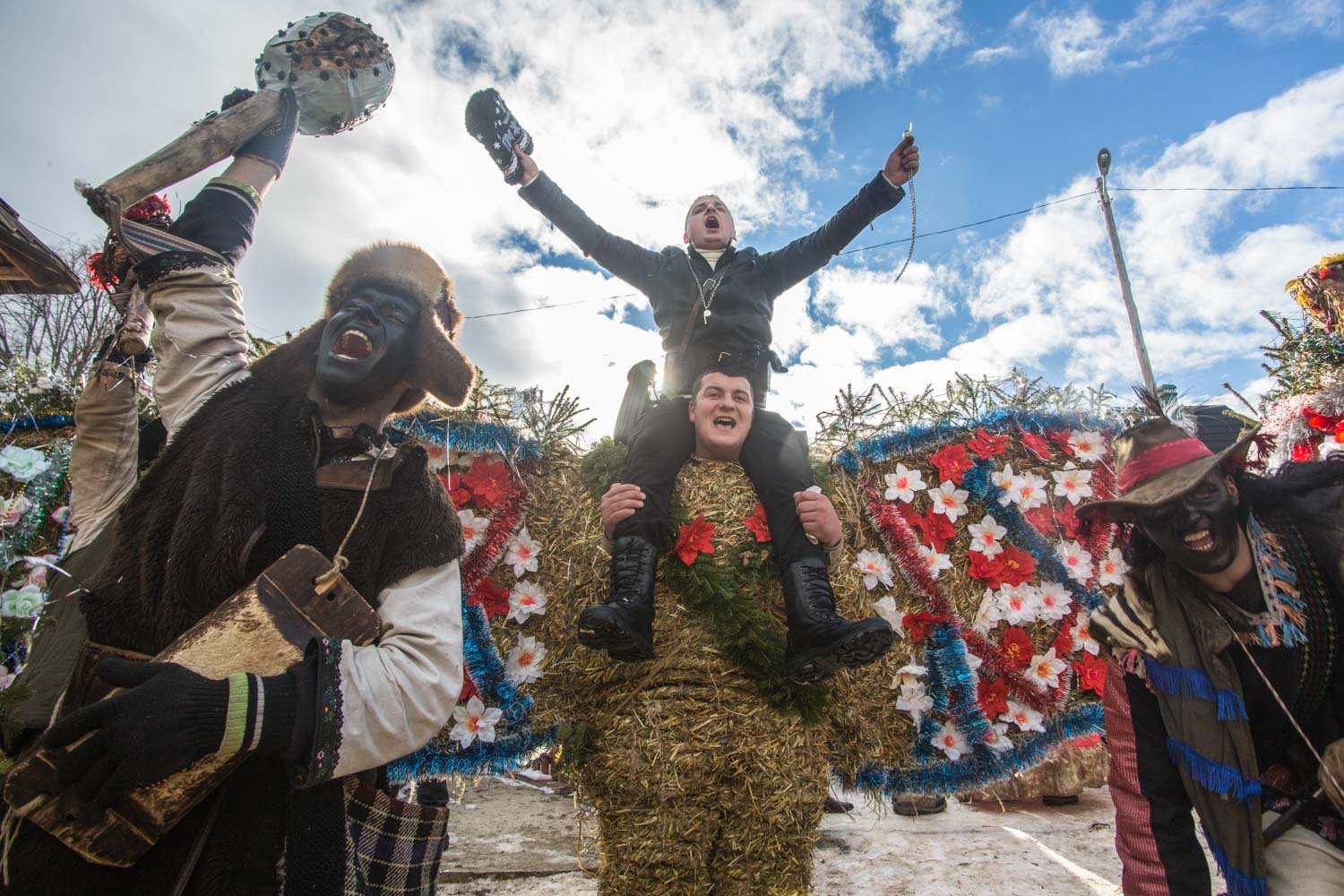
“Bears” and “Gypsies” celebrate Malanka in the village of Krasnoilsk in Bukovyna. 14 January 2019. Photo: Oleksandr Khomenko.
Every year one of the brightest New Year carnivals takes place in this village on the border with Romania. The story of Malanka in Krasnoilsk.
Ukraїner has been broadcasting the Malanka carnival in Krasnoilsk live for two years in a row.
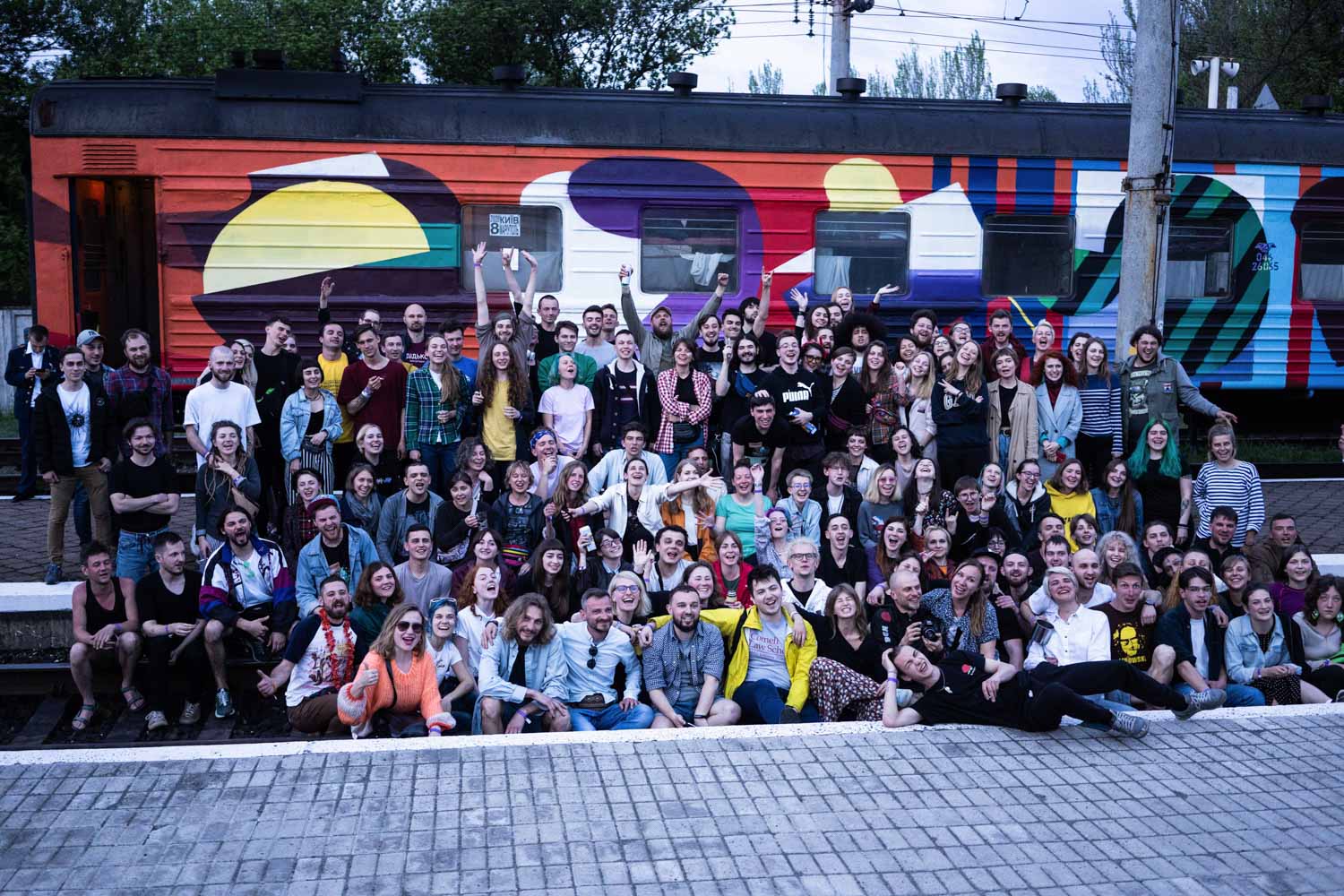
Passengers of the first Ukrainian art train “GogolTrain” in Mariupol at the end of the festival Startup Gogolfest, which took place in Mariupol from 27 April to 1 May 2019. 30 April 2019. Photo: Serhij Korovajnyj.
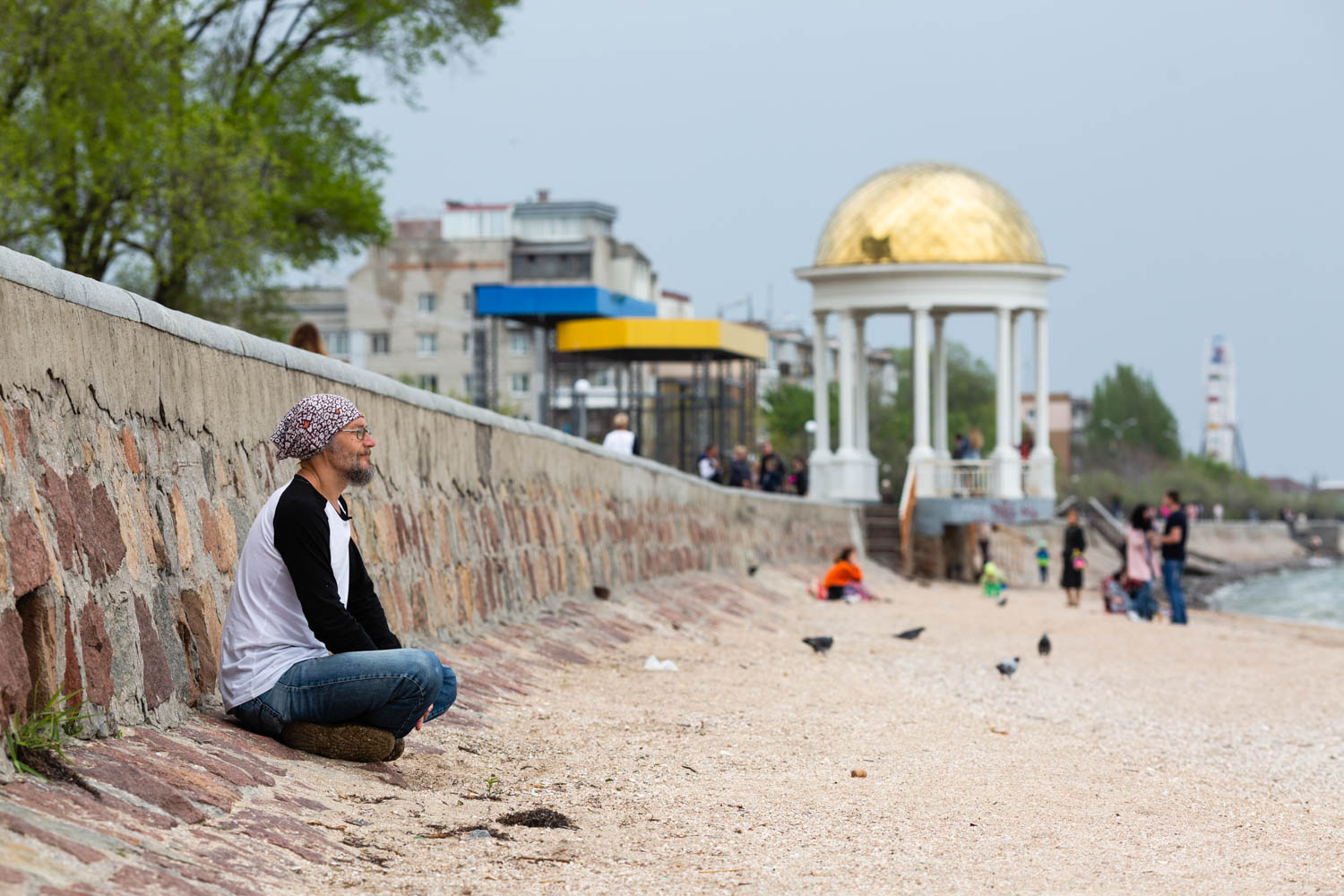
Andrii Shevchenko, font designer and calligrapher, sits on the shore of the Sea of Azov in Berdiansk. 1 May 2019. Photo: Dmytro Bartosh.
Andrii Shevchenko creates modern Cyrillic fonts used by the Ukrainian websites, on printed goods and in urban communication.
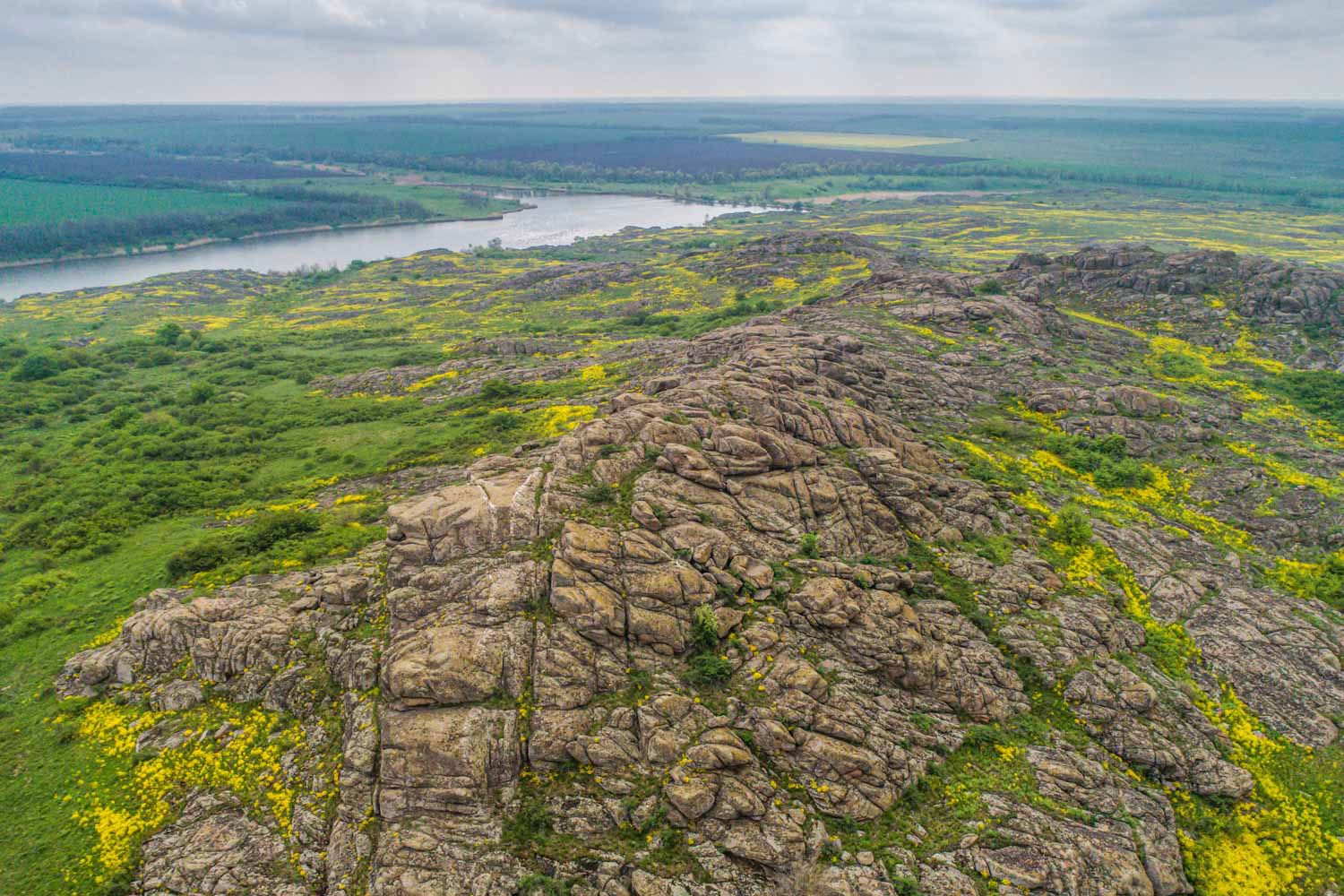
Copter view of Kamiana Mohyla. 1 May 2019. Photo: Pavlo Pashko.
Kamiana Mohyla (‘stone tomb’ — tr.) is a unique geological and archaeological site in Pryazovia. It’s a sandstone hill, whose grottoes and caves showcase several thousand petroglyphs, rock art by the ancient people, who lived and wandered in the steppes of Pryazovia over a thousand years ago.
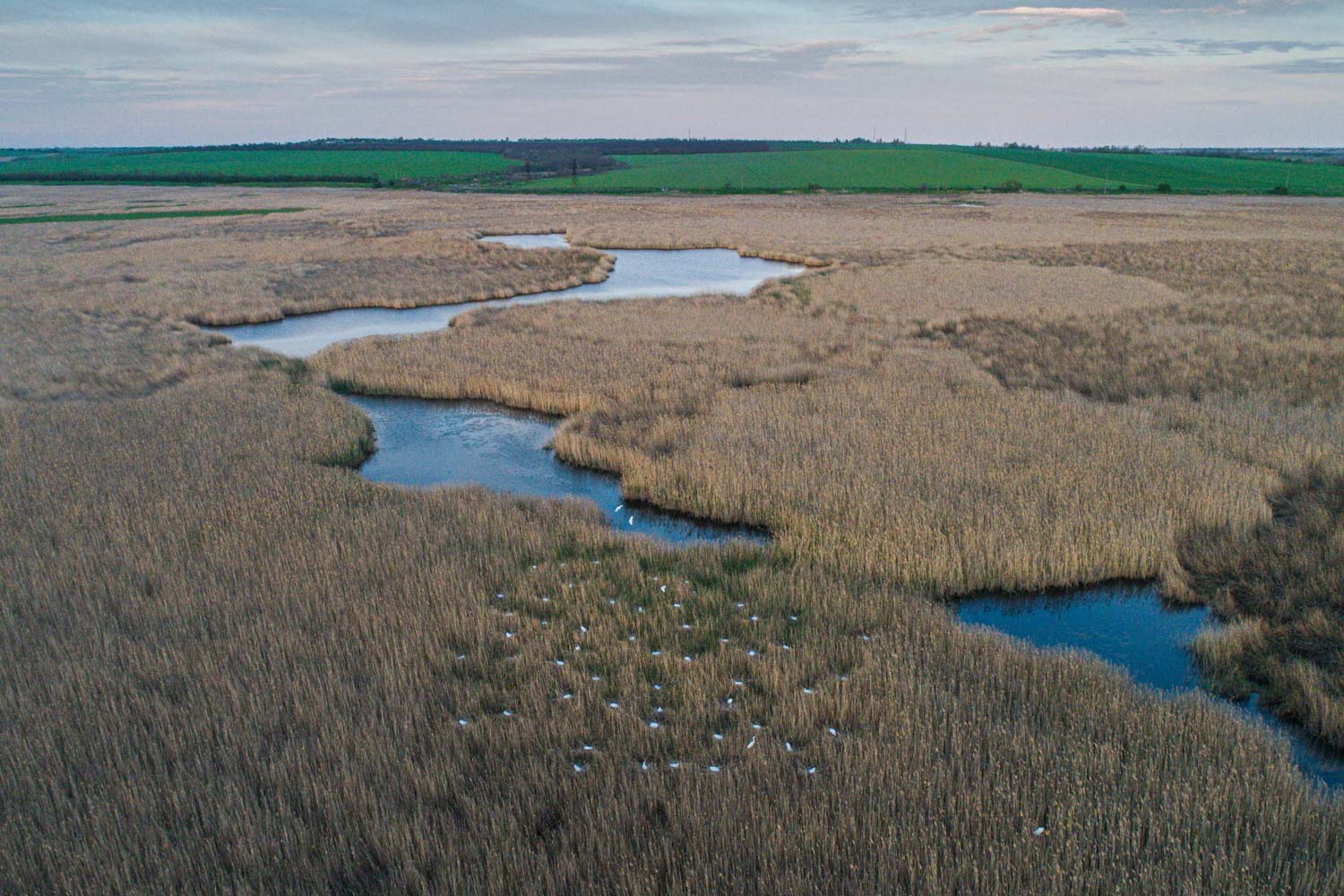
Bird’s-eye view of the Meotyda National Park. In 2014, military actions started on its territory. As a result, part of the park is now temporarily occupied by the Russian military forces. 2 May 2019. Photo: Pavlo Pashko.
Meotyda is considered a unique park thanks to the coquina and sand layers which used to form the bottom of the sea in the past.
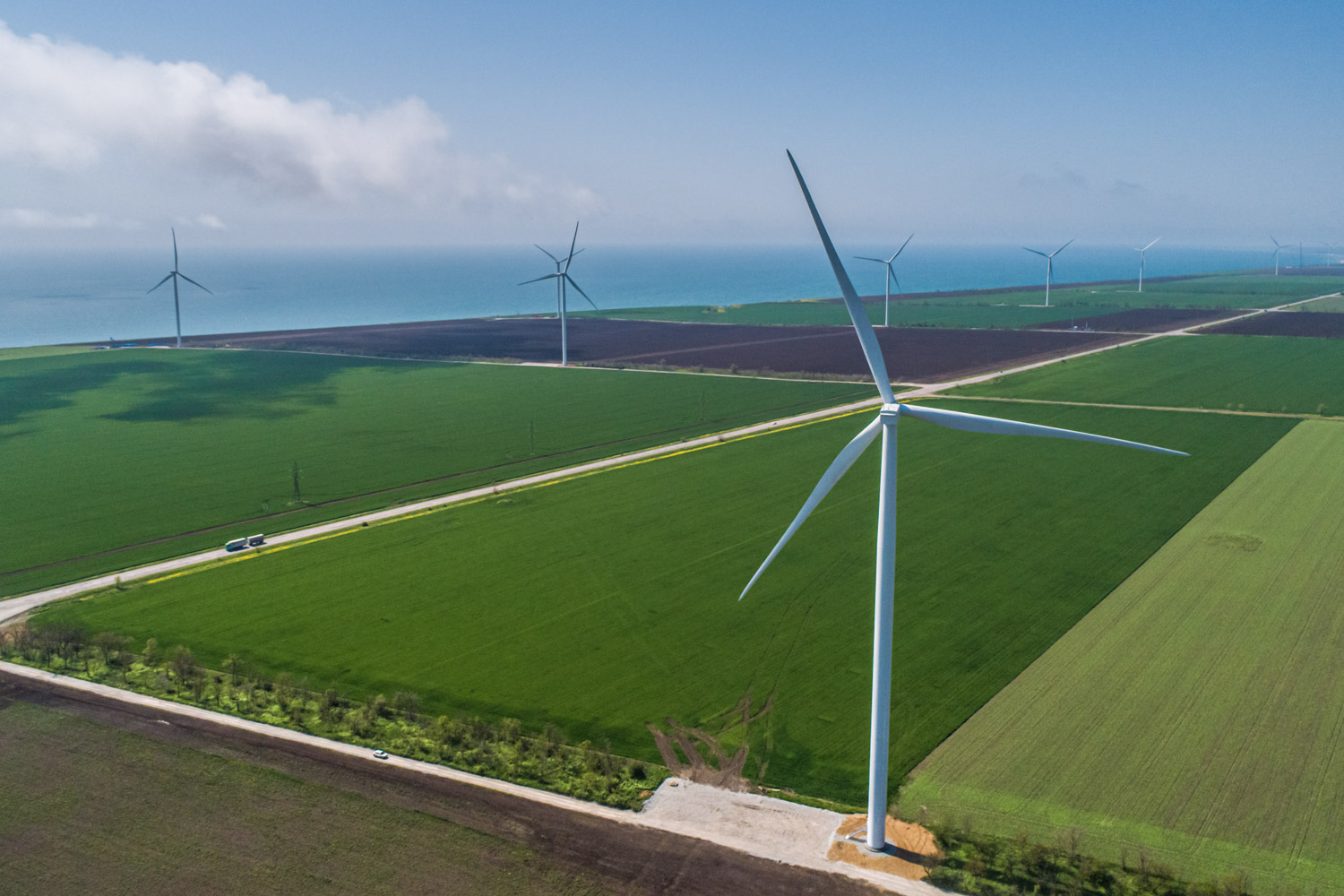
Wind farm near the village of Botiieve in Pryazovia. 3 May 2019. Photo: Pavlo Pashko.
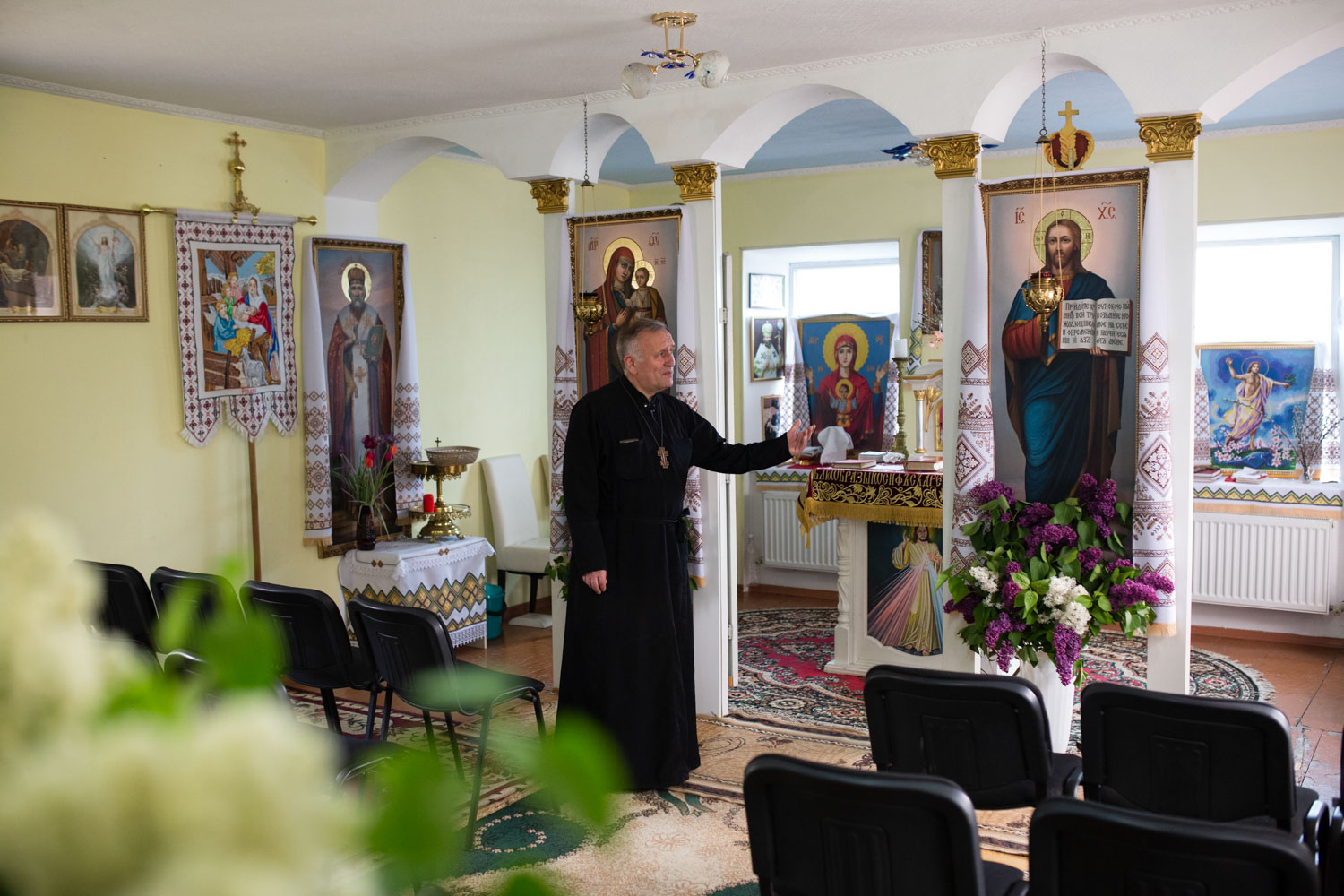
Father Petro Krenitskyi shows the parish of the Nativity of the Blessed Virgin Mary in Melitopol, a Ukrainian Greek Catholic church where he celebrates Mass himself. 3 May 2019. Photo: Dmytro Bartosh.
Father Petro used the Greek Catholic church as a base for a hostel for the homeless. Here he also teaches orphans and children from deprived families.
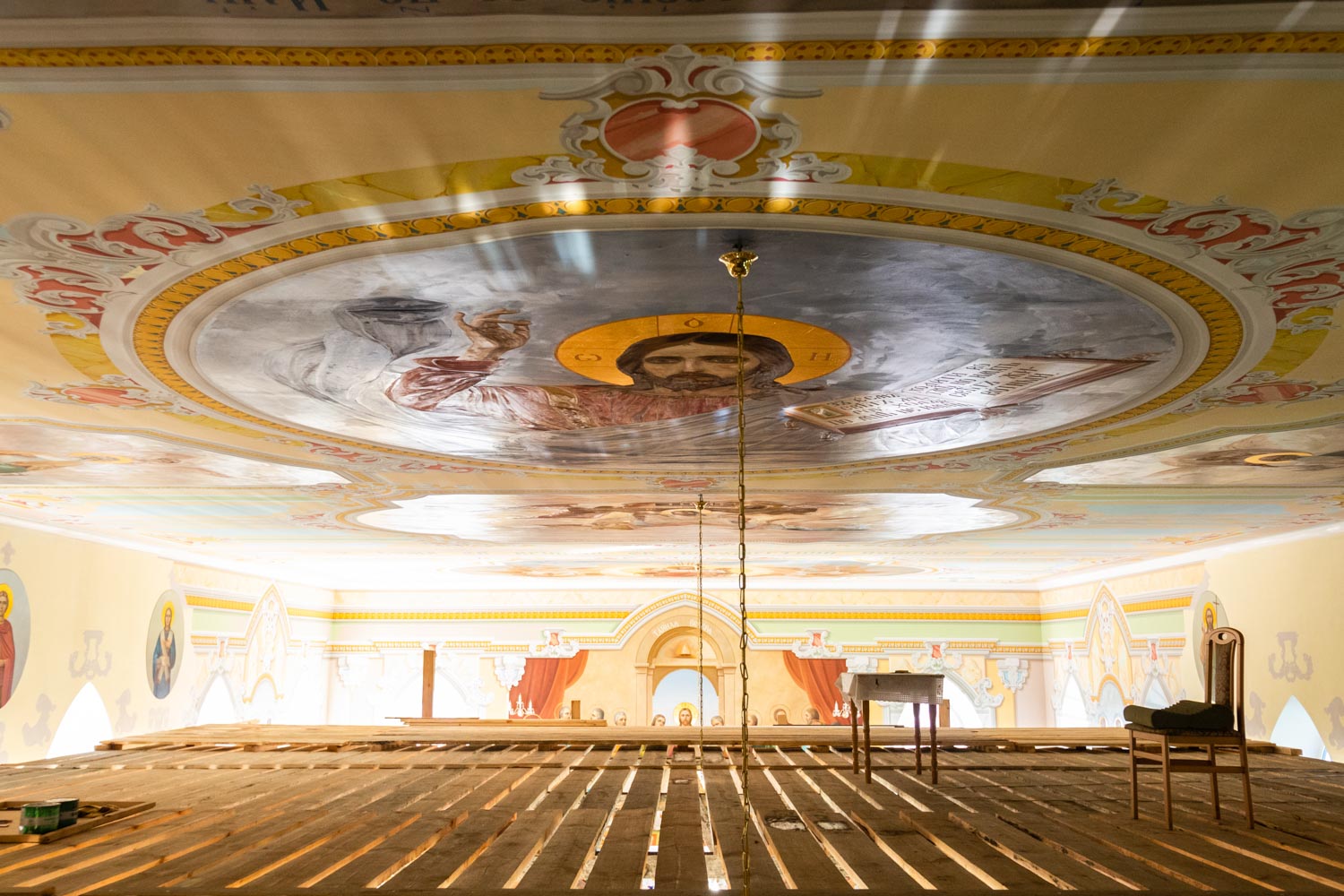
Fresco with of Jesus Christ on the ceiling of Saint Prophet Elijah’s Greek Catholic Church in the village of Snihurivka. 4 May 2019. Photo: Dmytro Bartosh.
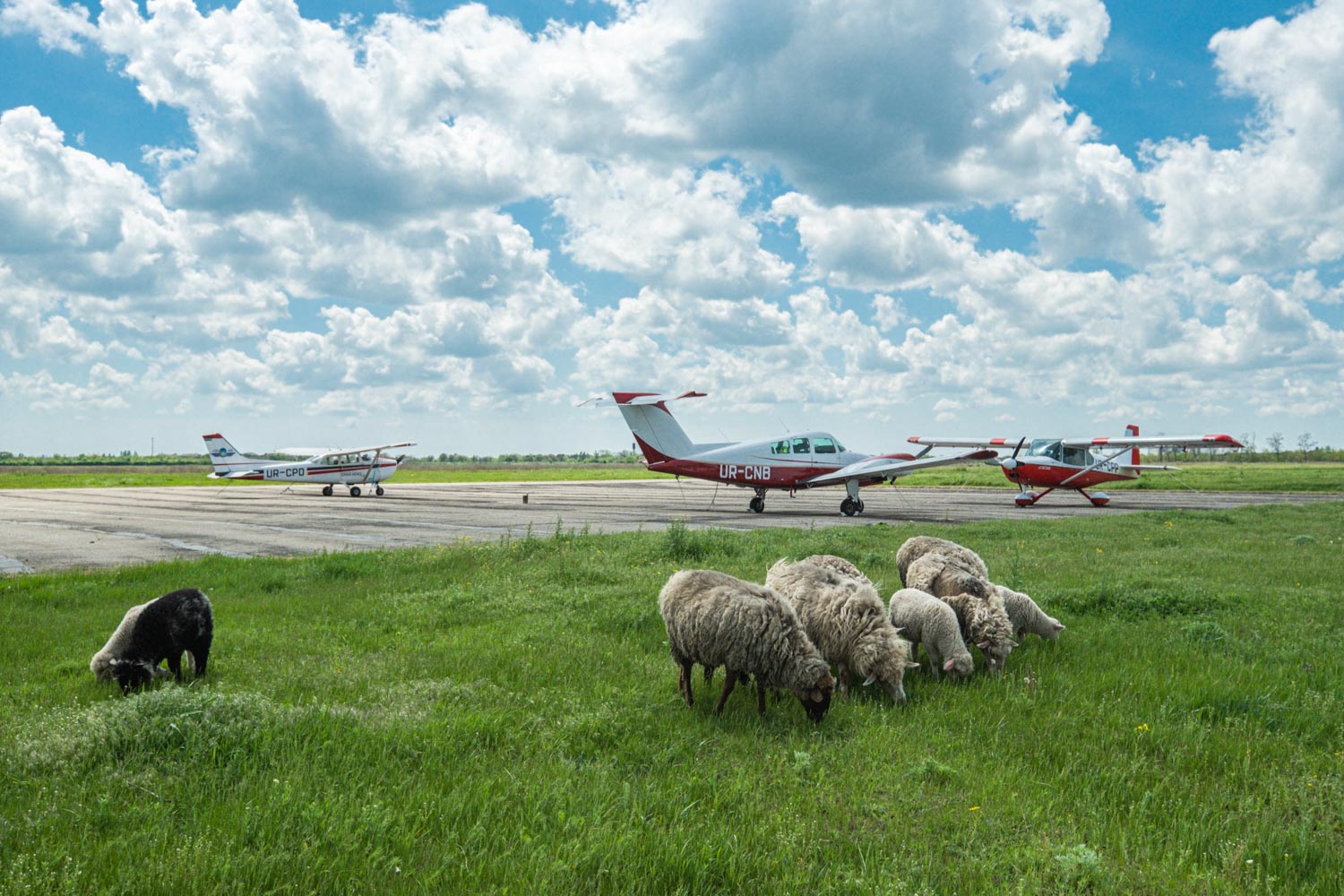
Sheep graze near the runway “Vesele” not far from Melitopol in Pryazovia. 5 May 2019. Photo: Pavlo Pashko.
Here operate a light aircraft manufacturer and a flight school where they train pilots from all over the world.
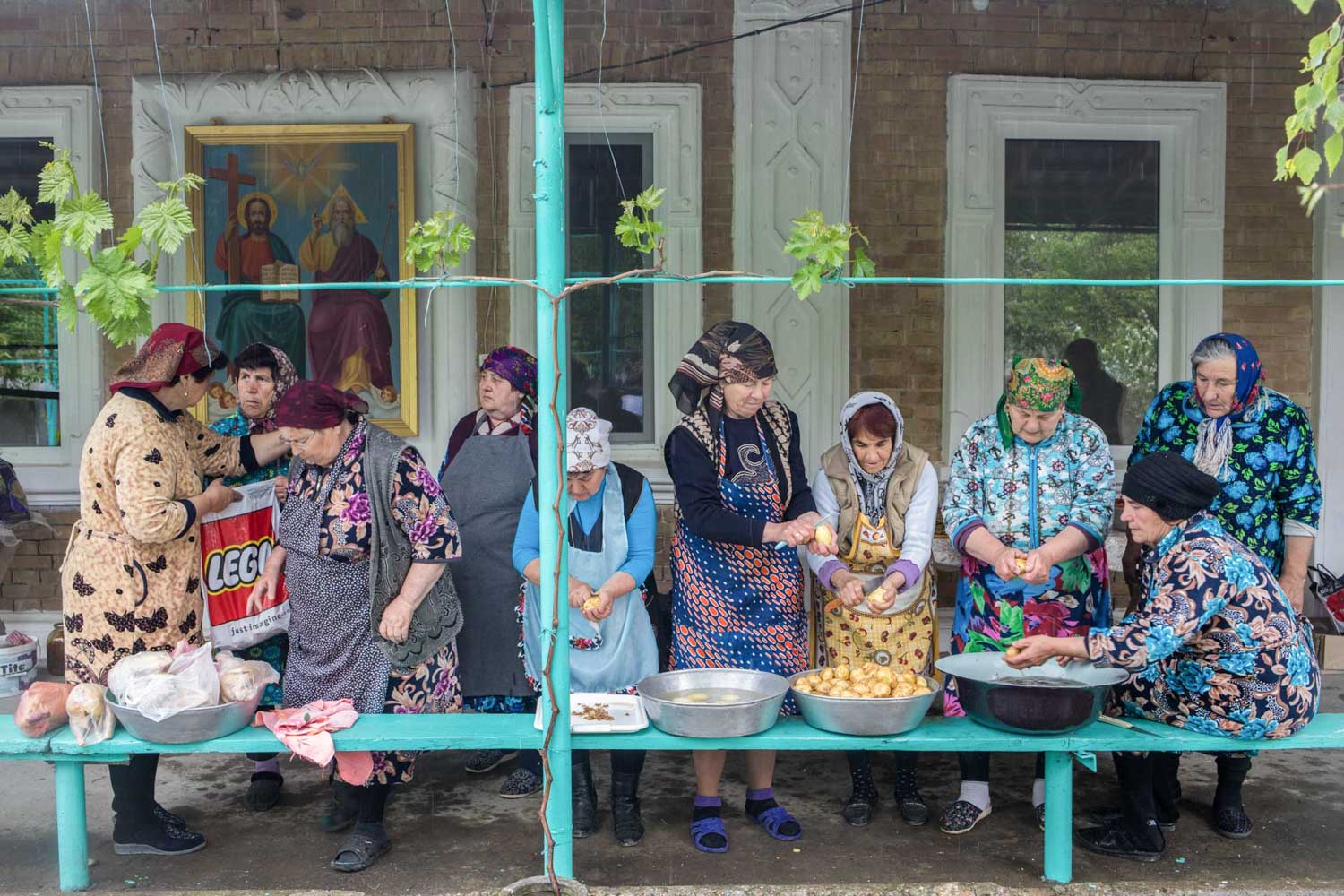
Gagauz women prepare the dishes for the festive meal on the day before Hederlez holiday in the village of Vynohradivka in Bessarabia. 10 May 2019. Photographer: Oleksandr Khomenko.
Story of the national minority of Gagauzes living in Ukraine.
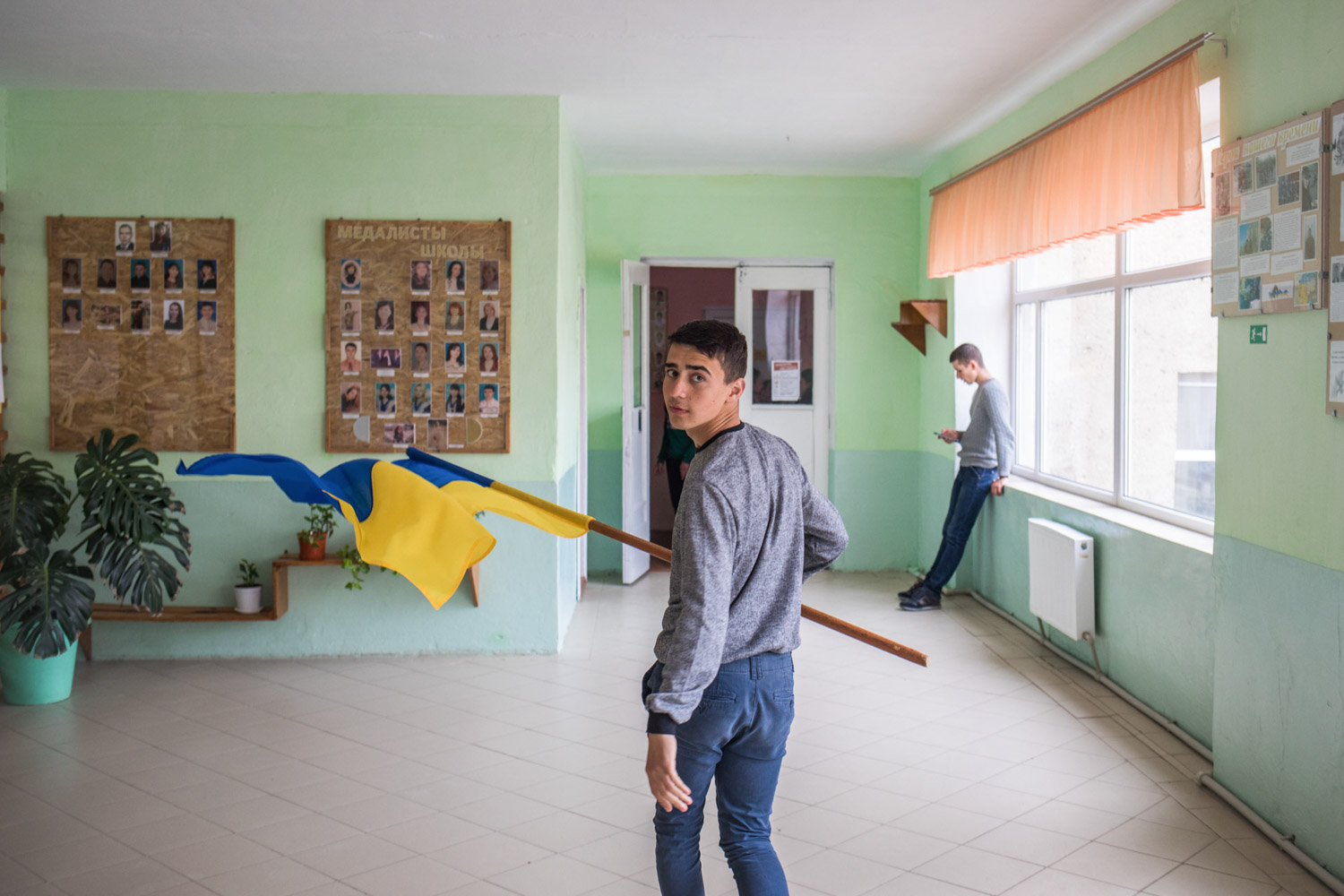
Gagauz student carries the flag of Ukraine for the marching class at school in the village of Vynohradivka in Bessarabia. 10 May 2019. Photo: Oleksandr Khomenko.
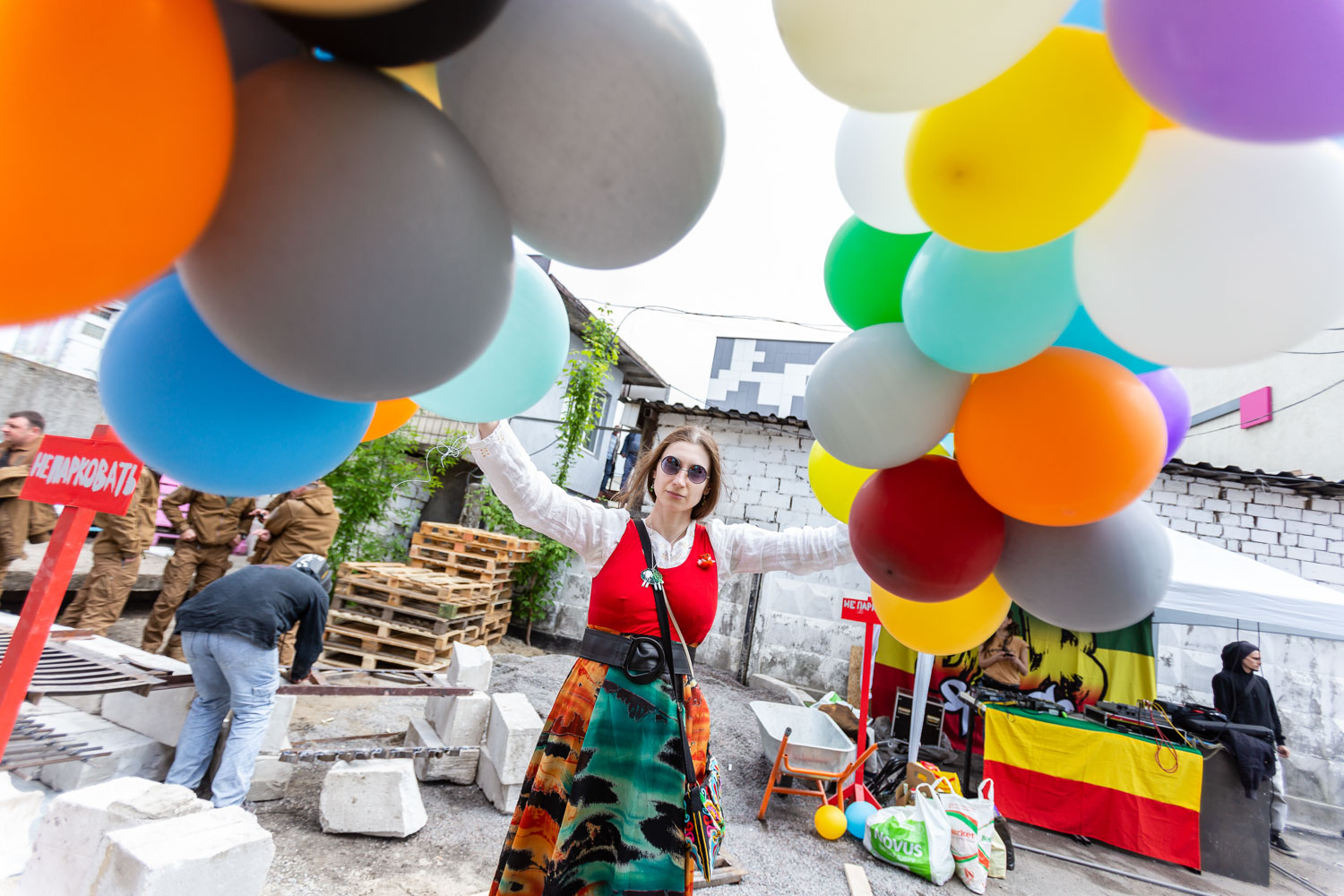
Girl carries balloons in the art space Kurenivka Palace in Kyiv. The second independent art festival Burning Man Precompression took place on the premises of the art space on 11 May 2019. Photo: Artem Galkin.
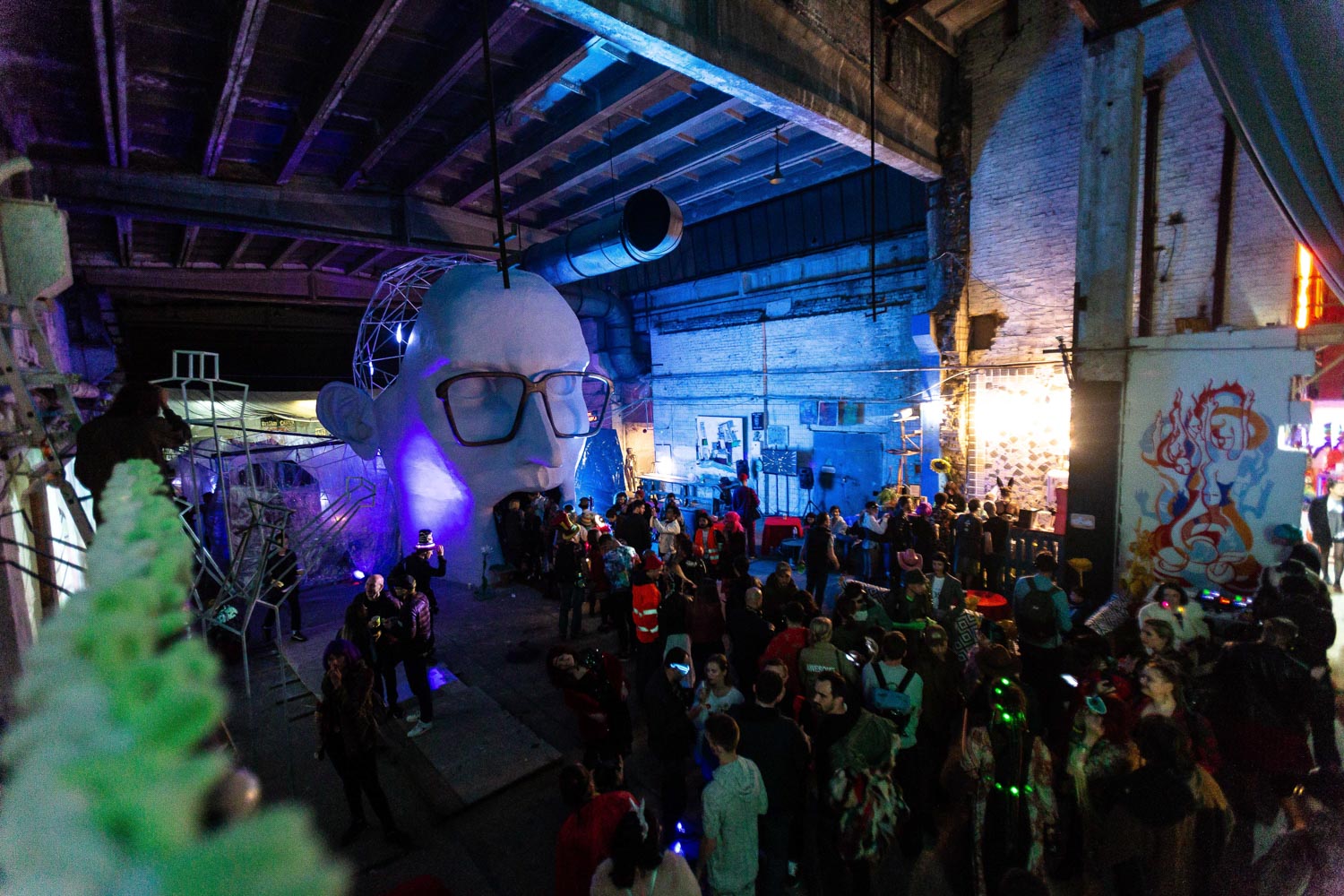
The hall of the art space Kurenivka Palace during the second independent art festival Burning Man Precompression. 11 May 2019. Photo: Artem Galkin.
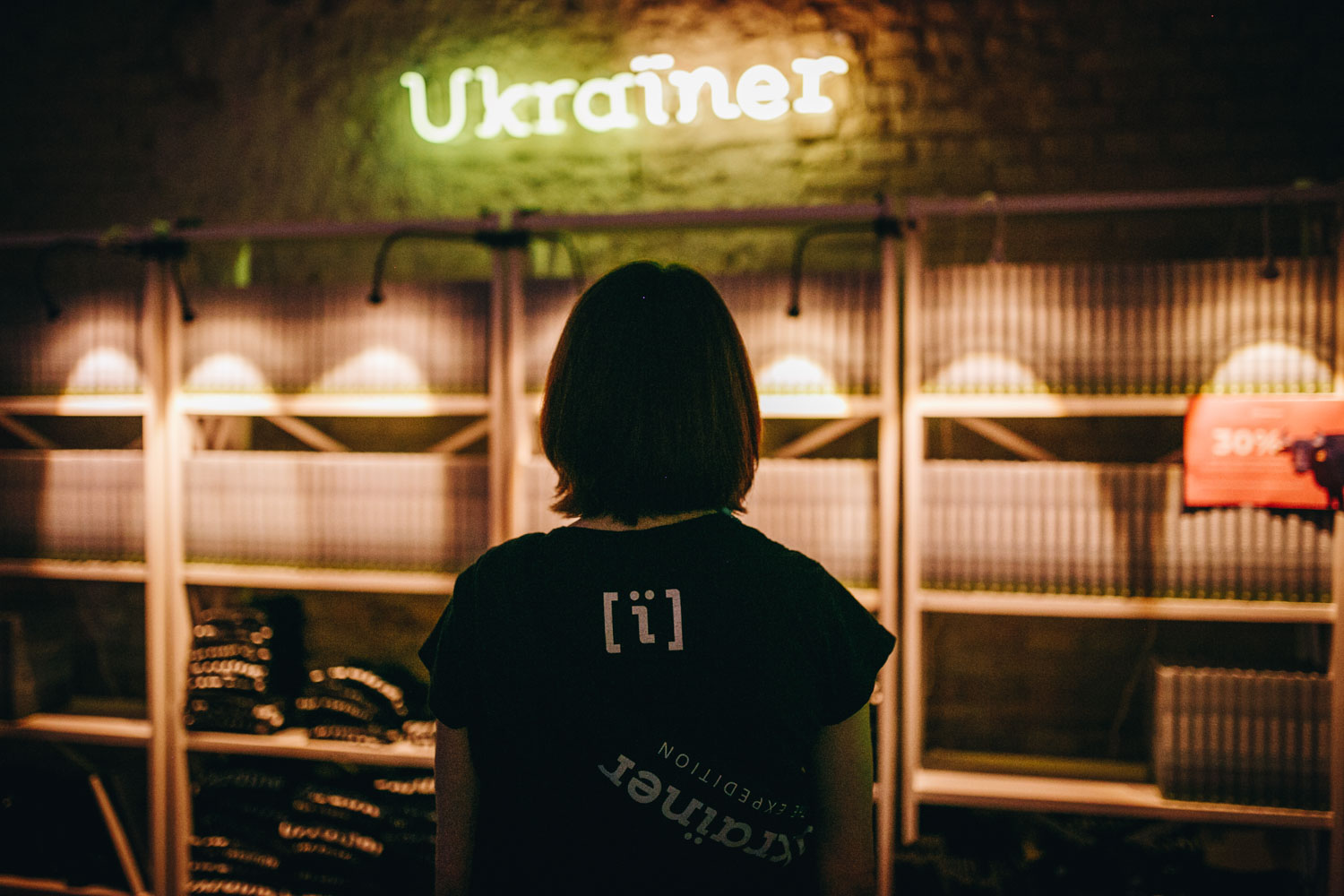
Sofia Anzheliuk, volunteer of the Ukraїner project, looks at the shelf with just published books “Ukraїner. Ukrainian Insider”. The book was presented at Book Arsenal Festival in Kyiv. 24 May 2019. Photo: Katya Akvarelna.
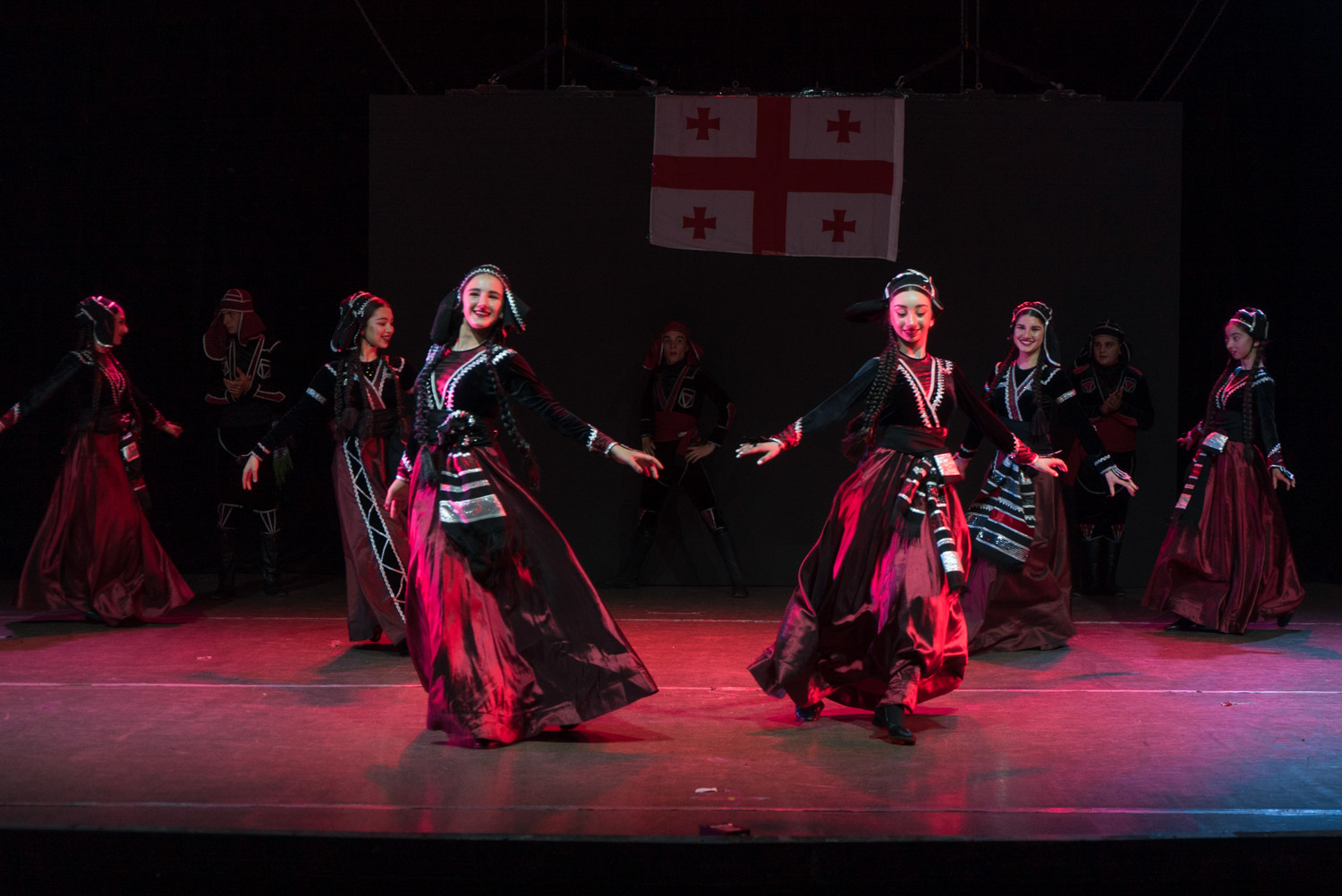
Performance by the vocal and dance ensemble “Iberia”. Its members are Georgians living in Ukraine. The concert was dedicated to the Independence Day of Georgia, which is celebrated on 26 May. 29 May 2019. Photo: Anna Vorobiova.
Story of the national minority of Georgians living in Ukraine.
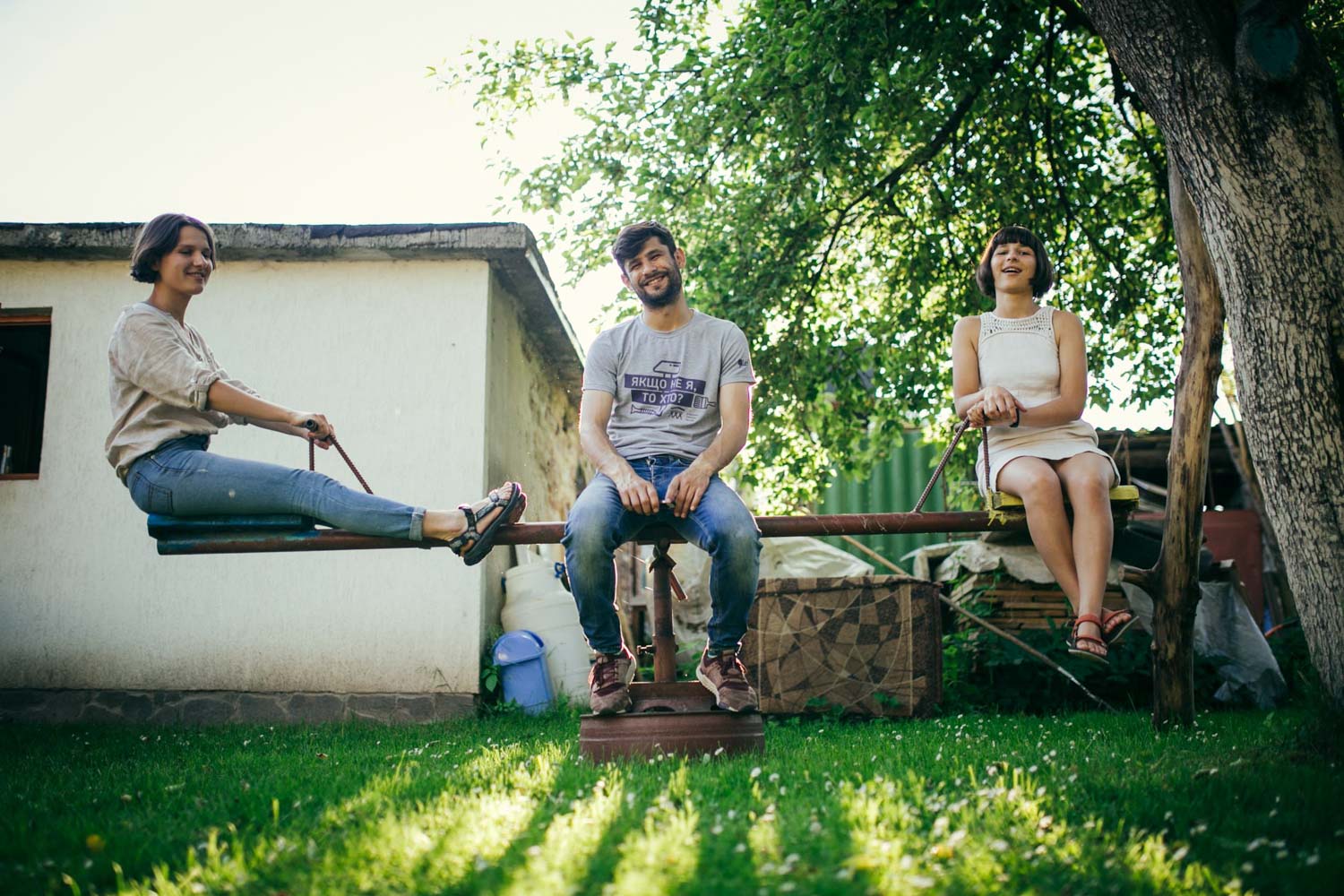
Yurko Didula poses for pictures on a seesaw with his sisters Hannusia and Halia in the yard of their family home on the outskirts of Lviv. 2 June 2019. Photo: Katya Akvarelna.
The Didula family is well-known far outside the region of Halychyna for a large number of social projects they implemented.
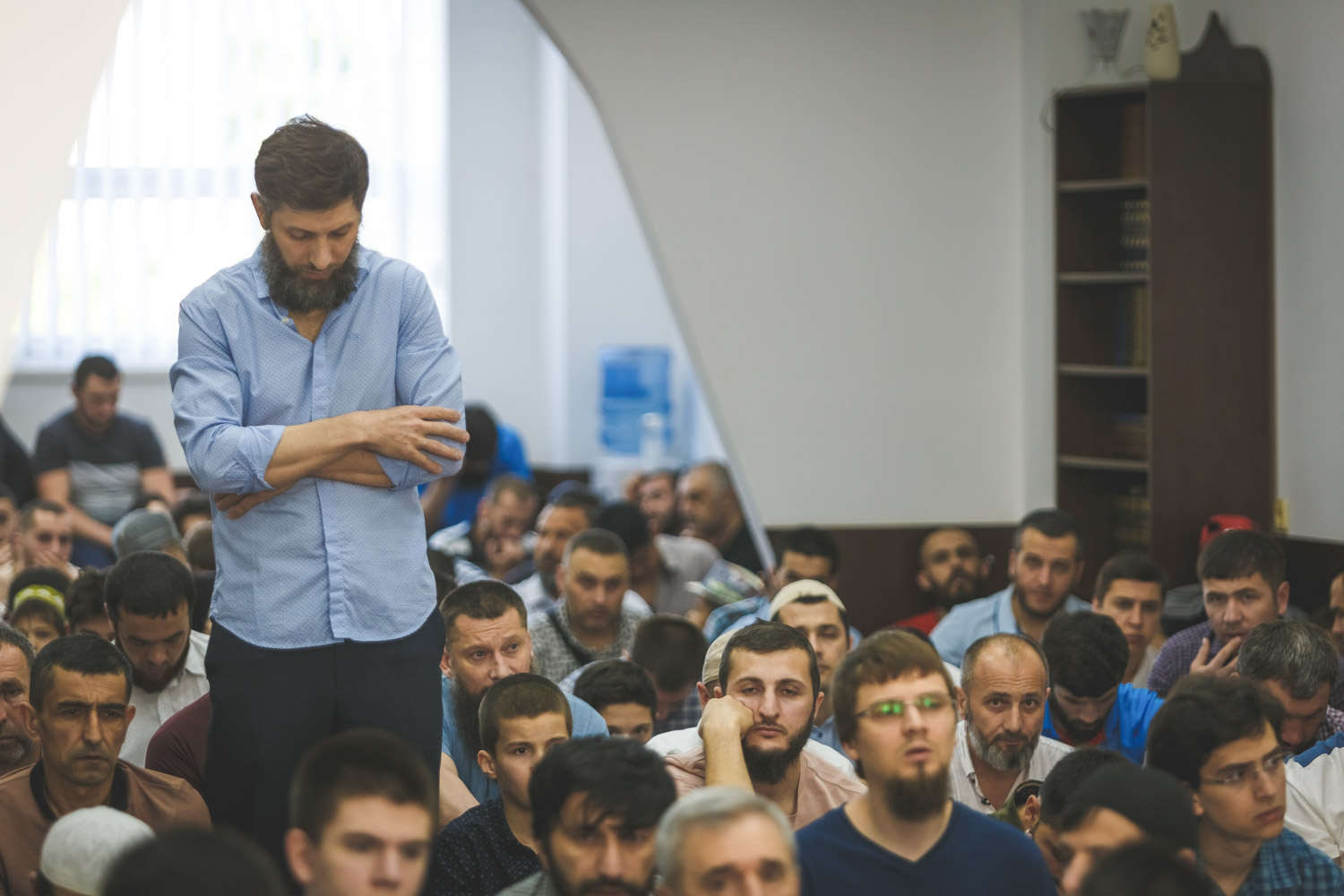
Crimean Tatars have gathered in the mosque at Religious Administration of Muslims in Kyiv for namaz to commemorate the holiday of Oraza bayram, which concludes the 30-day fast of Ramazan. 4 June 2019. Photo: Juriy Stefanyak.
Story of the national minority of Crimean Tatars living in Ukraine.
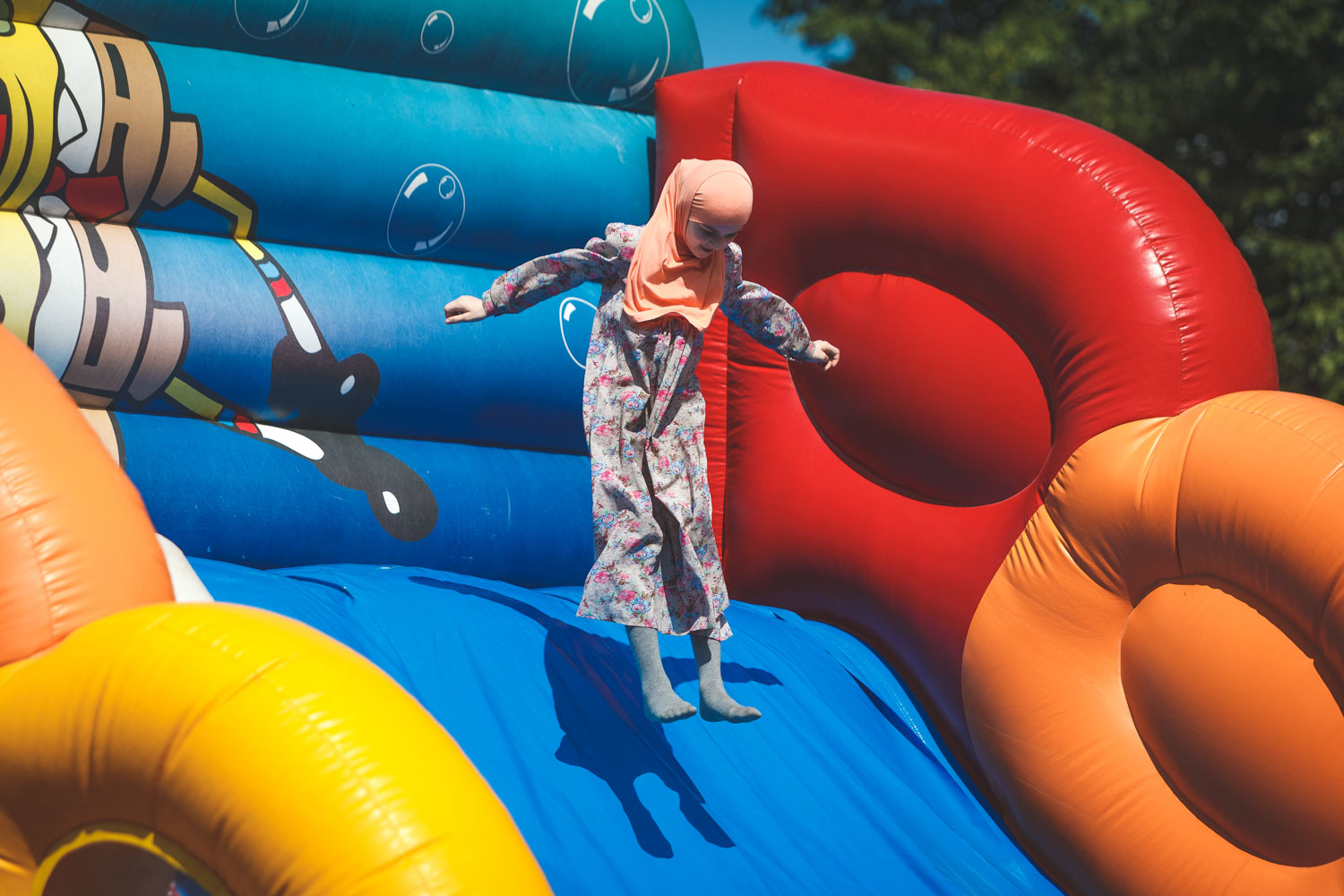
Crimean Tatar girl plays on an inflatable slide during Oraza bayram, the national holiday of Crimean Tatars, which was celebrated in Kyiv at the Nyvky amusement park. 6 June 2019. Photo: Juriy Stefanyak.
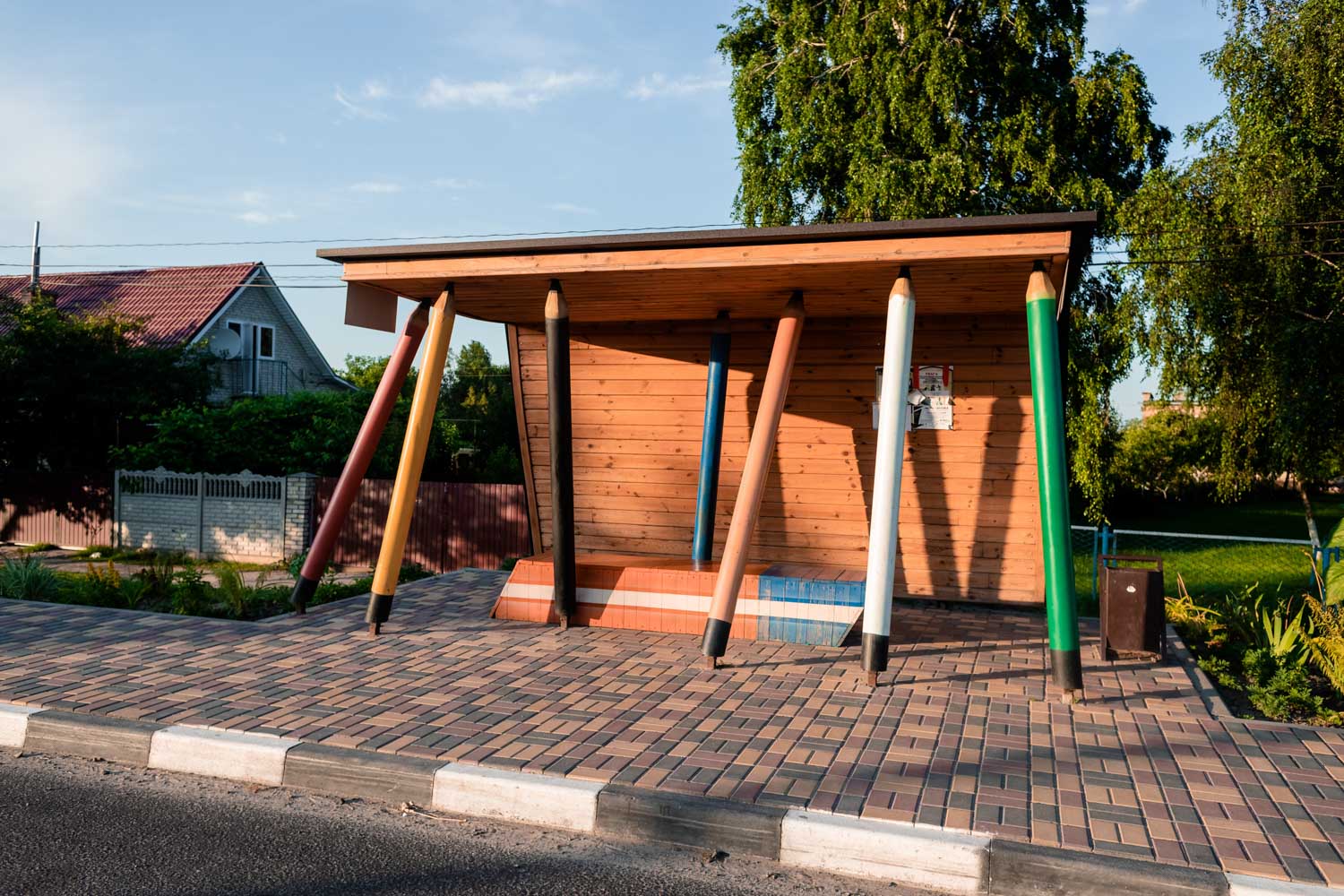
Wooden bus stop with pencil-shaped supports in the village of Kniahynynok in Volyn. 13 June 2019. Photo: Mykola Korol.
The bus stop was put up thanks to the local amalgamated territorial community (hromada). The Ukraїner project published the story of Kniahynynok in the series dedicated to amalgamated territorial communities.
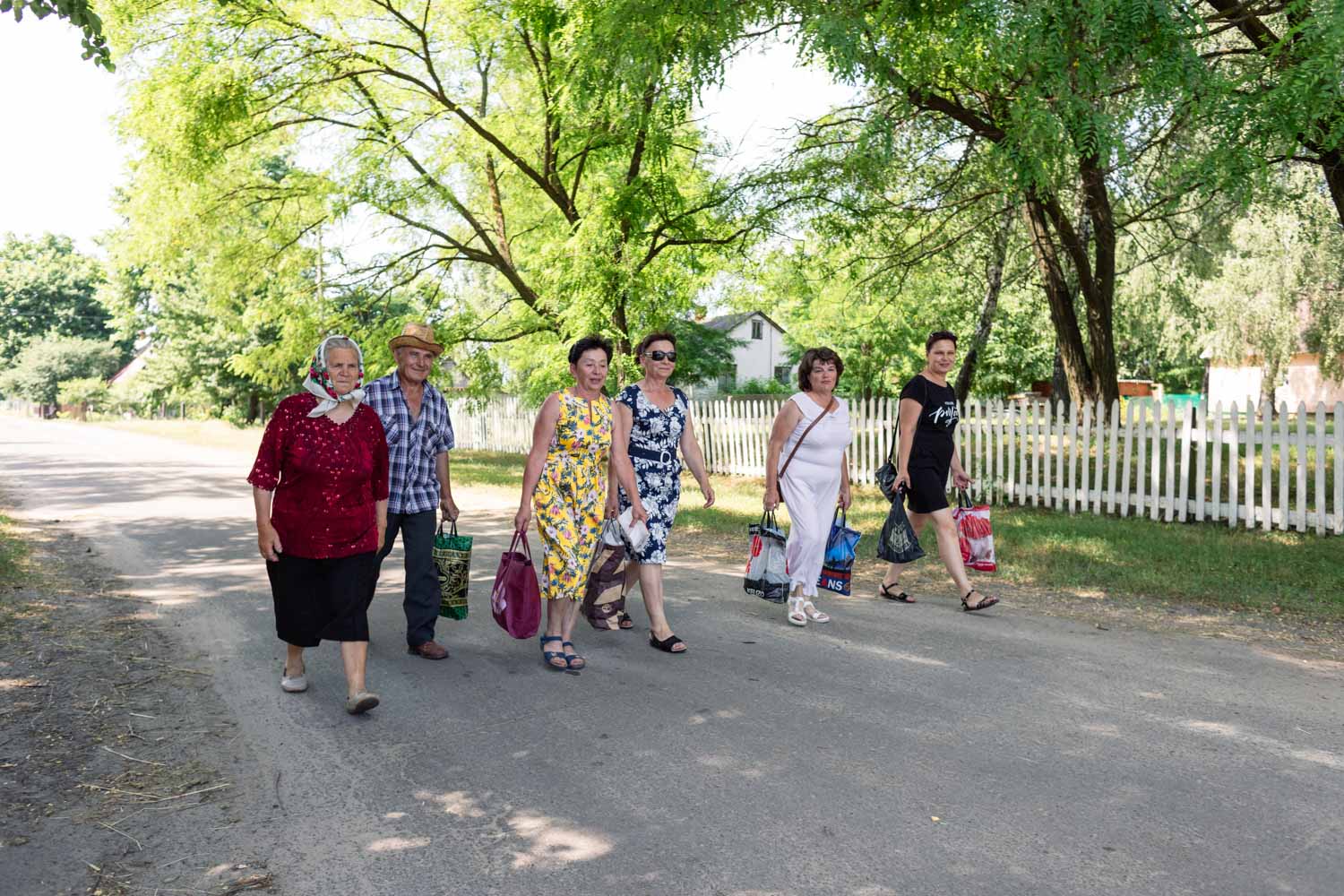
Members of the folk ensemble “Rodynonka” walk along the street of the village of Lozky in Polissia. 15 June 2019. Photo: Mykola Korol.
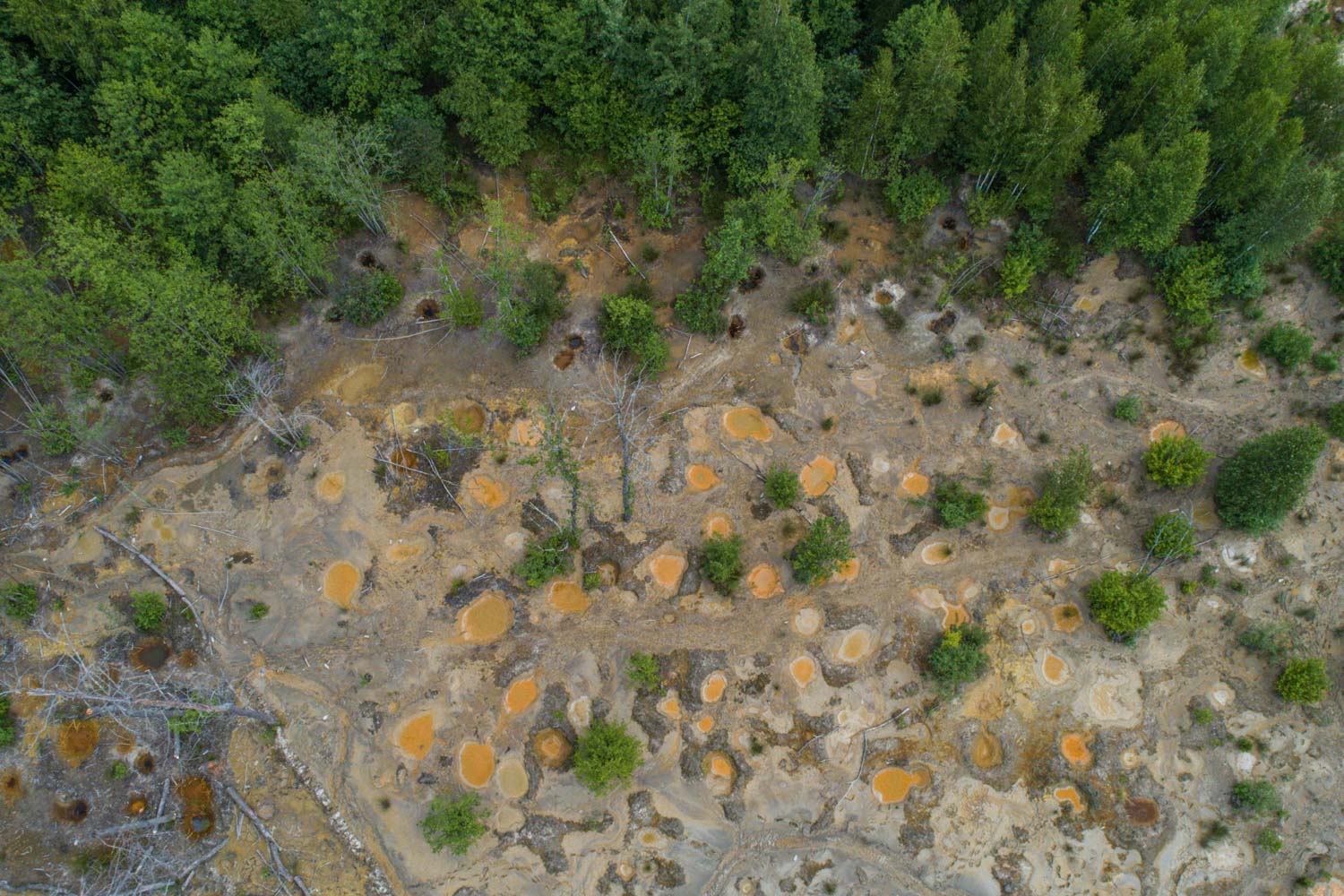
Bird’s-eye view of one of the amber mining sites not far from the town of Volodymyrets in Polissia. 18 June 2019. Photo: Pavlo Pashko.
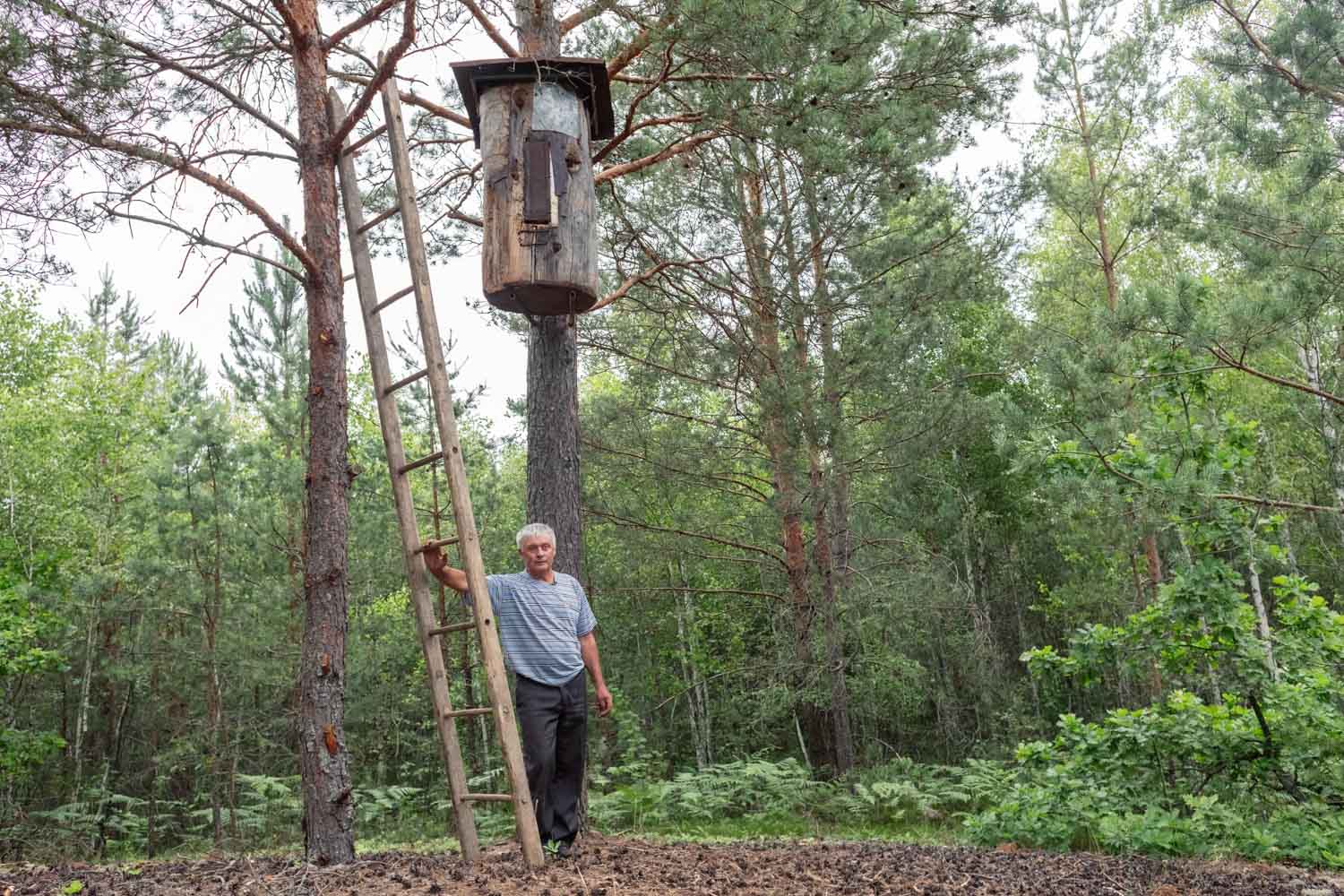
Wild-honey farmer Anatolii Skumin poses for pictures near the forest log hive which he has just collected honey from. 20 June 2019. Photo: Mykola Korol.
Anatolii Skumin is one of the few in Ukraine who still do wild-honey farming. This ancient craft of producing honey of wild bees from the log hives was considered lost until recently. In Polissia, however, it is preserved and revived.
Anatolii Skumin became one of the heroes of the film “Ukraïner. The Movie”.
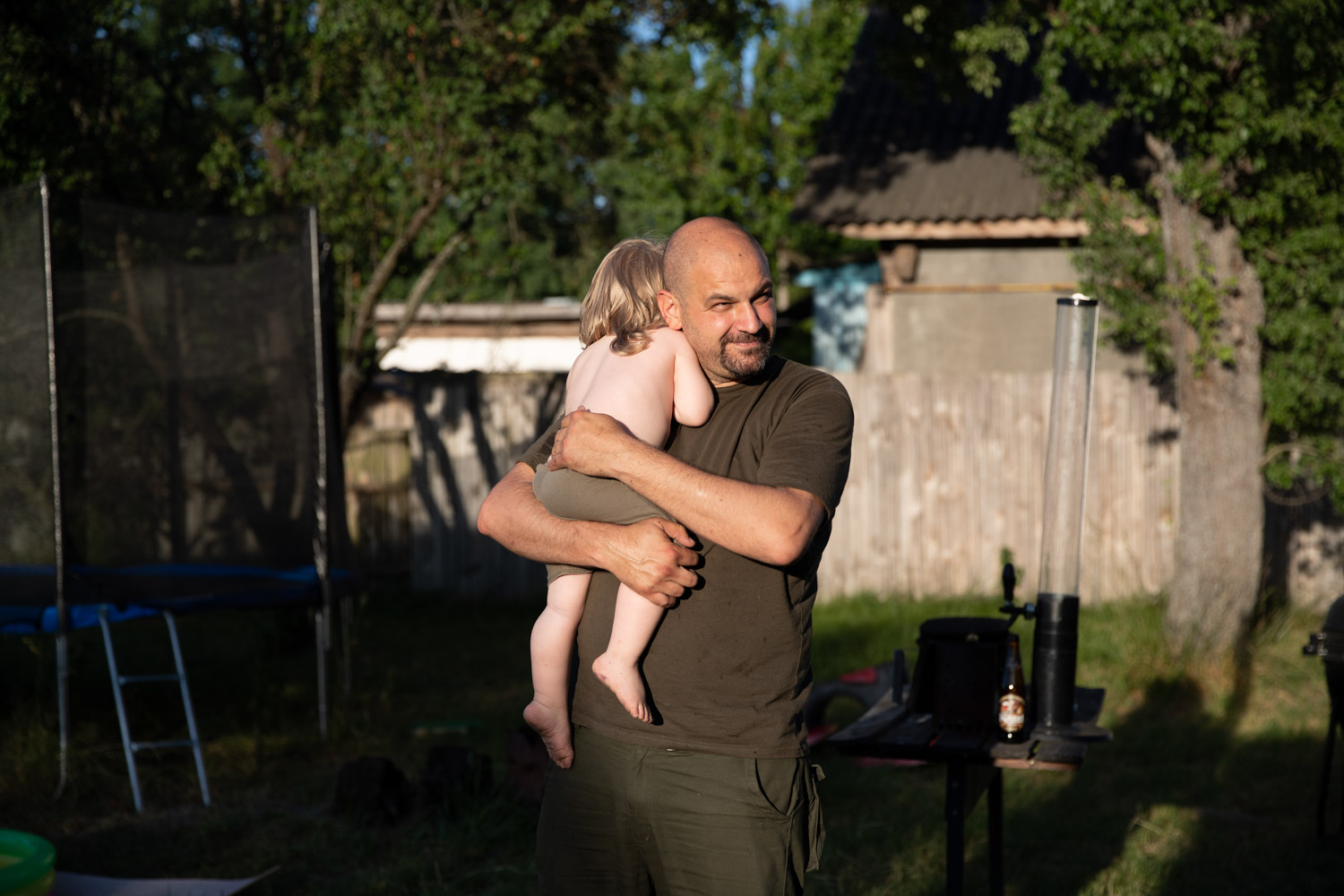
Oleksandr Syrota, explorer of the Chornobyl exclusion zone, hugs his son in the yard of their house in the village of Dytiatky in Polissia. 24 June 2019. Photo: Pylyp Dotsenko.
Oleksandr, who used to live in Prypiat, writes and films documentaries dedicated to the tragedy of Chornobyl, he is also the head of an international organisation “Centre Prypiat.com” and member of the Public Council at the State Agency of Ukraine on Exclusion Zone Management.
Oleksandr Syrota became the hero of the story of the exclusion zone, and also one of the heroes of the “Ukraïner. The Movie” documentary.
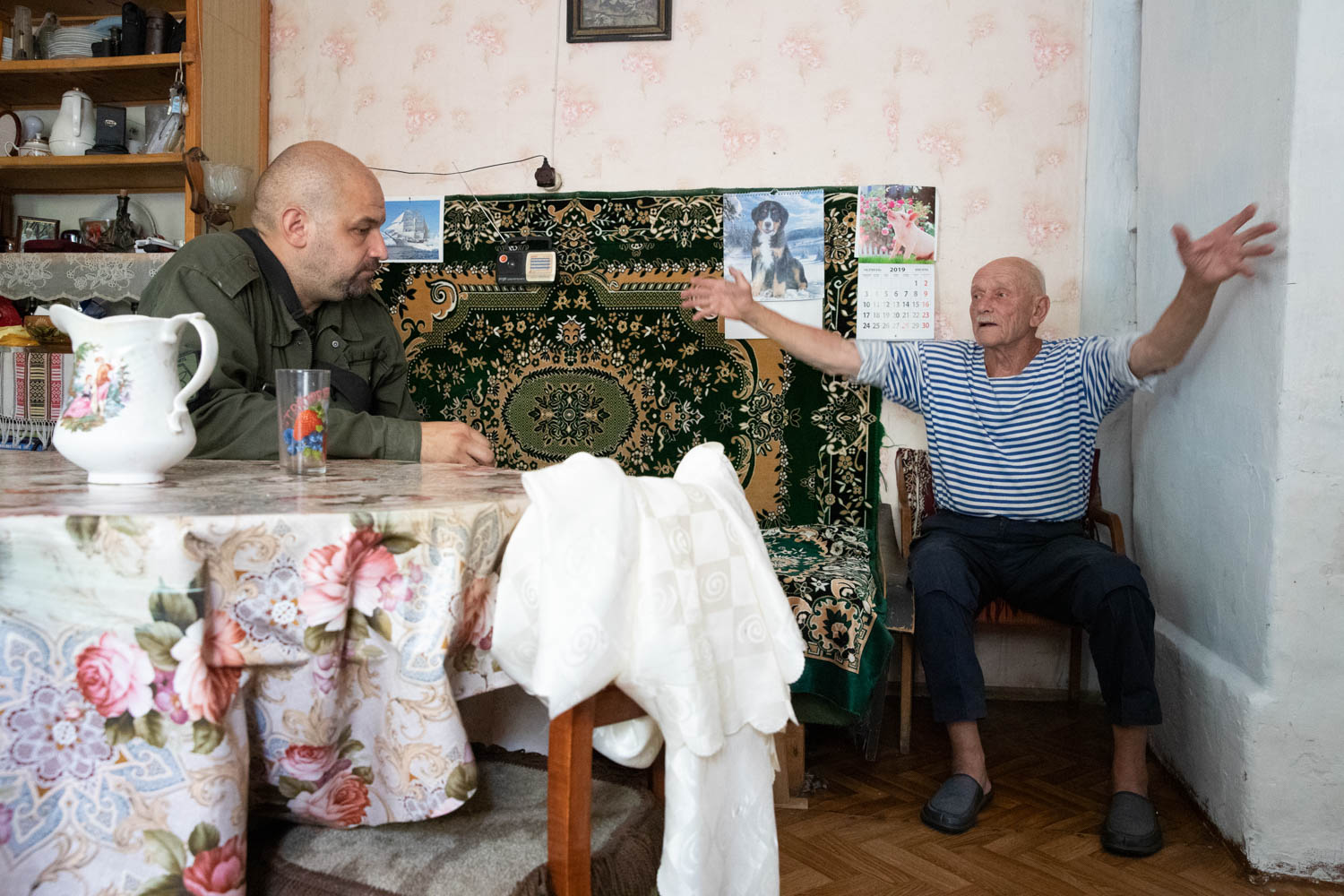
Oleksandr Syrota, explorer of the Chornobyl exclusion zone, talks to Yevhen Markevych, a Chornobyl self-settler. 26 June 2019. Photo: Pylyp Dotsenko.
Story of the self-settlers in the Chornobyl Exclusion Zone.
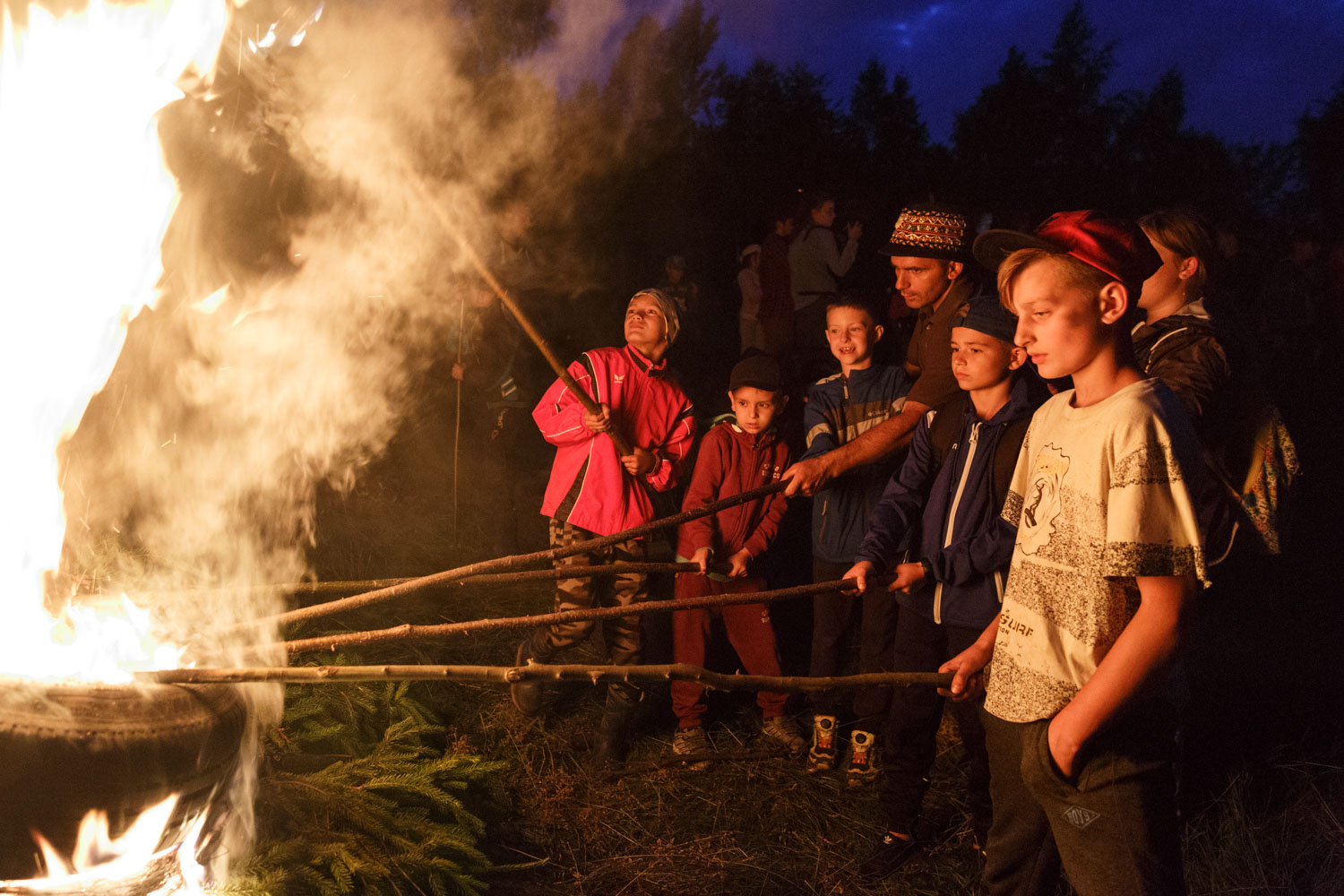
Children heat wooden tiles (“shayblyky”) attached onto the sticks as they celebrate the holiday of Shayblyky in the village of Ust-Chorna in Zakarpattia, which has a significant Austrian community. 21 June 2019. Photo: Oleh Pereverzev.
Shayblyky is a celebration of the summer solstice, a Zakarpattia equivalent of the Austrian Sonnenwende. This holiday is celebrated over three days from 21 June till 23 June.
Story of the national minority of Austrians living in Ukraine.
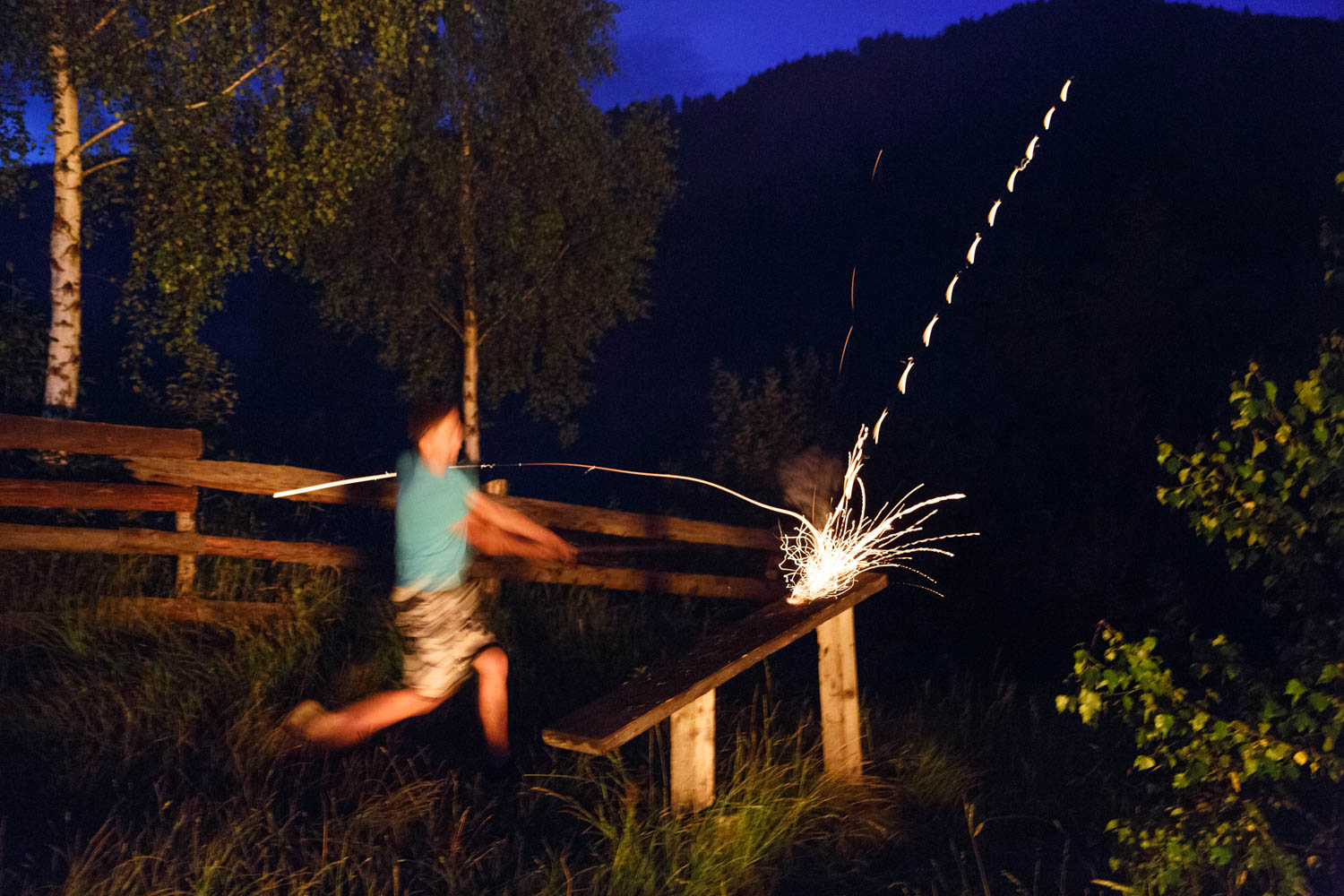
Children launch wooden shayblyky in the air as they celebrate the summer solstice in the village of Ust-Chorna in Zakarpattia. 21 June 2019. Photo: Oleh Pereverzev.
Shayblyky are hand-cut wooden square tiles that have a hole in the middle and are placed onto a stick. People of all ages, old, young, and children alike, heat the tiles over the fire and then launch the wooden tiles in the air at a specific angle. When the tile is hot, it begins to glow brightly in the dark, and the participant comes to the springboard or the bench and hits it with the stick to launch the tile in the air. The aim is to get the tile to fly as far as possible in the air leaving a long trail of bright sparks before it falls on the ground. A burning shayblyk flying in the air represents the sun moving in the sky.
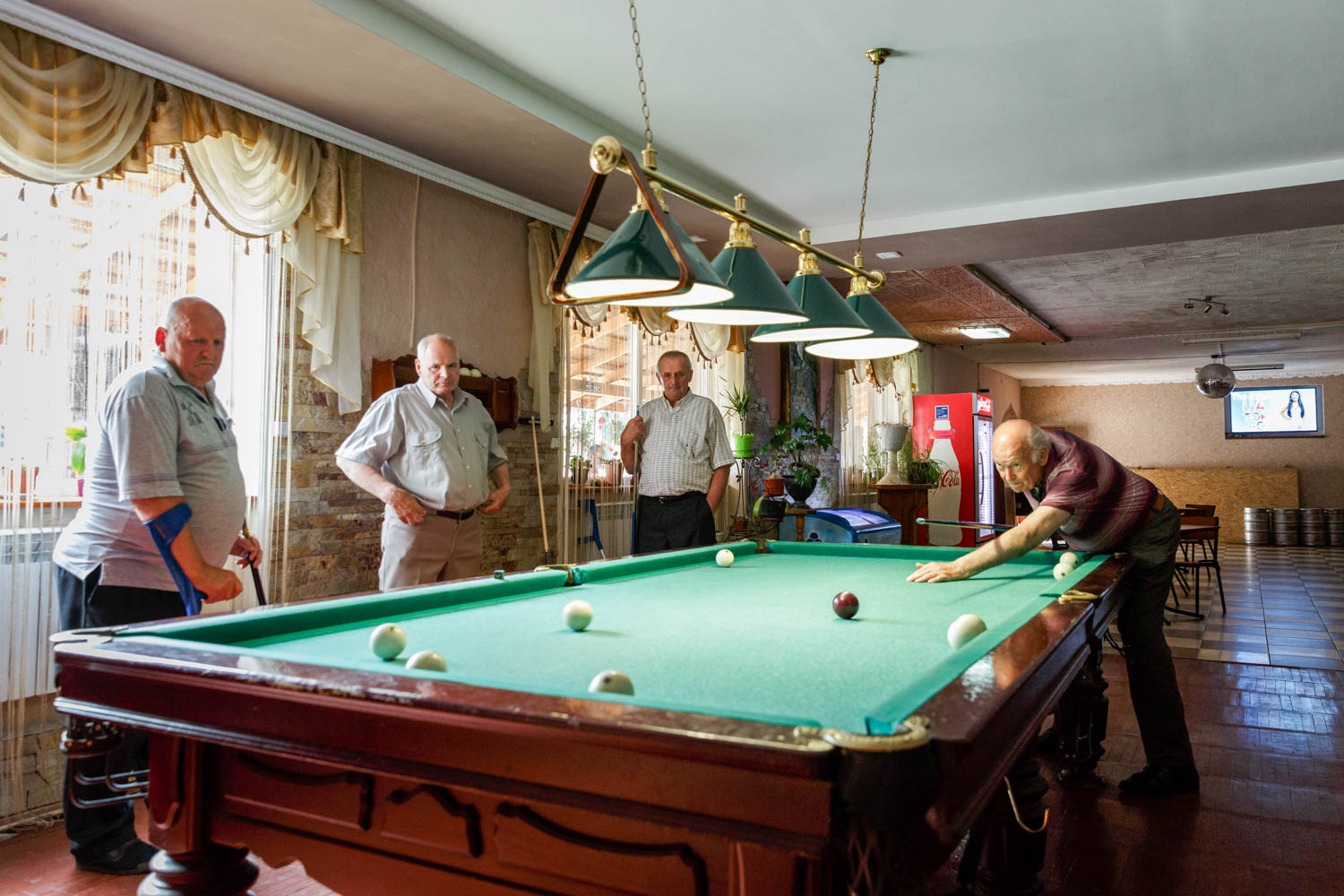
Austrians play billiards in the village of Ust-Chorna in Zakarpattia. 23 June 2019. Photo: Oleh Pereverzev.
Members of the Austrian community in Ukraine primarily reside in Zakarpattia in the villages of Ust-Chorna, Nimetska Mokra, and other villages located in the valley of the Teresva river. Their ancestors came from Austria to settle here in the 18th century encouraged by Empress Maria Theresa.
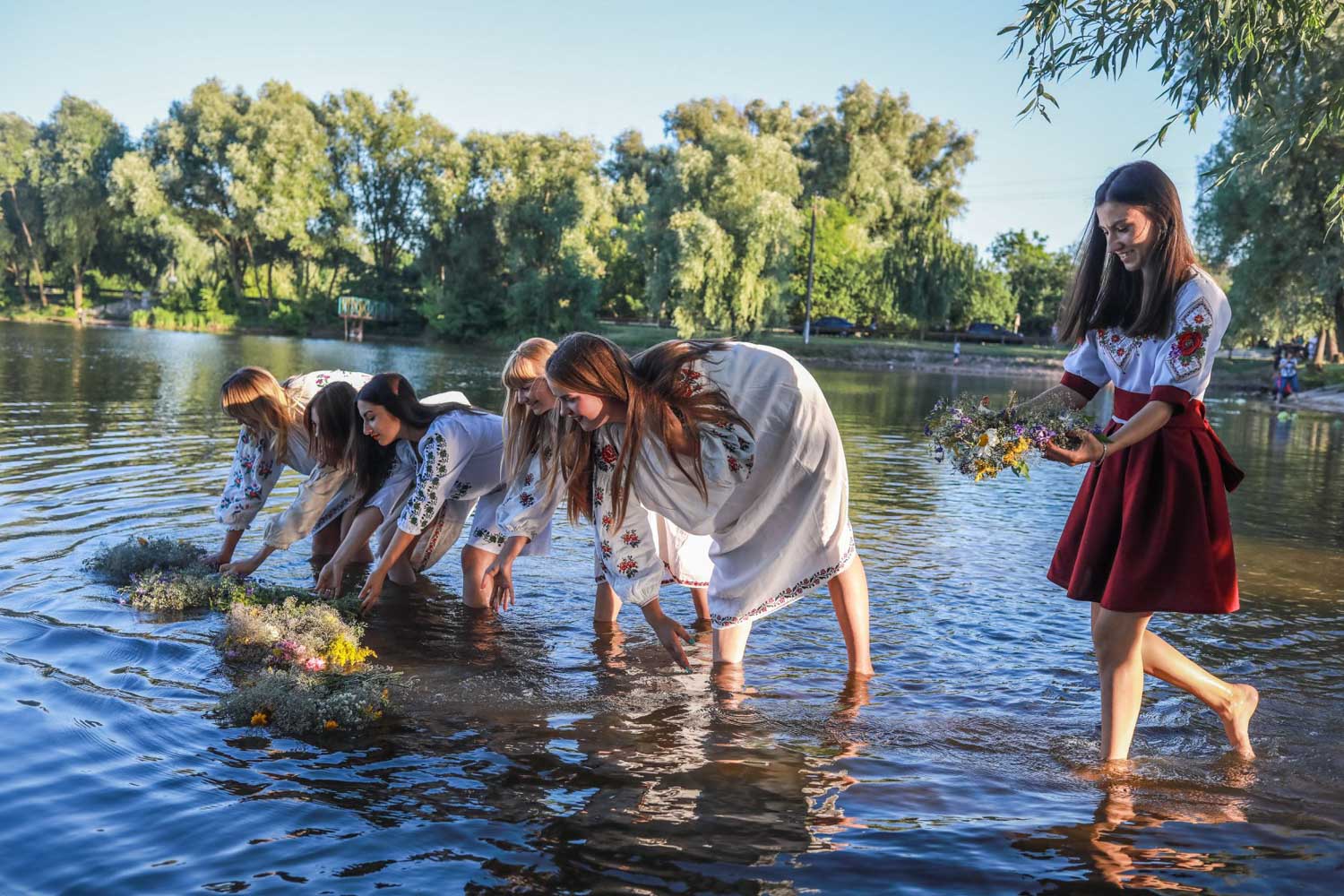
Girls float wreaths of flowers on water as they celebrate Ivanа Kupala in the village of Dobranychivka in Polissia. 7 July 2019. Photo: Oleksandr Khomenko.
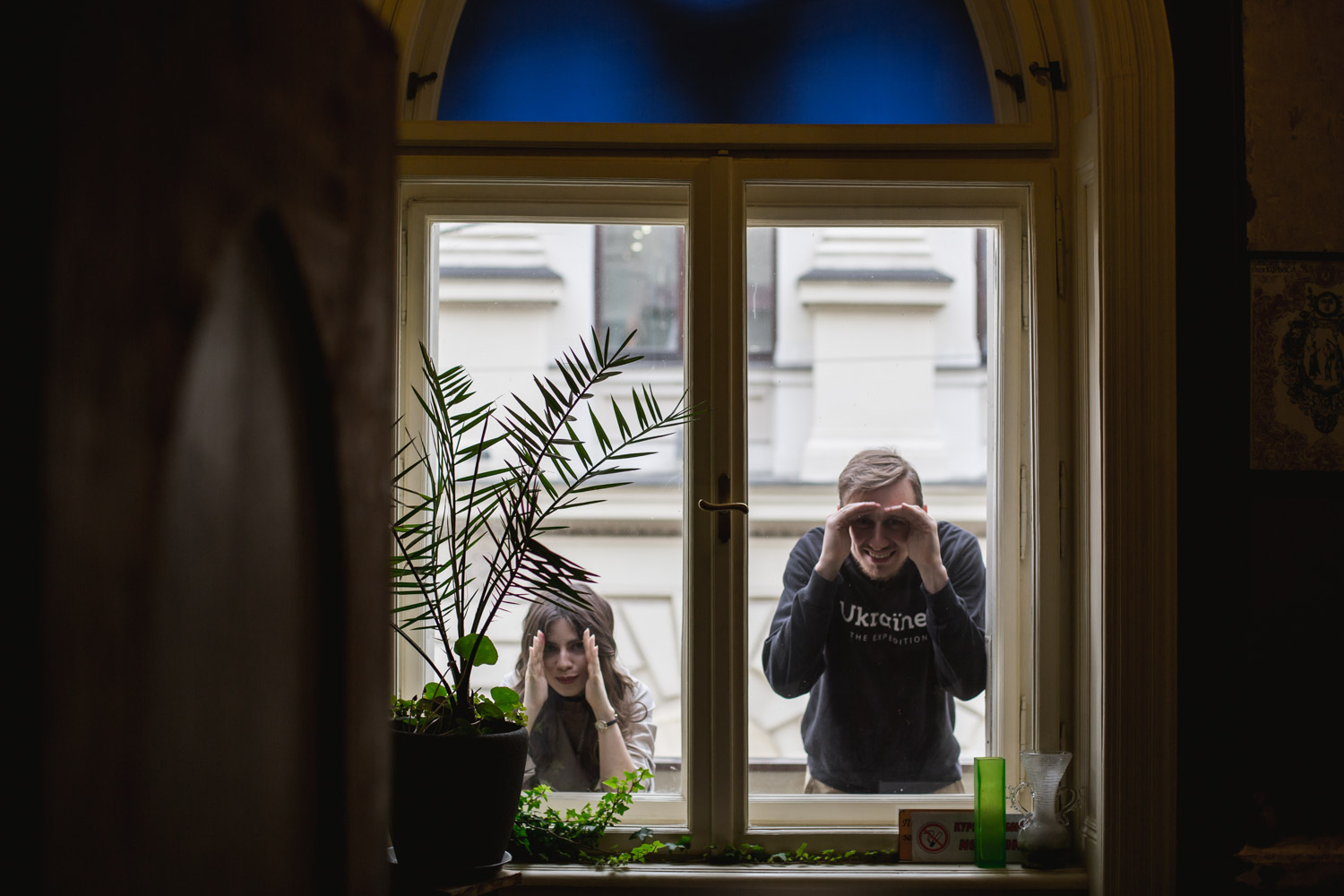
Singer Khrystyna Soloviy and Bogdan Logvynenko, the founder of the Ukraïner project, peer through the window of the Lviv Academic Les Kurbas Theatre as they are filming the Ambassadors show. 10 July 2019. Photo: Oles Moskalchuk.
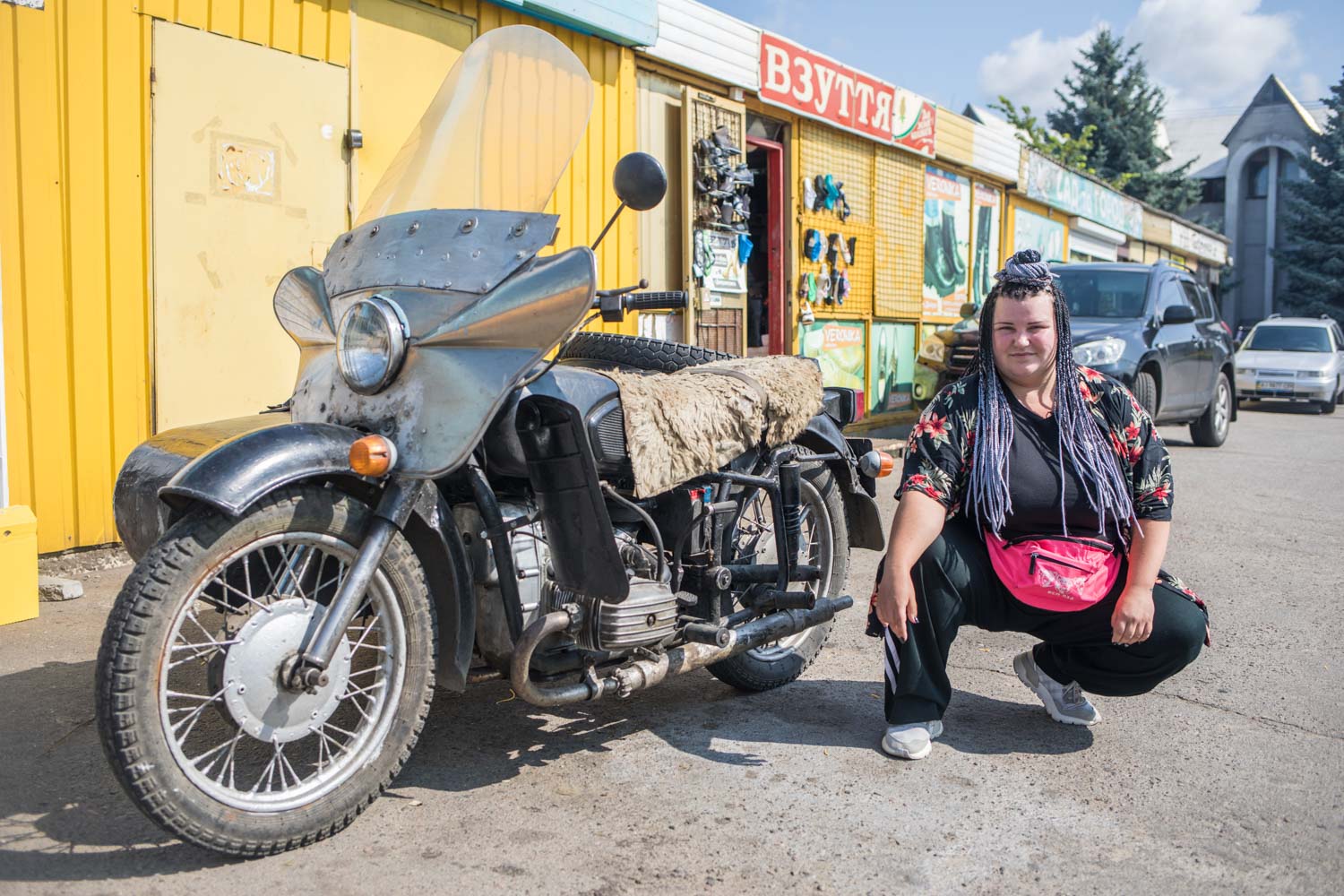
Hip-hop singer alyona alyona poses for pictures next to a motorcycle parked near the market in the town of Baryshivka in Naddniprianshchyna. 18 July 2019. Photo: Oleksandr Khomenko.
In the Ambassadors project, alyona alyona told us about the towns of Pereyaslav and Baryshivka.
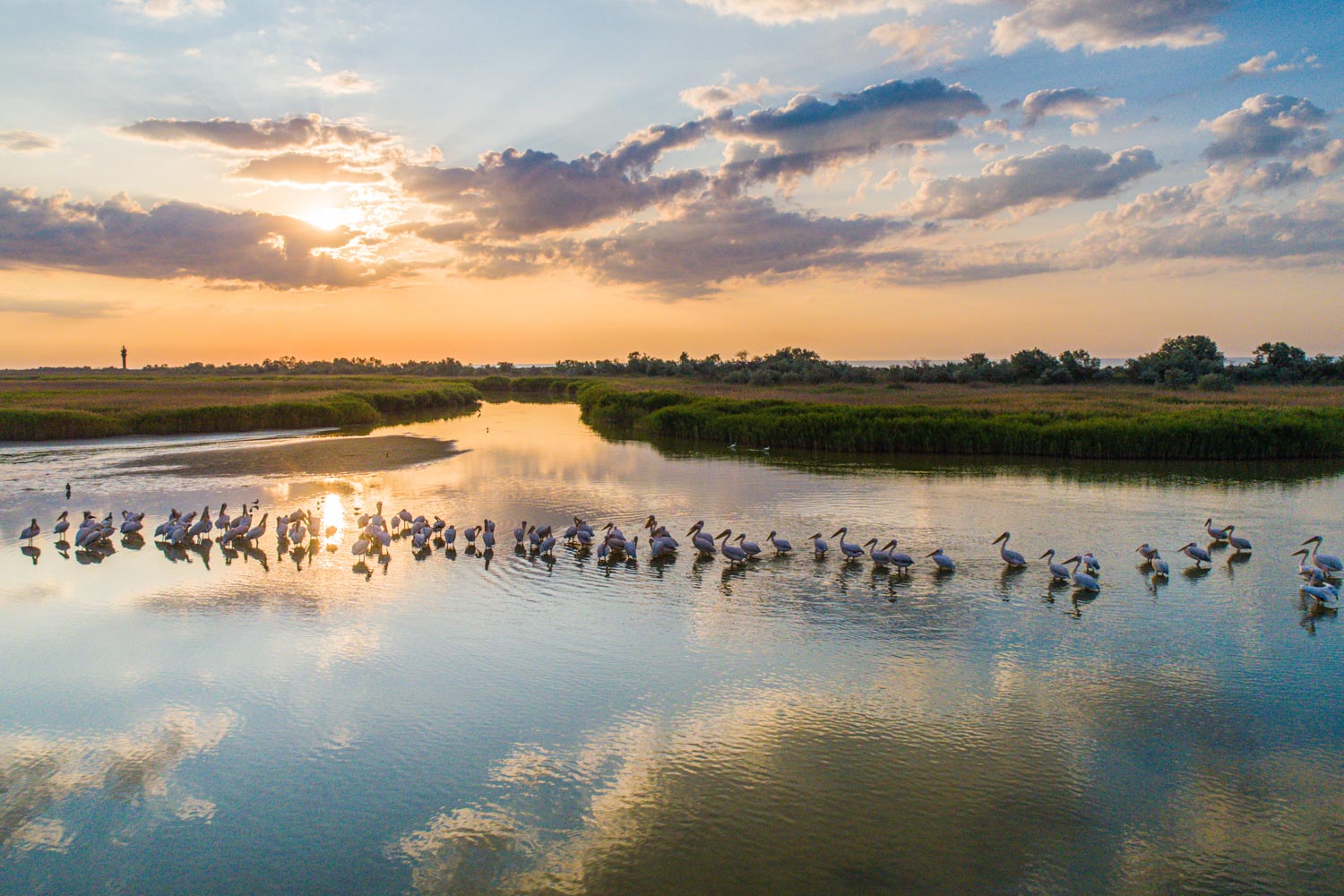
Flock of pelicans has a rest on the territory of the Tuzly Estuaries National Park. 18 July 2019. Photo: Pavlo Pashko.
The Tuzly Estuaries National Park is a chain of 13 estuaries in the catchment area of the Danube and the Dnister rivers. The estuaries are called ‘the maternity hospital of the Black Sea’, since they have enormous resources for reproduction of biological diversity.
Story of the park published in 2018.
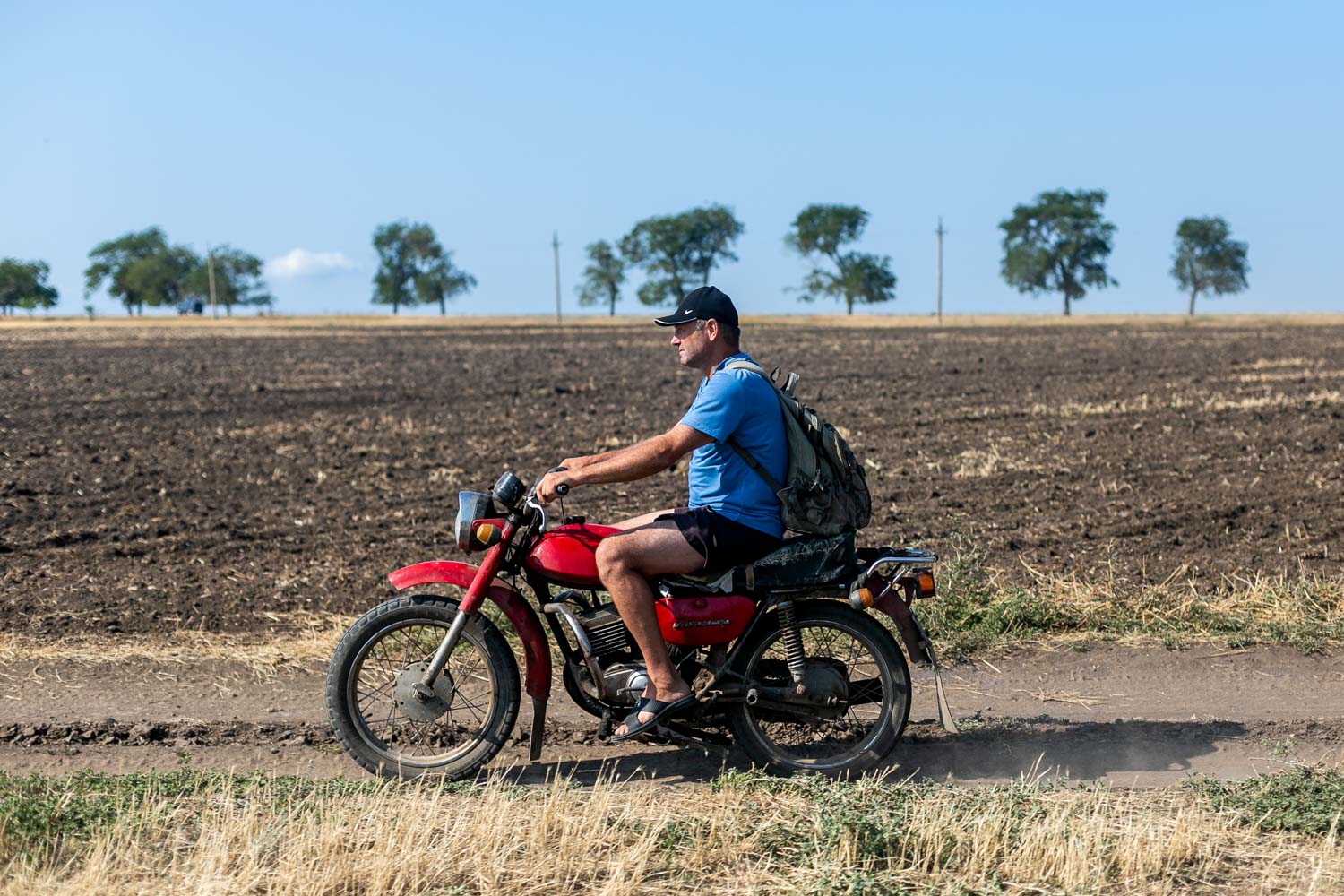
Viktor Sakara, the lighthouse keeper, is on his way to the lighthouse at the Shagany estuary. 21 July 2019. Photo: Artem Galkin.
Viktor Sakara became one of the heroes of the “Ukraïner. The Movie” documentary.
Story of the Shagany lighthouse.
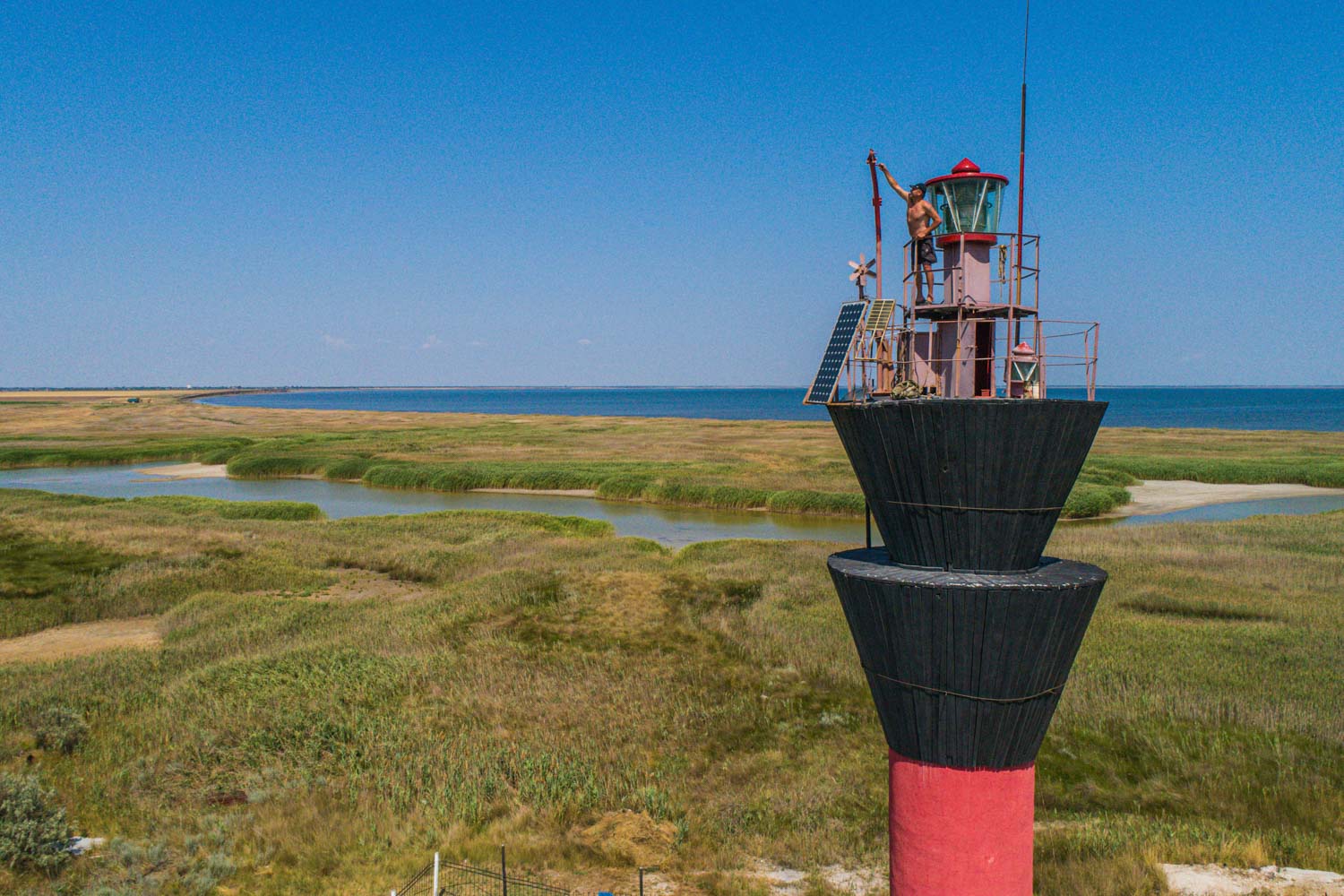
Viktor Sakara, the keeper of the lighthouse at the Shagany estuary, checks the systems of the lighthouse. 21 July 2019. Photo: Pavlo Pashko.
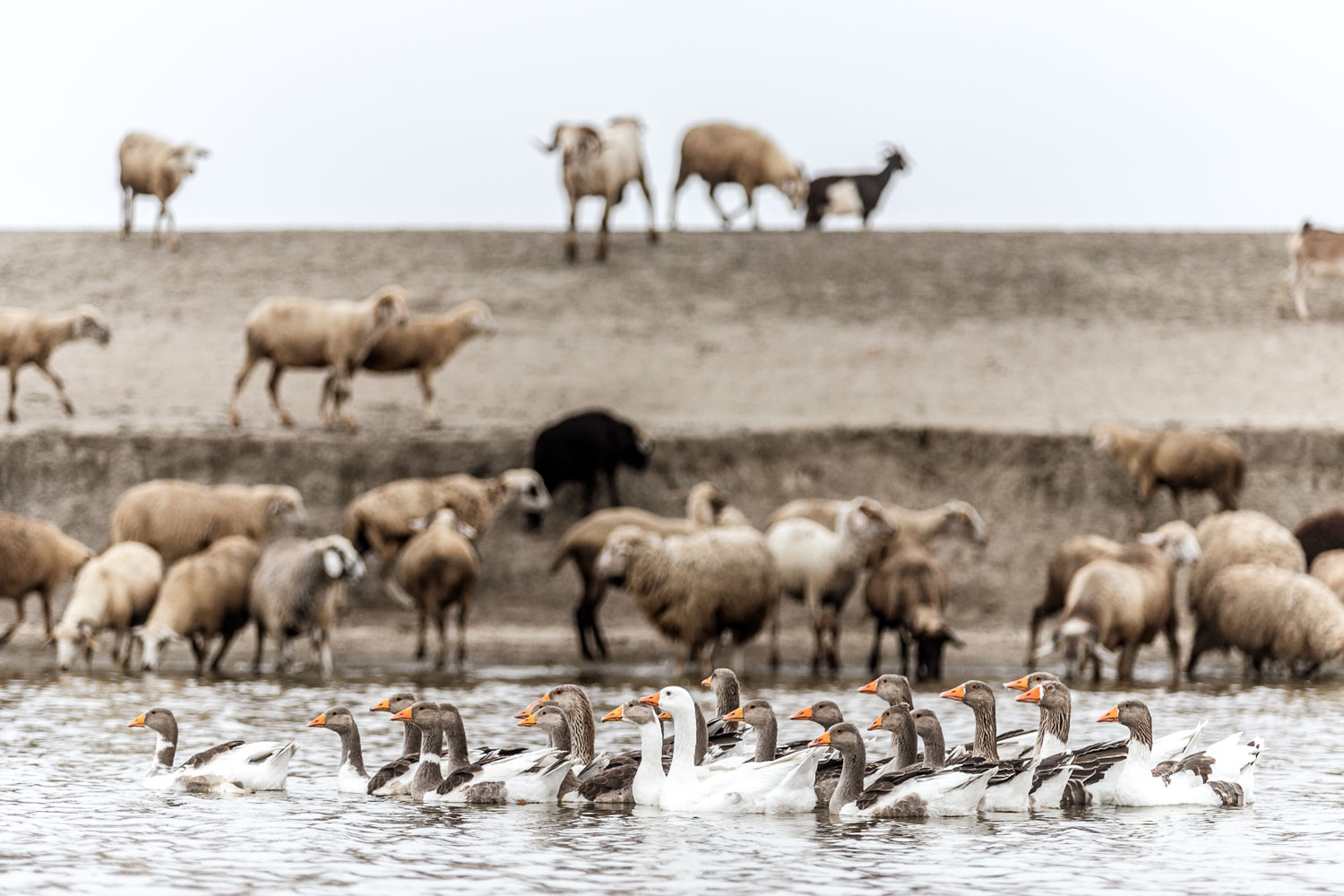
Geese and cattle have a rest near the water on the territory of the Tuzly Estuaries National Park. 23 July 2019. Photo: Artem Galkin.
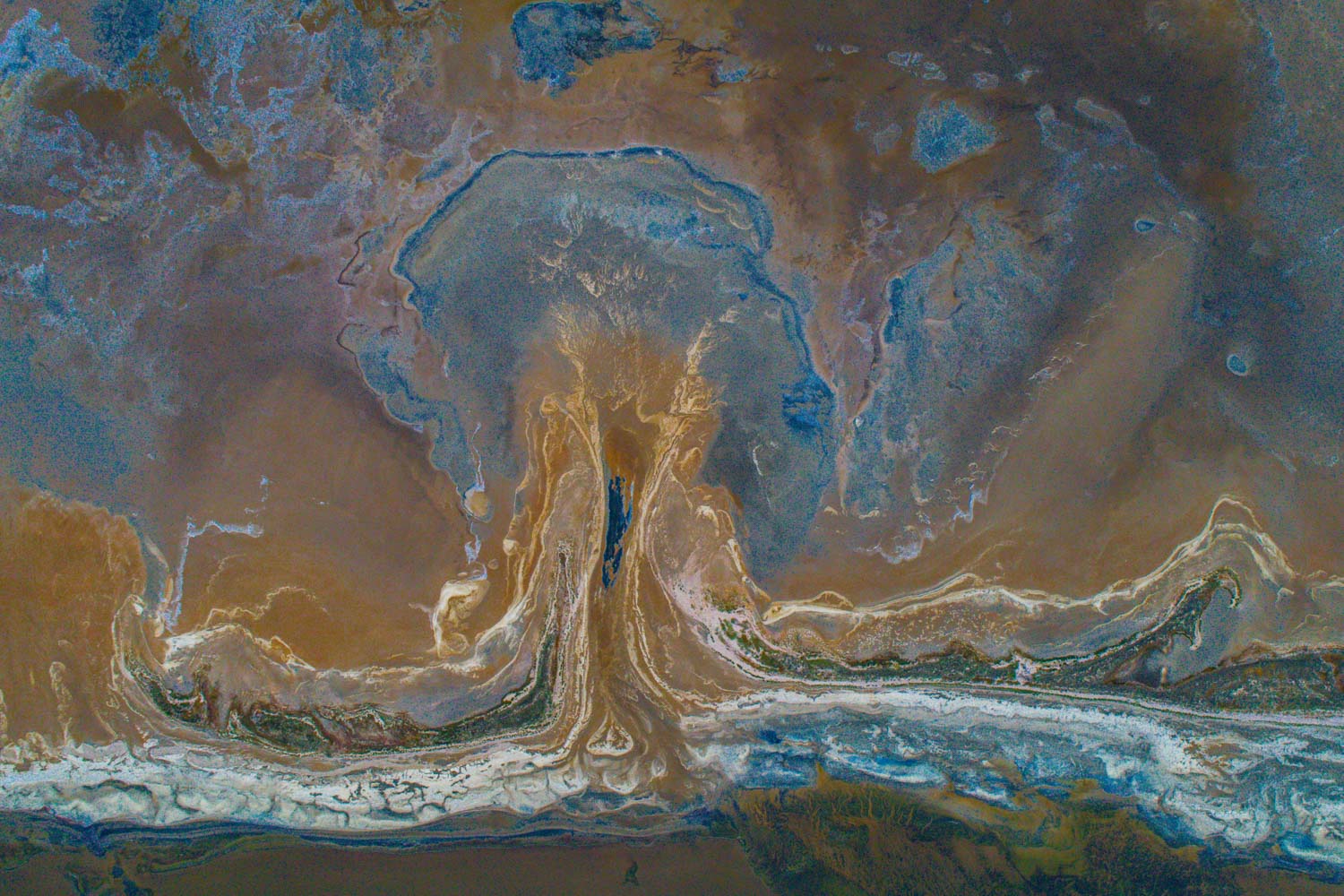
Bird’s-eye view of the Tuzly estuaries. 23 July 2019. Photo: Pavlo Pashko.
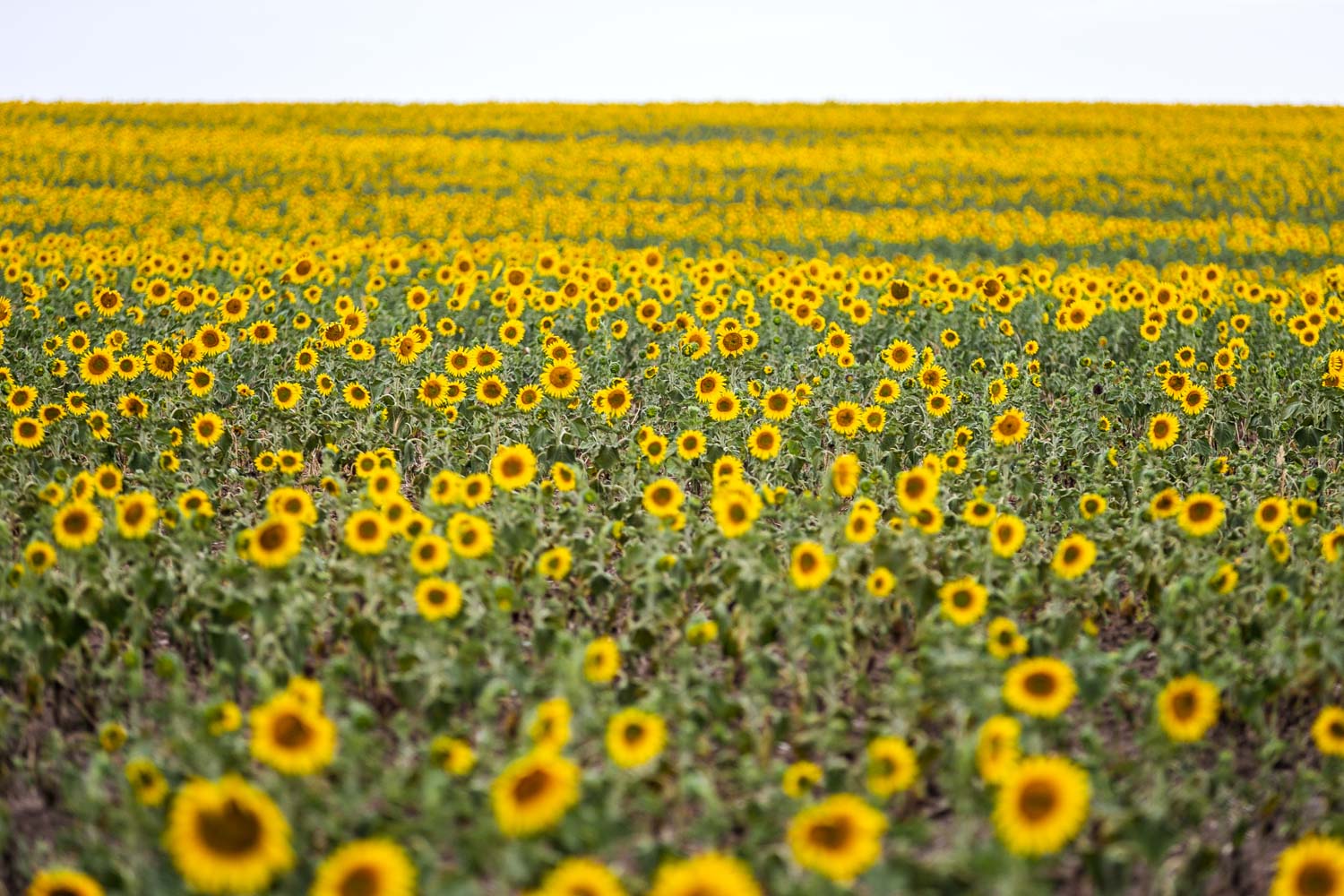
Sunflower field in Bessarabia. 23 July 2019. Photo: Artem Galkin.
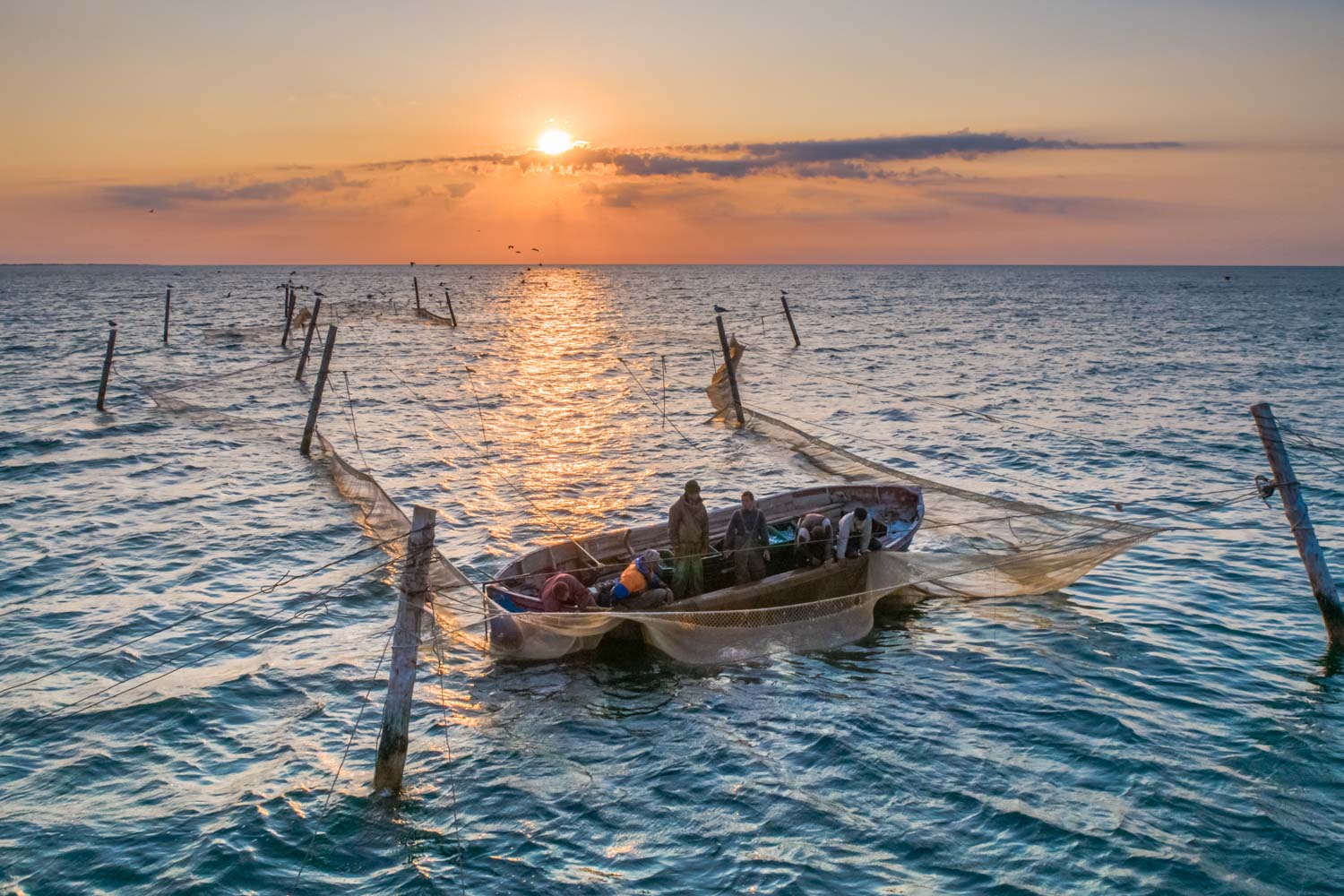
Fishermen set out for work at sunset near the Shagany estuary in Bessarabia. 24 July 2019. Photo: Pavlo Pashko.
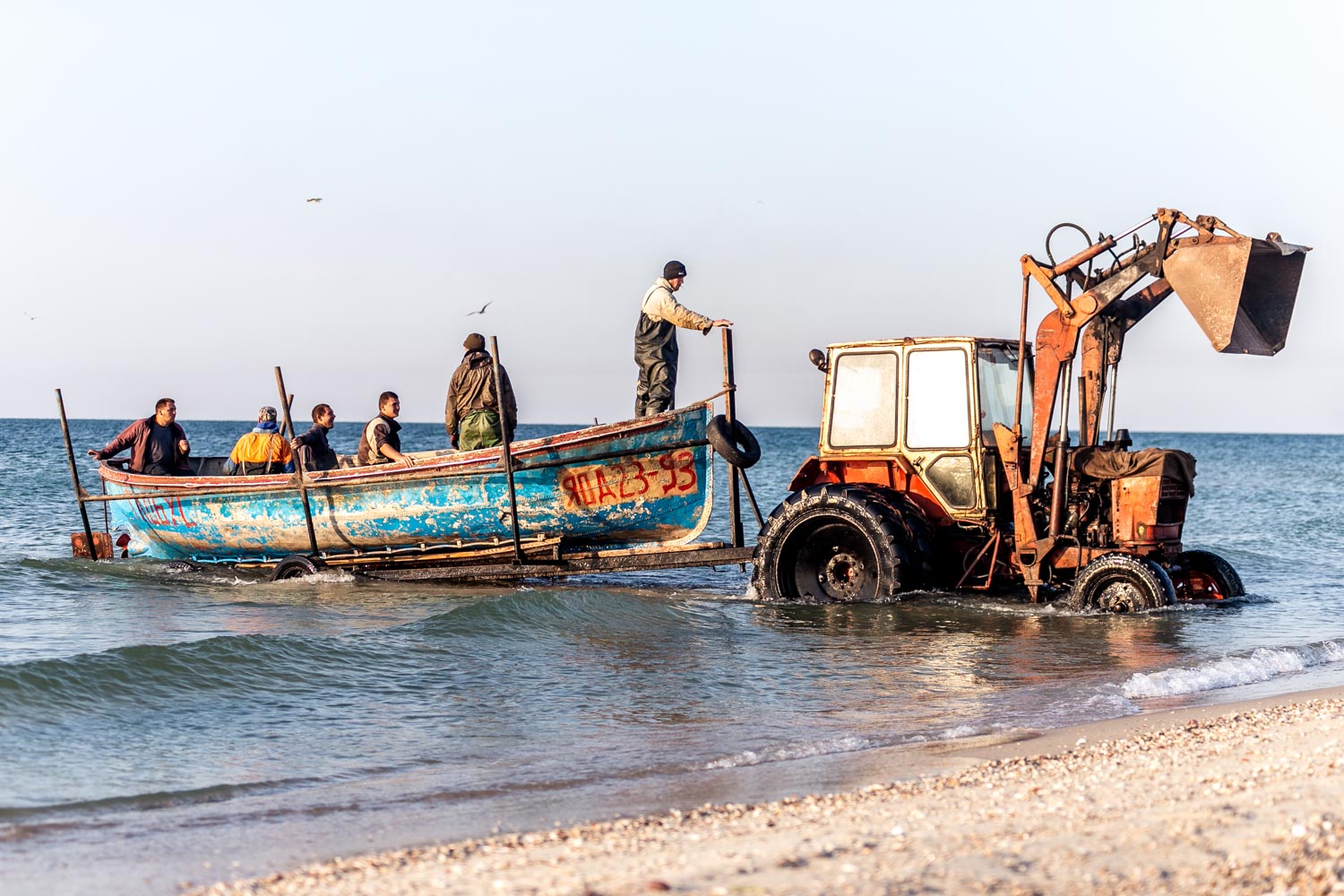
Tractor pulls a fishing boat out of water not far from the town of Vylkove in Bessarabia. 24 July 2019. Photo: Artem Galkin.
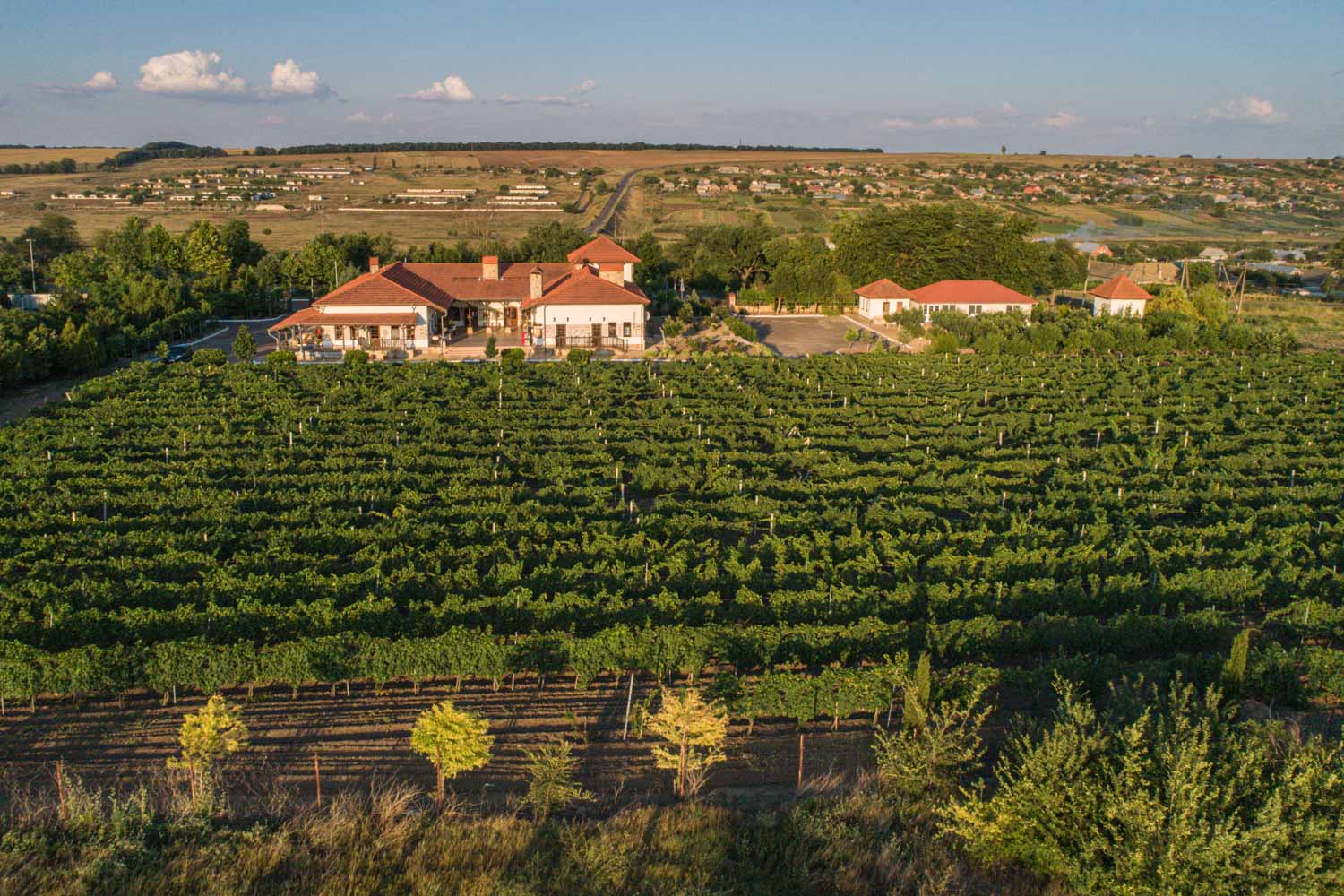
Vineyard of “Kolonist”, one of the biggest wineries in Bessarabia. 25 July 2019. Photo: Pavlo Pashko.
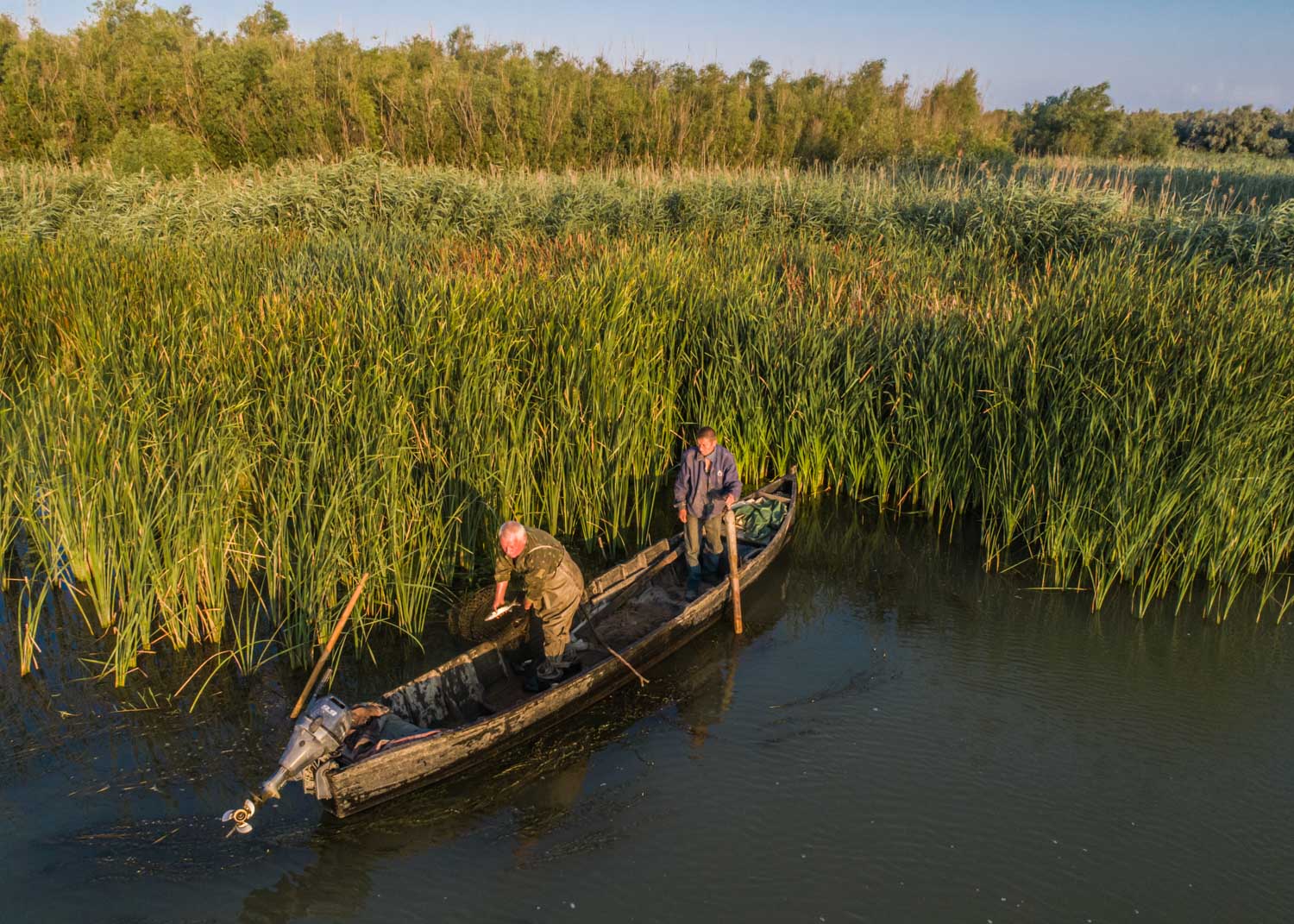
Fishermen set out for work near the town of Vylkove in Bessarabia. 27 July 2019. Photo: Pavlo Pashko.
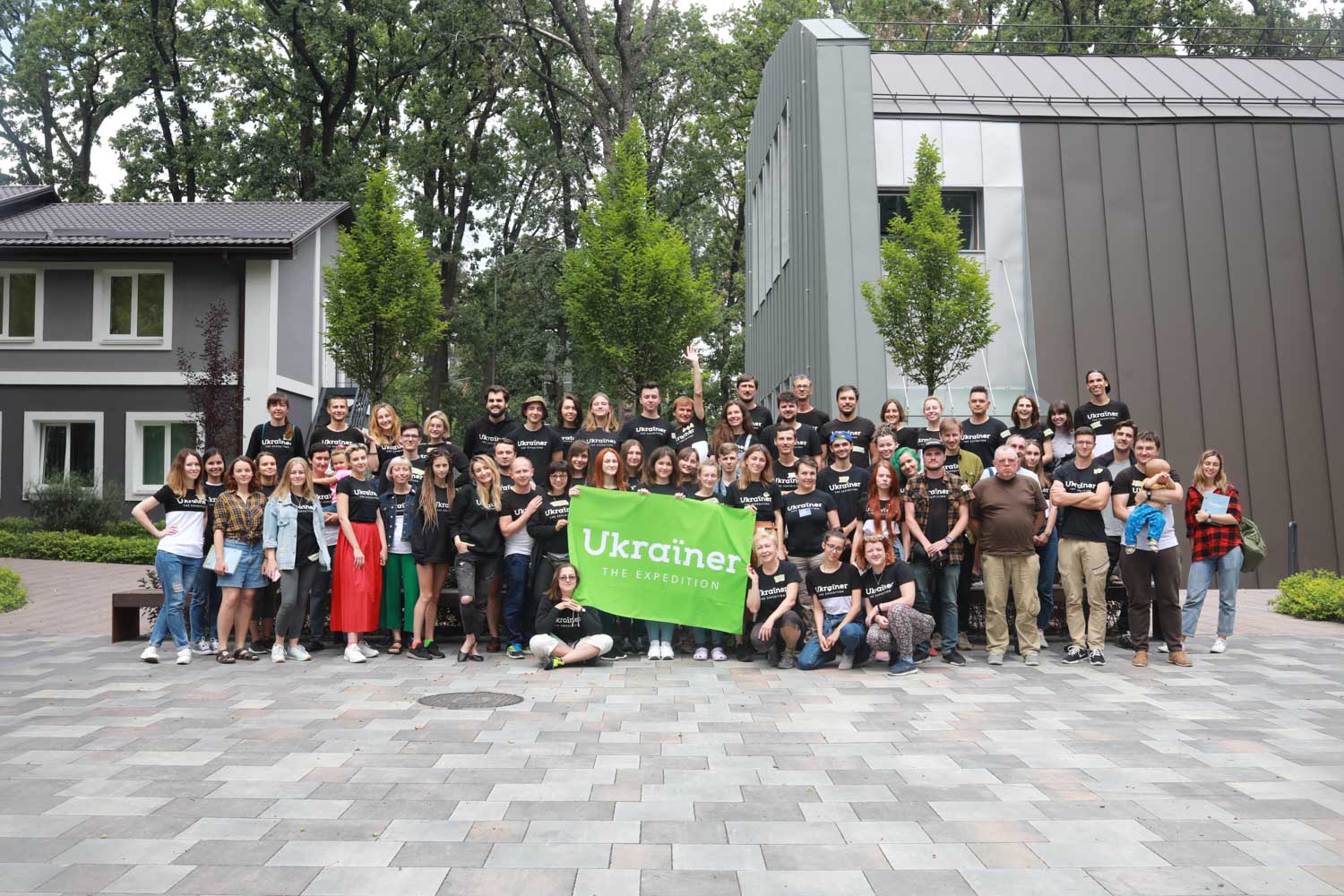
Volunteers of the Ukraïner project take a group photo near the building of Plast, the National Scout Organization of Ukraine, in Bucha. 3 August 2019.
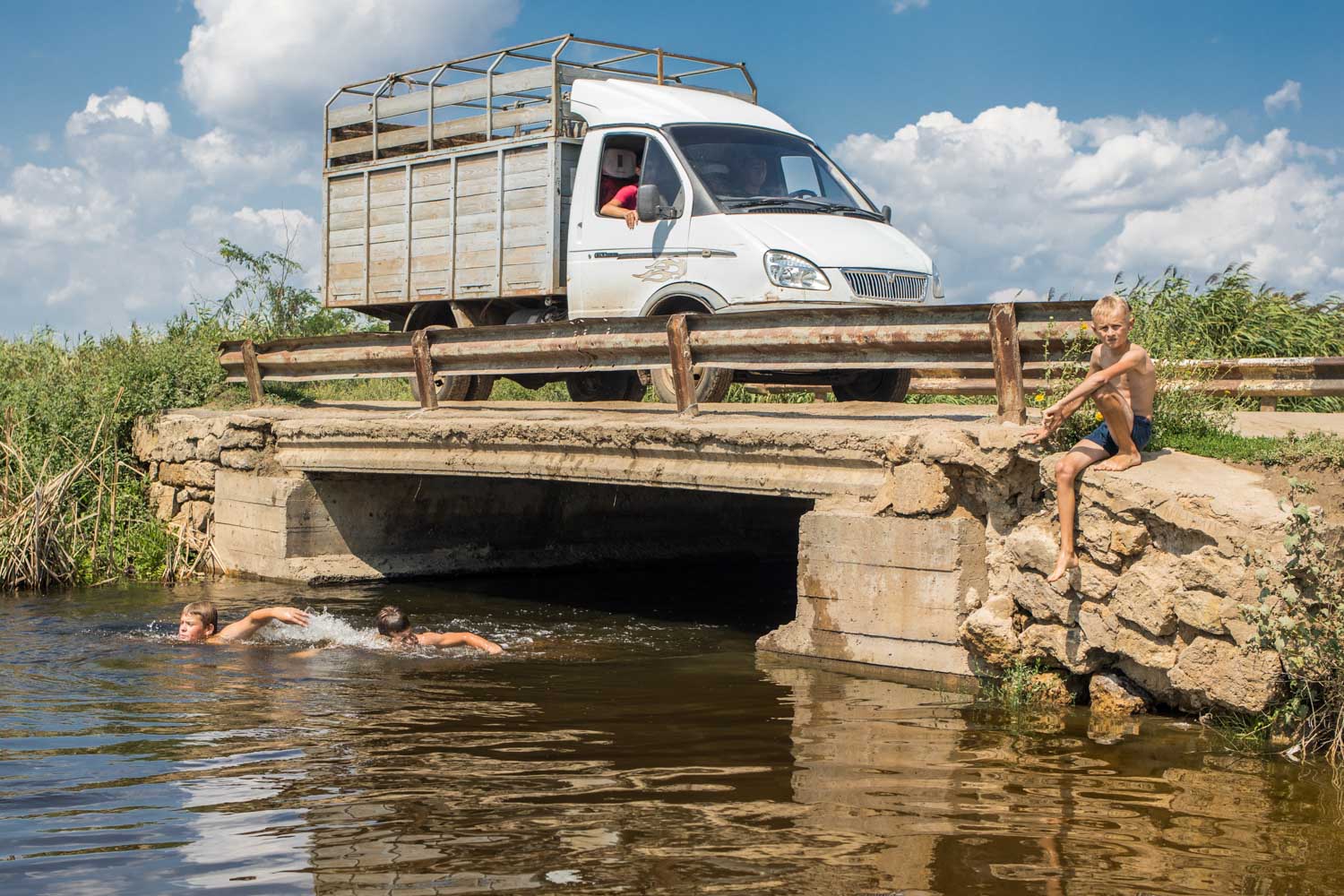
Local children have a swim in the river Inhul not far from the village of Vynohradivka in Prychornomoria. 10 August 2019. Photo: Oleksandr Khomenko.
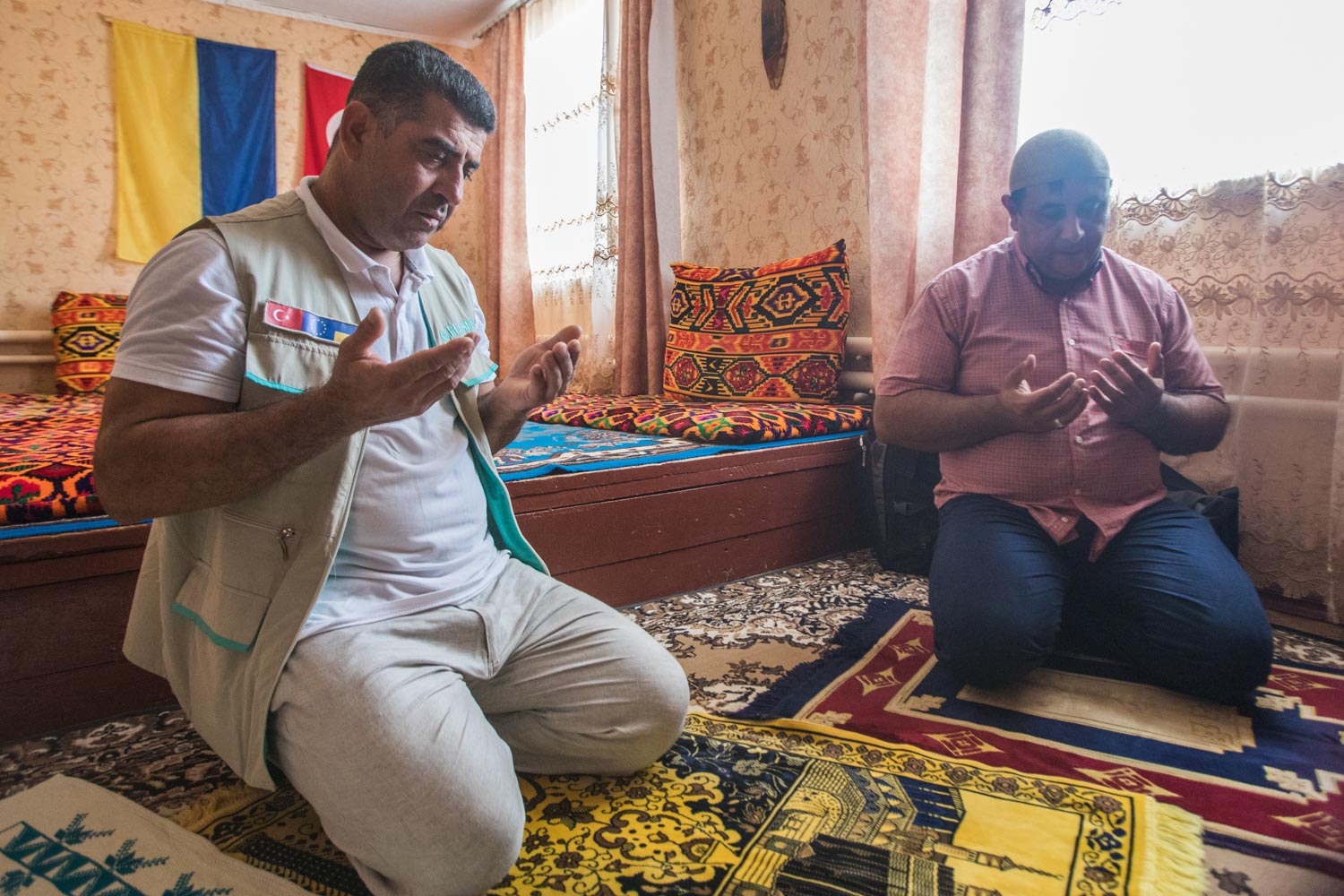
Evening namaz of Meskhetian Turk Marat Rasulov and his guest in the village of Vynohradivka in Prychornomoria. 10 August 2019. Photo: Oleksandr Khomenko.
Meskhetian Turks are Turkic speaking people that follow Islam and originate from Meskhetia, the historic territory on the border between Georgia and Turkey. They had to re-settle twice: in 1944 the Soviet authorities exiled them to Central Asia, and in the 1990s they had to flee from there because of ethnic clashes.
Story of the national minority of Meskhetian Turks living in Ukraine.


slideshow
Meskhetian Turk families have gathered for the celebration of Qurbān Bairām. 12 August 2019.
Meskhetian Turk families have gathered for the celebration of Qurbān Bairām. 12 August 2019. Photo: Oleksandr Khomenko.
Meskhetian Turk families have gathered for the celebration of Qurbān Bairām. 12 August 2019. Photo: Oleksandr Khomenko.
Meskhetian Turk families have gathered for the celebration of Qurbān Bairām. 12 August 2019. Photo: Oleksandr Khomenko.
Members of the Meskhetian Turks community have lived in Ukraine since the 1990s. They typically settled down in Prychornomoria, Tavria, Slobozhanshchyna, and Bessarabia. They cherish their traditions and celebrate annual religious holidays, Qurbān Bairām being one of those.
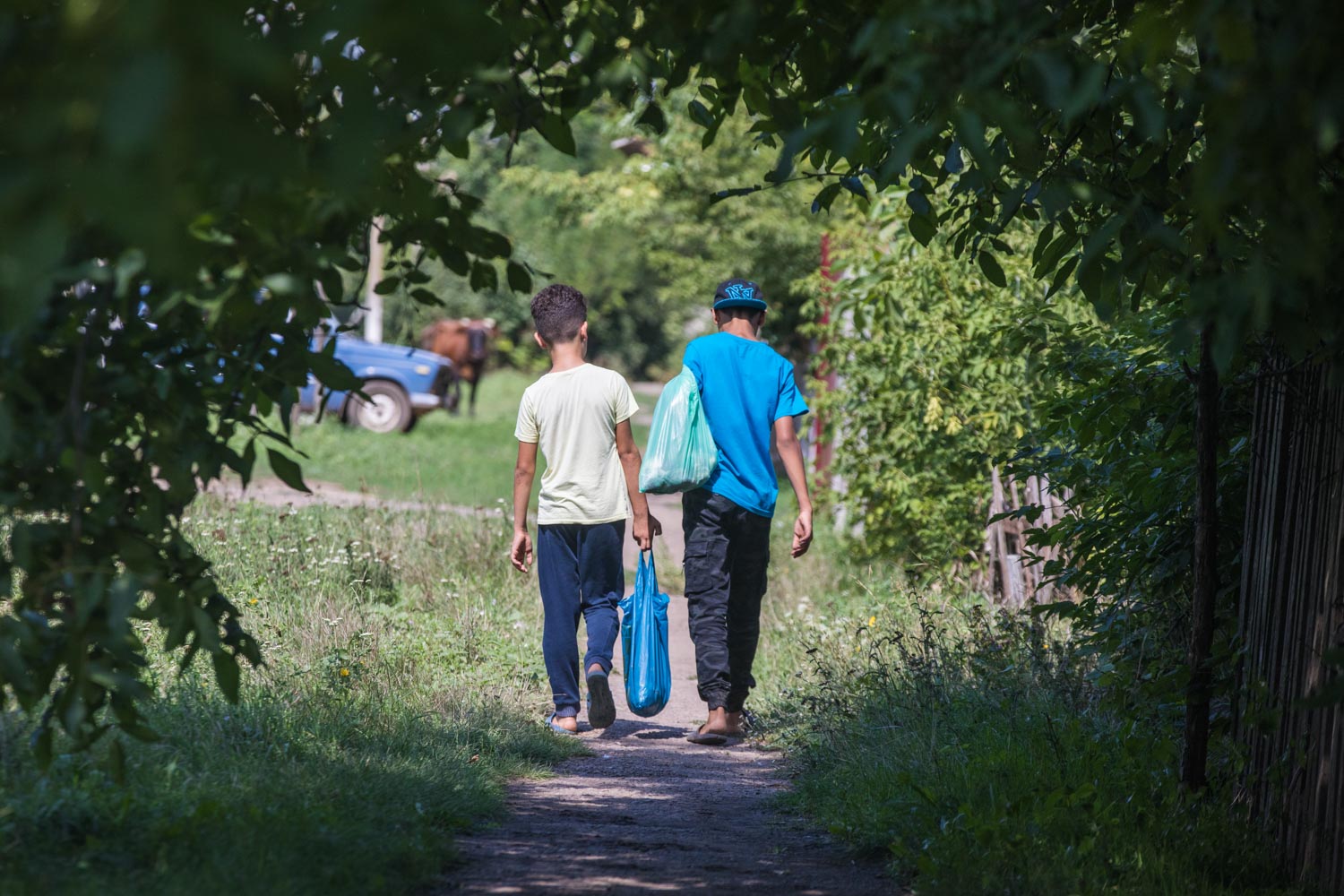
Two Meskhetian Turk boys walk around the village of Vynohradivka in Prychornomoria treating the neighbours with the meat of the sacrificed animal as they celebrate Qurbān Bairām. 12 August 2019. Photo: Oleksandr Khomenko.
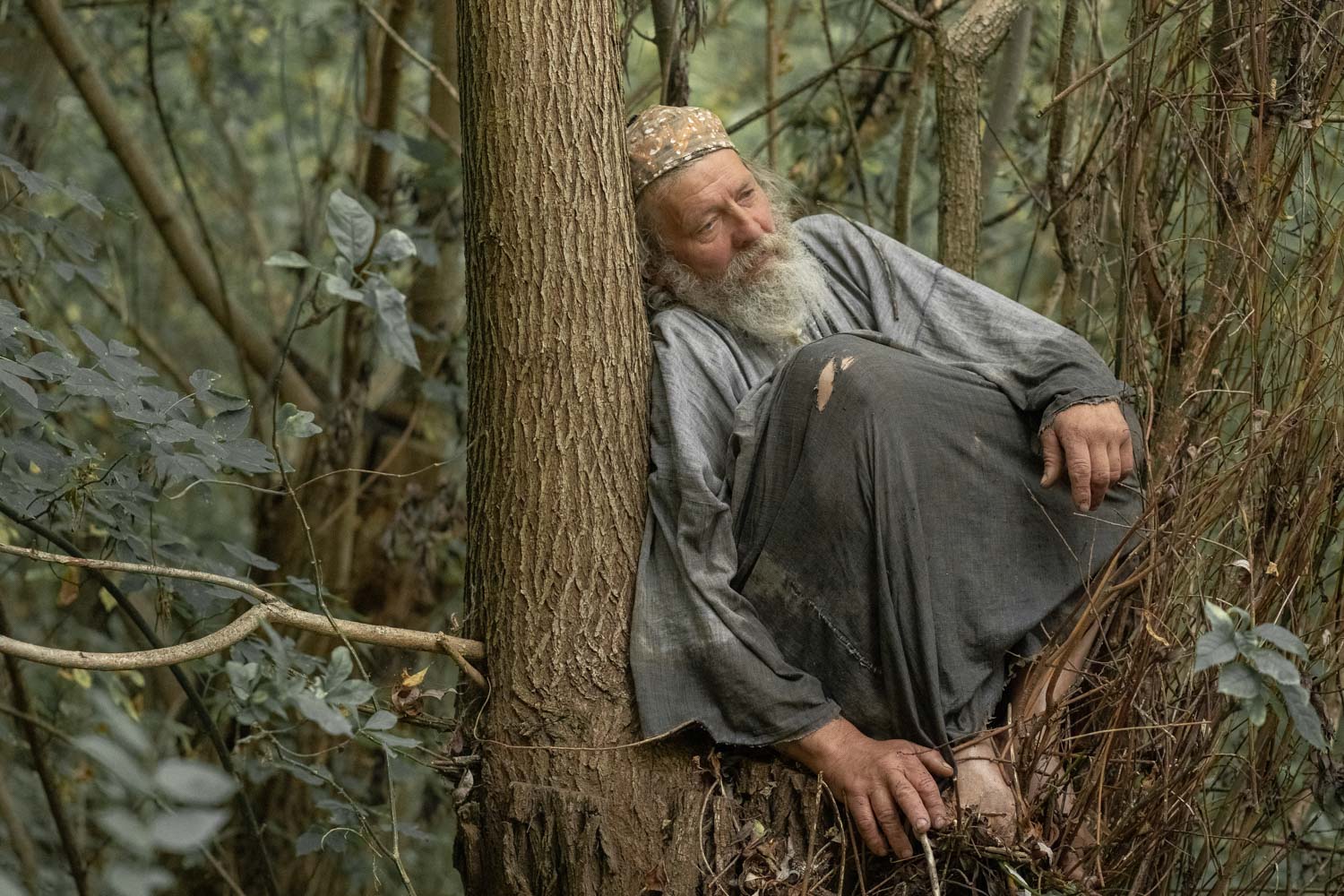
Olexii Aleshkin, a painter and sculptor, has a rest in the forest not far from the village of Bukatynka in Podillia, where he has lived for over 40 years already. 21 August 2019. Photo: Mykola Korol.
For many years, Olexii and his wife Liudmyla have been working to revive the village and turn it into an art centre and an attraction for the tourists.
Olexii Aleshkin became one of the heroes of the “Ukraïner. The Movie” documentary. Story of Bukatynka and the Aleshkin family.
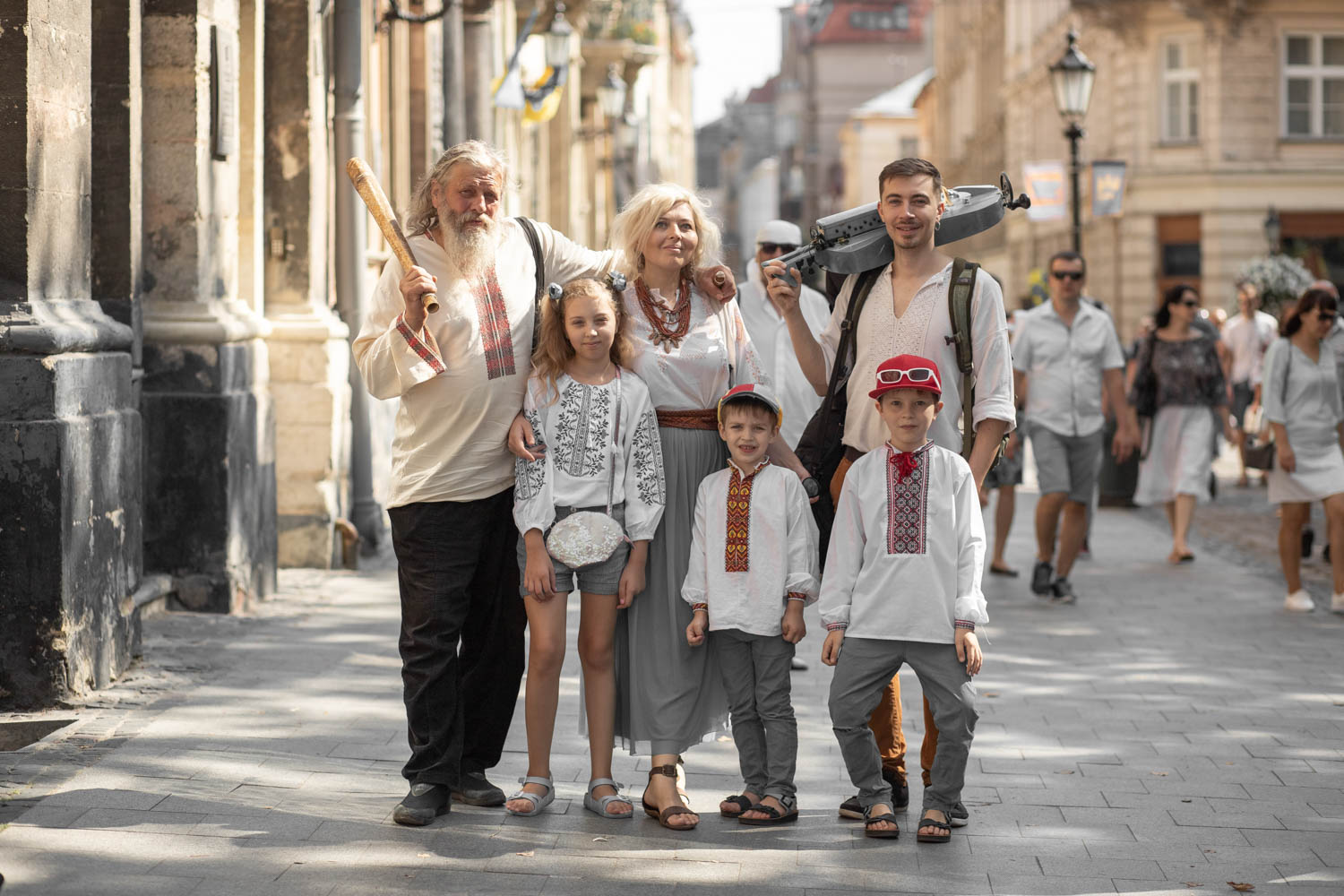
Olexii Aleshkin, a painter and sculptor, poses for pictures in Lviv together with his family: his daughter Dariya Alyoshkina, his son-in-law Hordii Starukh and his grandchildren. 24 August 2019. Photo: Mykola Korol.
Olexii’s daughter Dariya has found a new way to draw attention to Ukrainian craft, creating vytynanky for modern interiors, public institutions and book covers.
Story of vytynanky by Dariya Alyoshkina.
Dariya’s husband Hordii Starukh, a sculptor from Lviv, decided to revive and continue the tradition of making lyres and set himself a goal to learn how to make a lyre and manufacture three hundred of them.
Story of Hordii Starukh and lyre-making.
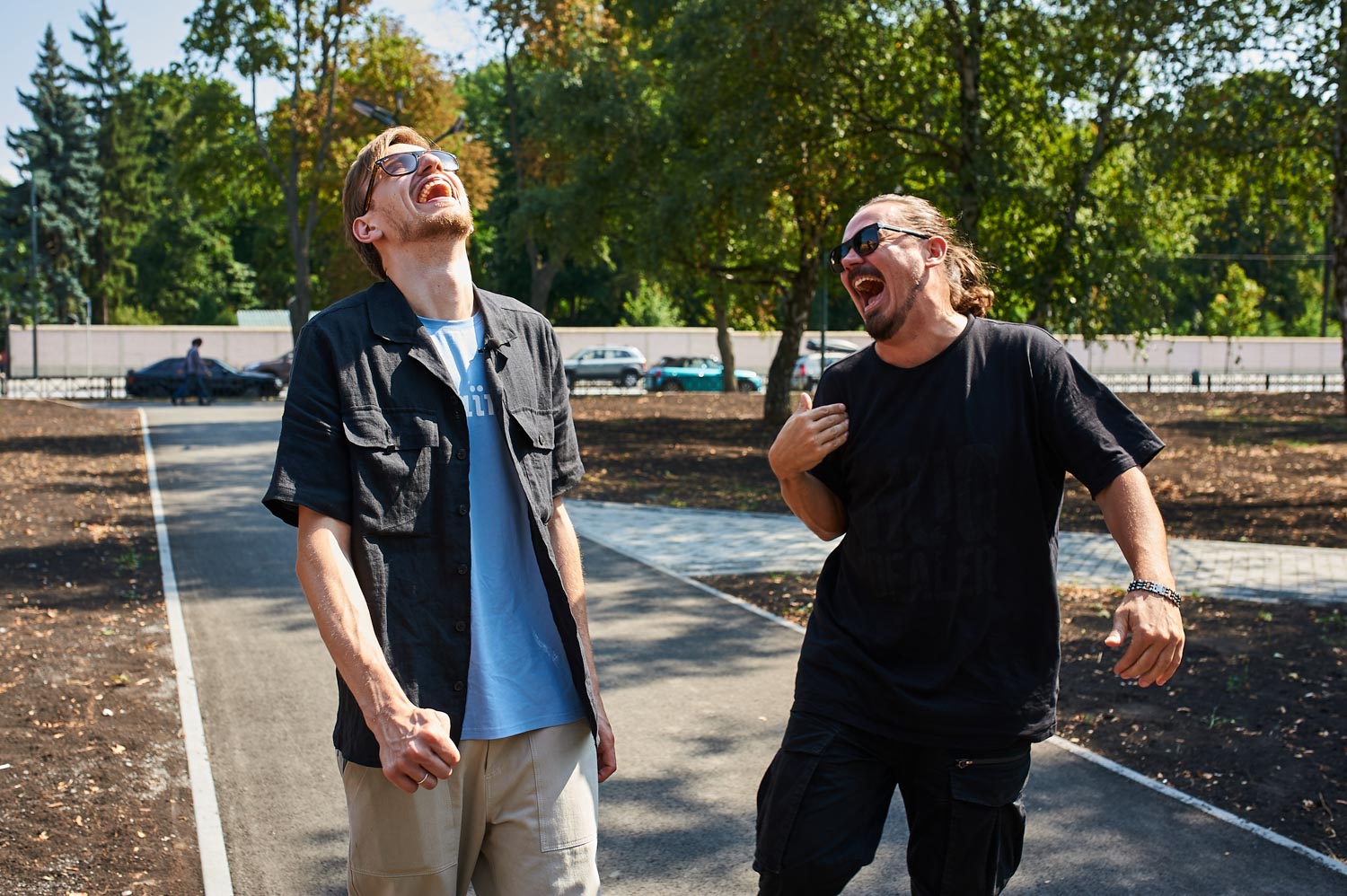
Oleh Mykhailiuta (a.k.a. Fahot), the frontman of the hip-hop band TNMK (Tanok na Maidani Kongo — ‘Dance on the Congo Square’) laughs with Bogdan Logvynenko, the founder of the Ukraïner project and the host of the Ambassadors show, as they are filming the show. 24 August 2019. Photo: Serhiy Sverdelov.
The Ambassadors show about Kharkiv.
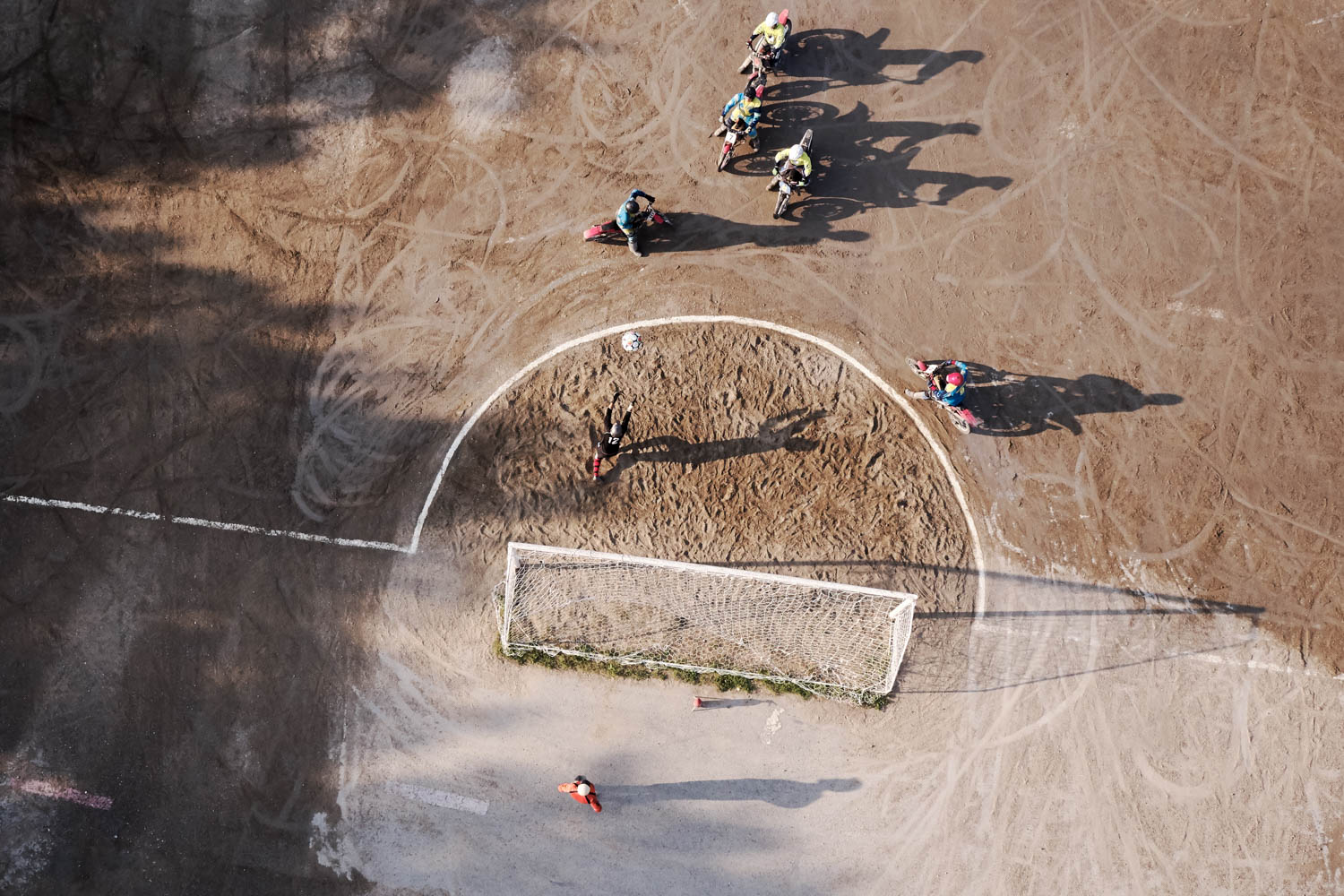
Bird’s-eye view of the game of the Kamianets-Podilskyi motoball team. 25 August 2019. Photo: Pavlo Pashko.
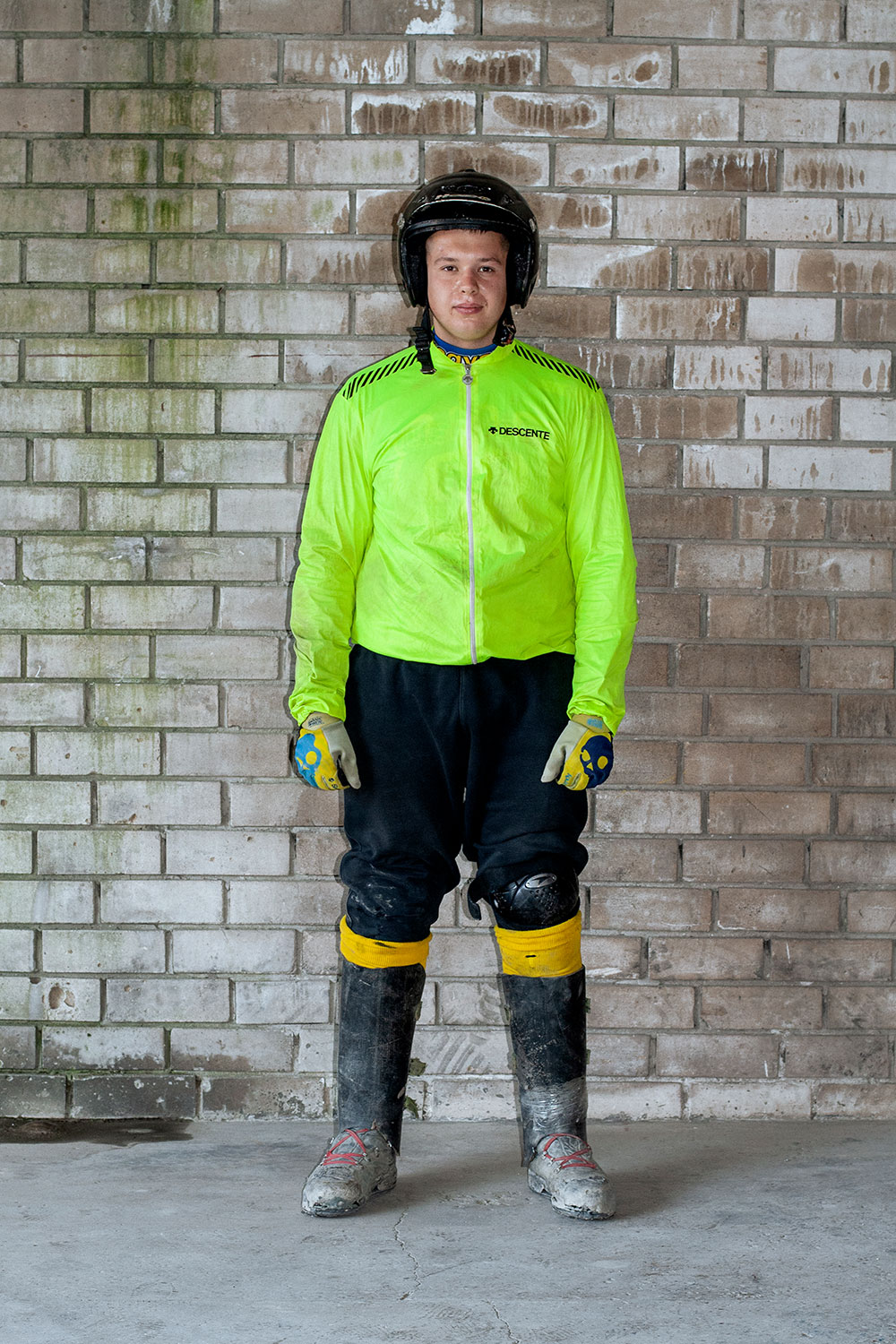
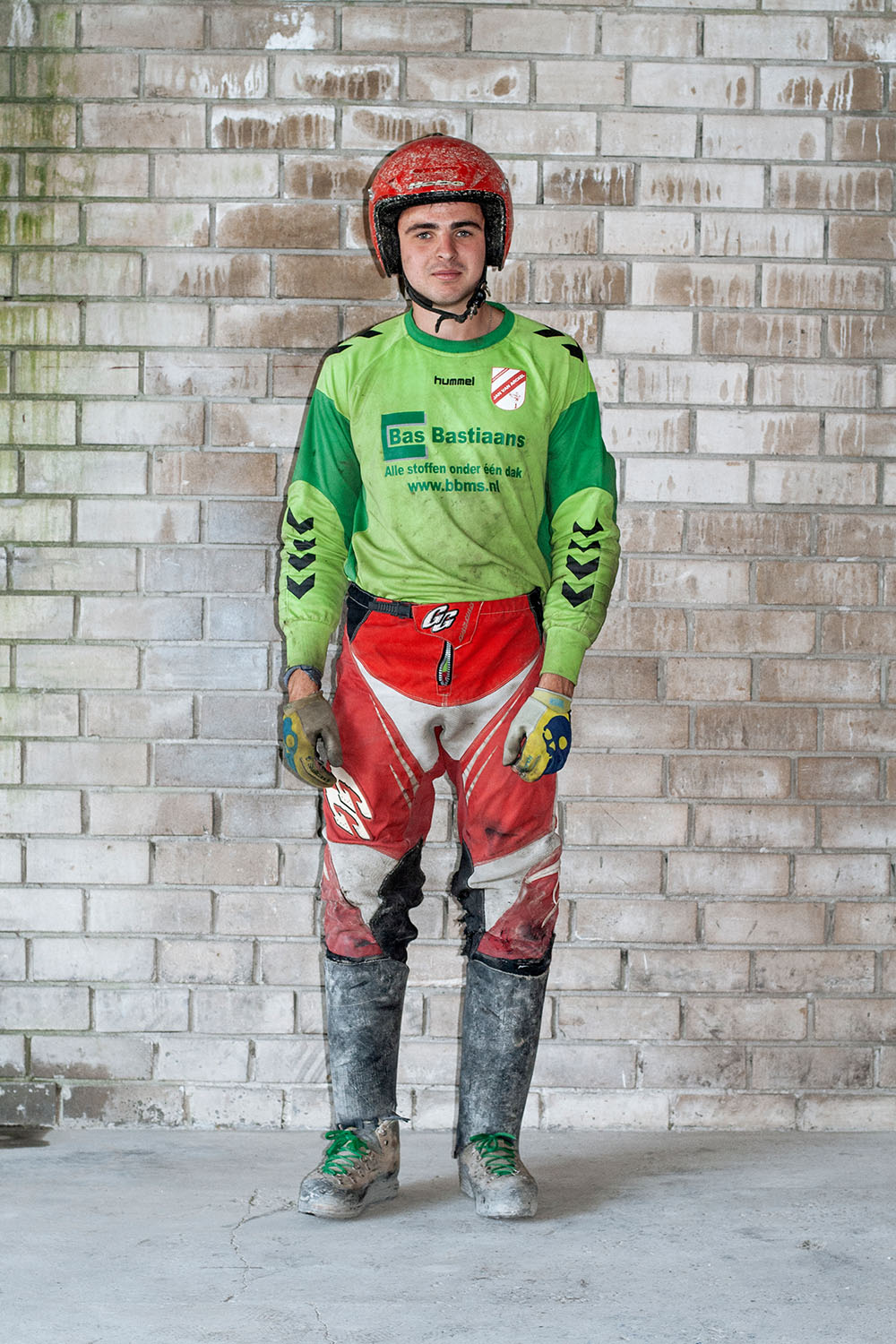
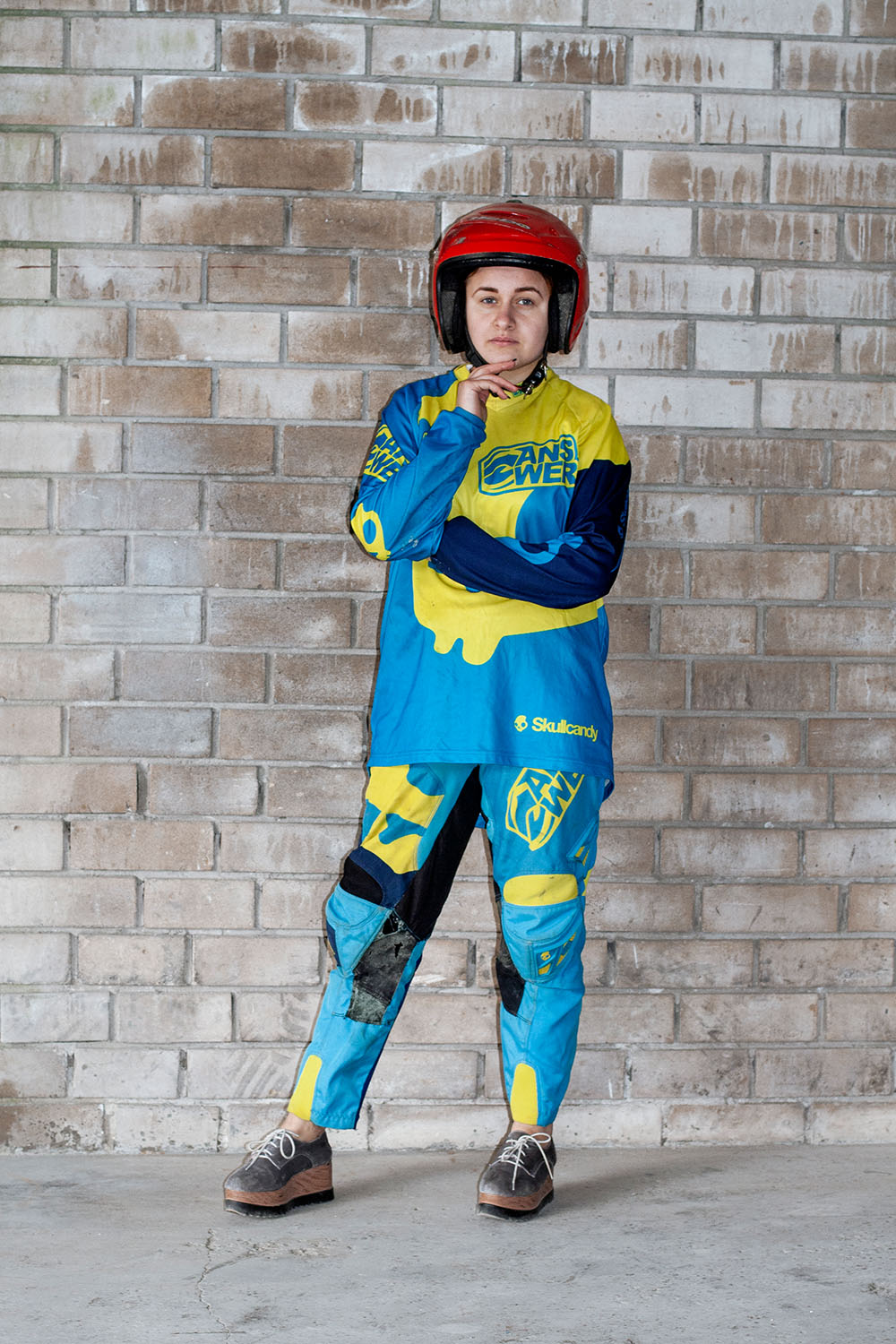
Motoball is an exclusively European sports game originating from France. It gained enormous popularity in Ukraine during Soviet times. Motoball tournaments and several motoball teams have survived until today only thanks to the enthusiasm of players, coaches, and the few spectators. In Kamianets-Podilskyi, motoball has already been played for 52 years. With a lack of local teams’ success in other sports, the “Podillia” motoball club has become famous in Ukraine over the time. It is in Kamianets-Podilskyi that they have a special motoball stadium. Here, motoball is a local highlight, still unknown to many visitors.
The oldest player of the Kamianets-Podilskyi motoball team Volodymyr Danyliak, who has been developing motoball in his native town for 50 years already, became one of the heroes of the film “Ukraïner. The Movie”. Story of motoball in Kamianets-Podilskyi.

Singer Jamala performs at the festival of Crimean Tatar culture. 25 August 2019. Photo: Oleksandr Khomenko.
Story of the life of Crimean Tatars in Ukraine.
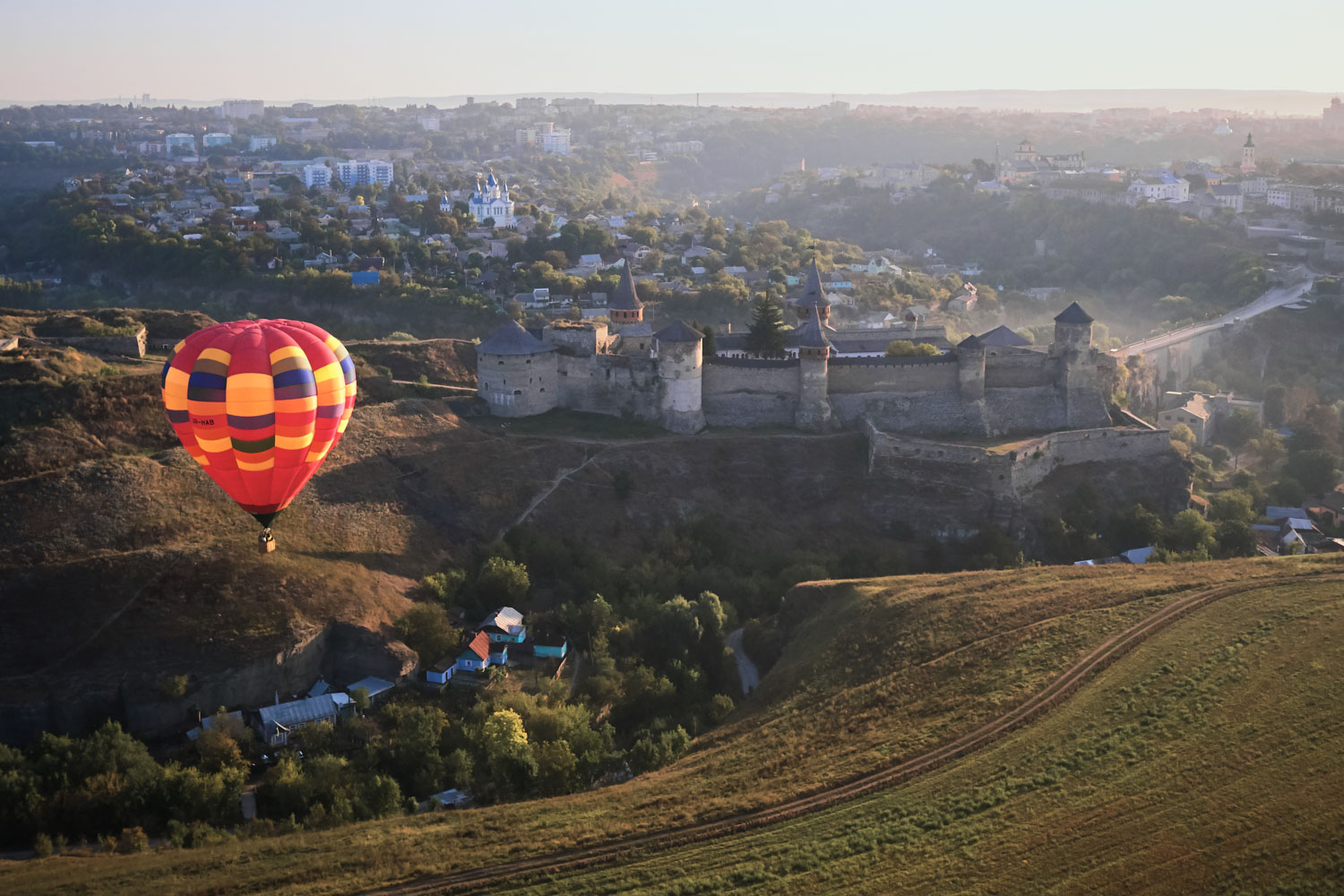
A hot-air balloon flies over the Kamianets-Podilskyi fortress. 27 August 2019. Photo: Pavlo Pashko.
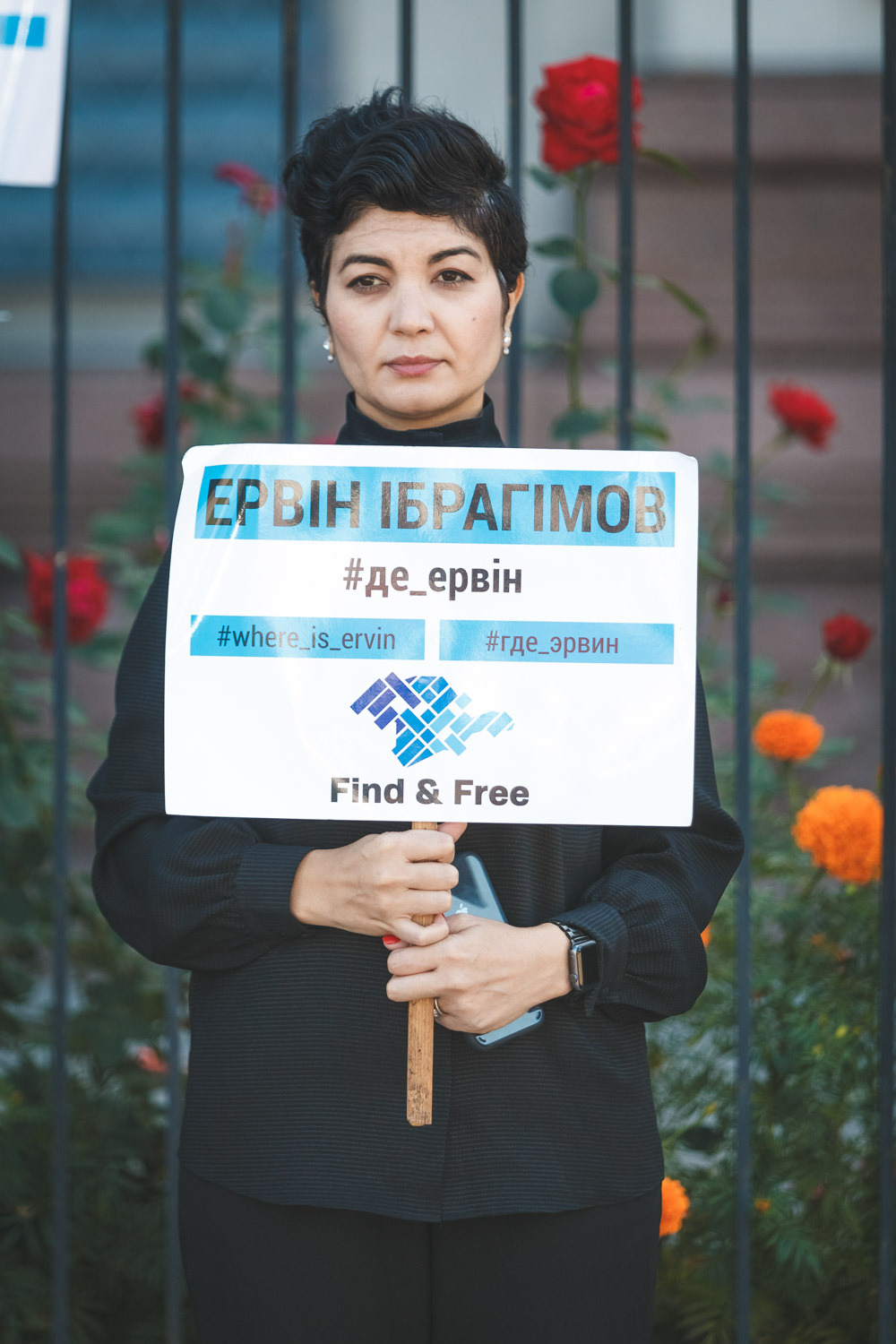
Tamila Tasheva, a public activist and founder of the CrimeaSOS organisation, takes part in a picket in front of the Embassy of the Russian Federation in Kyiv, holding a poster with the name of one of the Crimean Tatars who went missing in the Crimea occupied by Russia. 29 August 2019. Photo: Juriy Stefanyak.
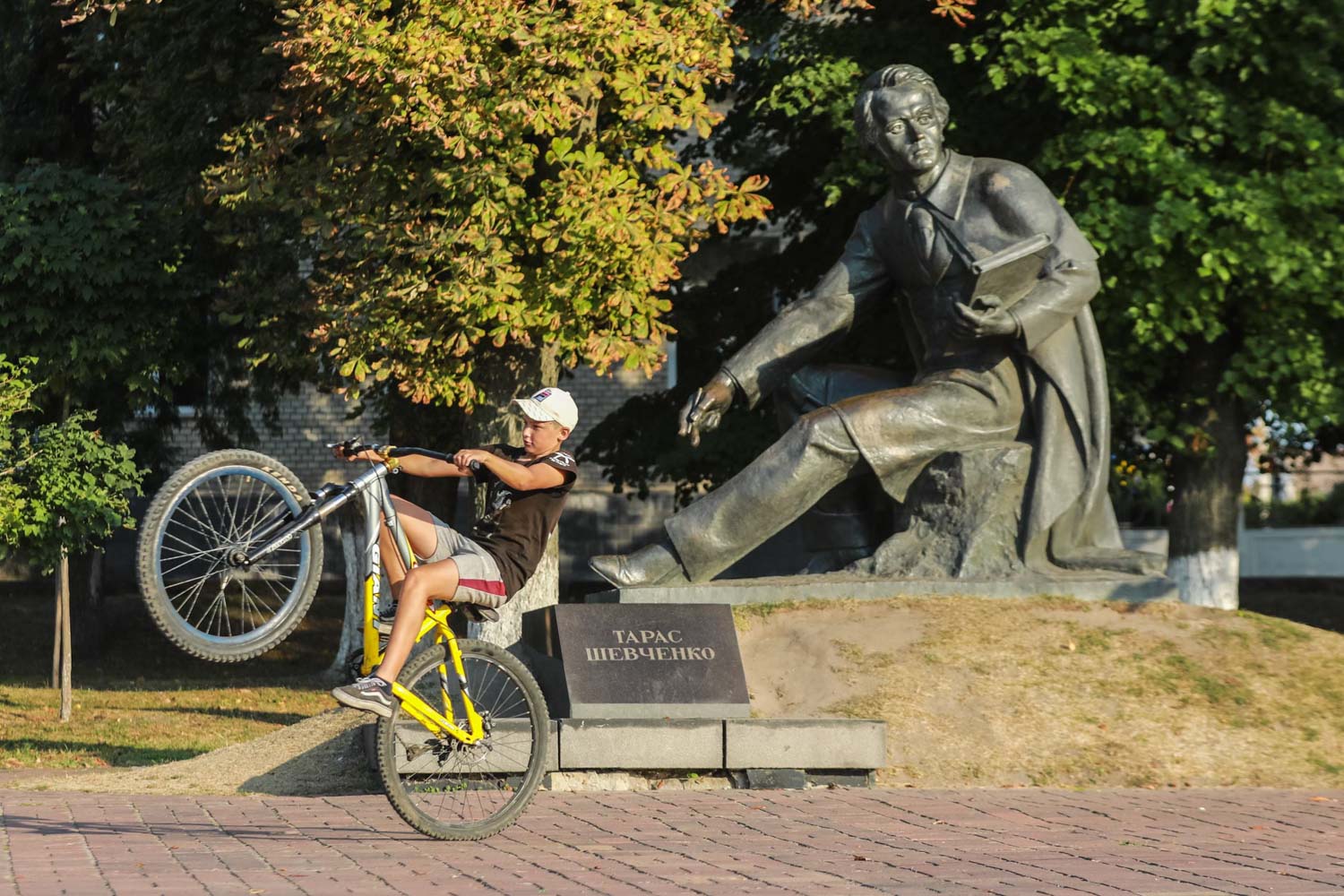
Boy does stunts on his bike in the central square of the town of Vasylkiv near the monument to Taras Shevchenko. 30 August 2019. Photo: Oleksandr Khomenko.
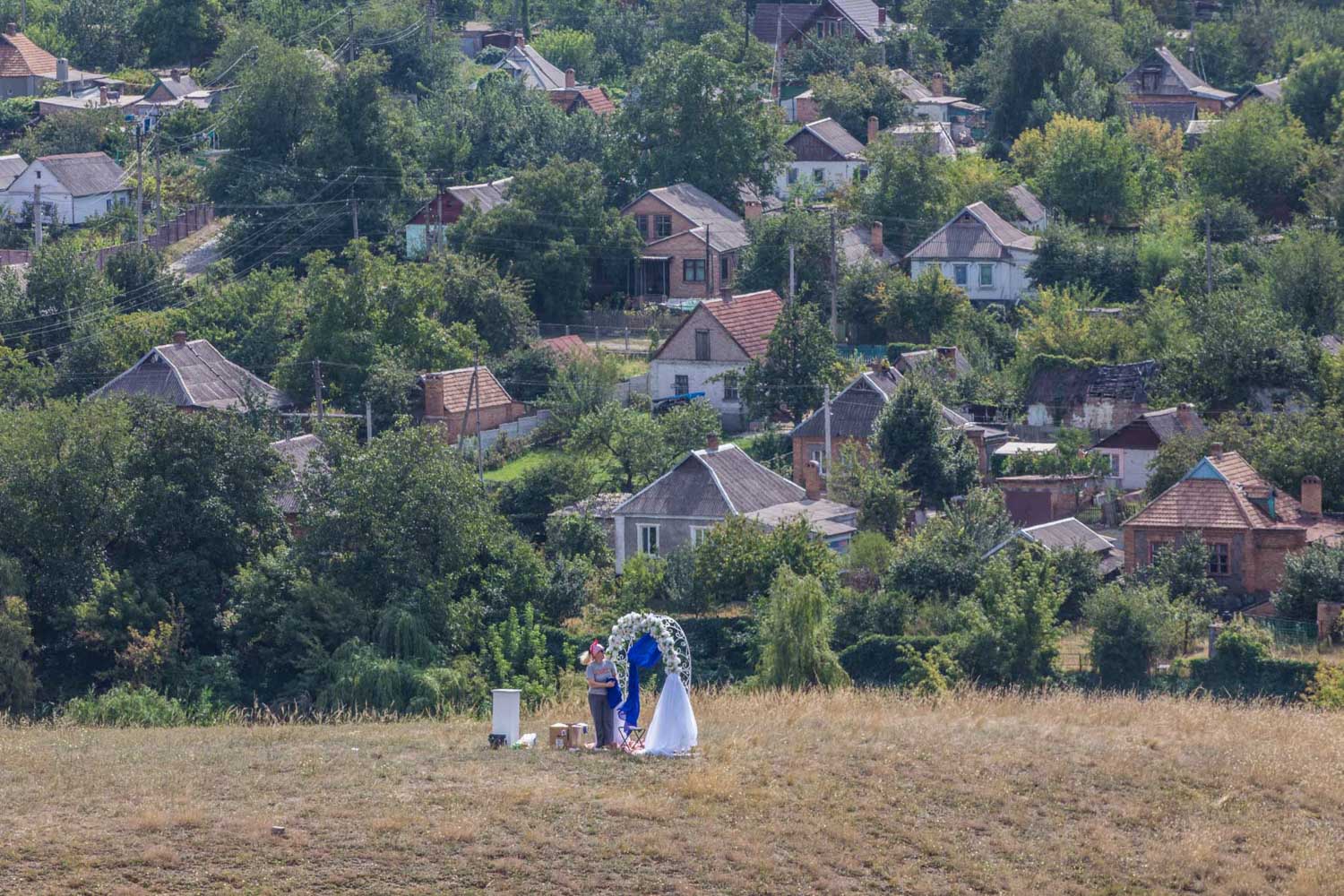
A woman decorates an arch for the wedding photo session on the MODR Rocks in Kryvyi Rih. 31 August 2019. Photo: Oleksandr Khomenko.
The MODR Rocks, which lie in the valley of the Inhulets river, belong to one of the region’s protected natural areas. They got their name from the nearby housing estate, MODR (a Ukrainian acronym for the communist organisation International Red Aid). The hills, also known as Lysi hory (‘the bald mountains’), attract rock climbers, who hold trainings and competitions here. And the Inhulets, which flows between the rocks, is a popular spot for kayaking.
In Kryvyi Rih, Ukraïner filmed the Ambassadors show with the members of the Brunettes Shoot Blondes band.
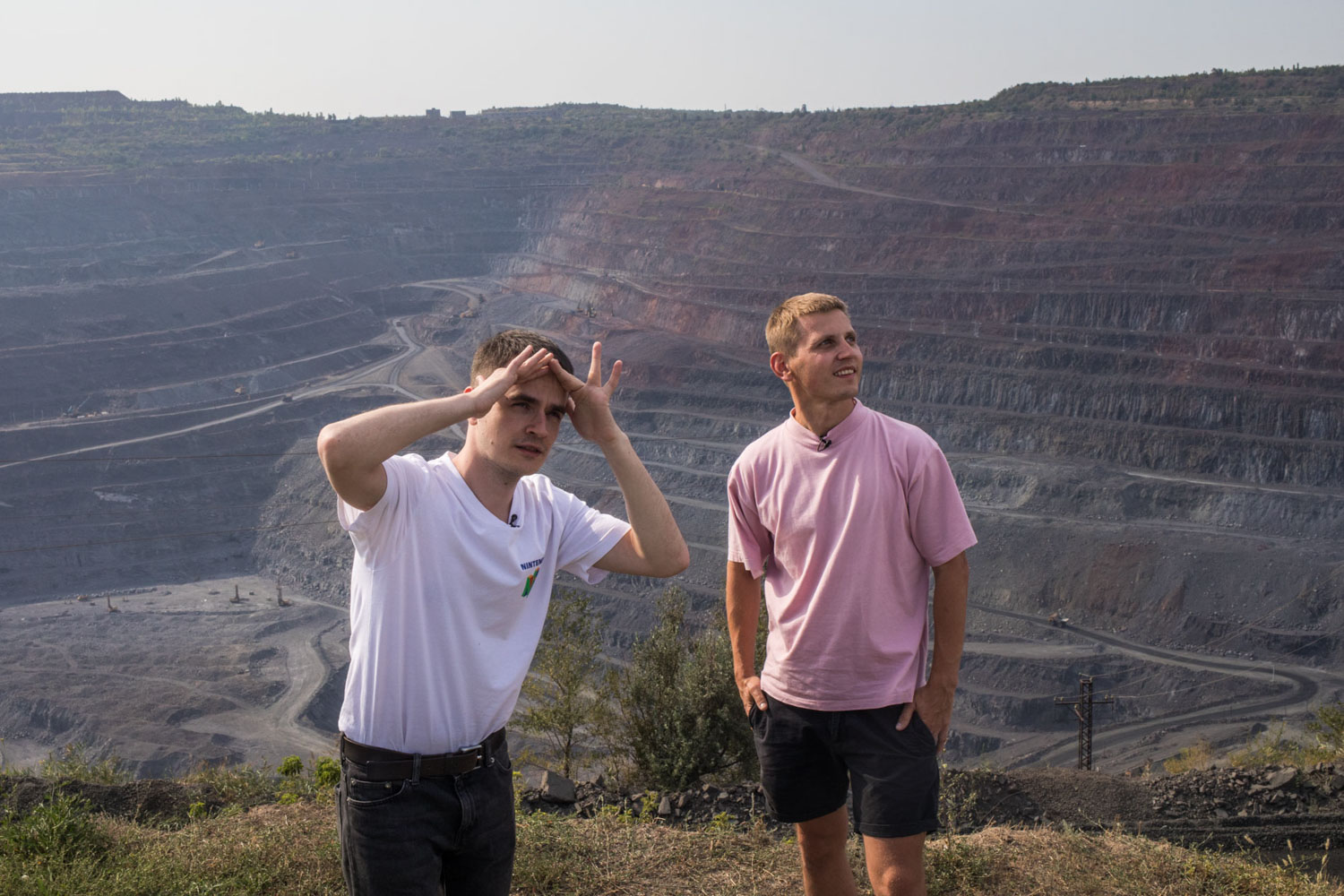
Andrii Kovaliov and Roman Sobol, members of the Brunettes Shoot Blondes band, pose for pictures with one of the largest iron ore quarries in Kryvyi Rih in the background. 31 August 2019. Photo: Oleksandr Khomenko.

Dmytro Shurov, a musician and the frontman of the band Pianoboy, records a funny video message to his subscribers during a gondola ride on the Pivdennyi Buh river. 13 September 2019. Photo: Oleksandr Khomenko.
Dmytro Shurov became the ambassador of Vinnytsia in the Ukraïner show.
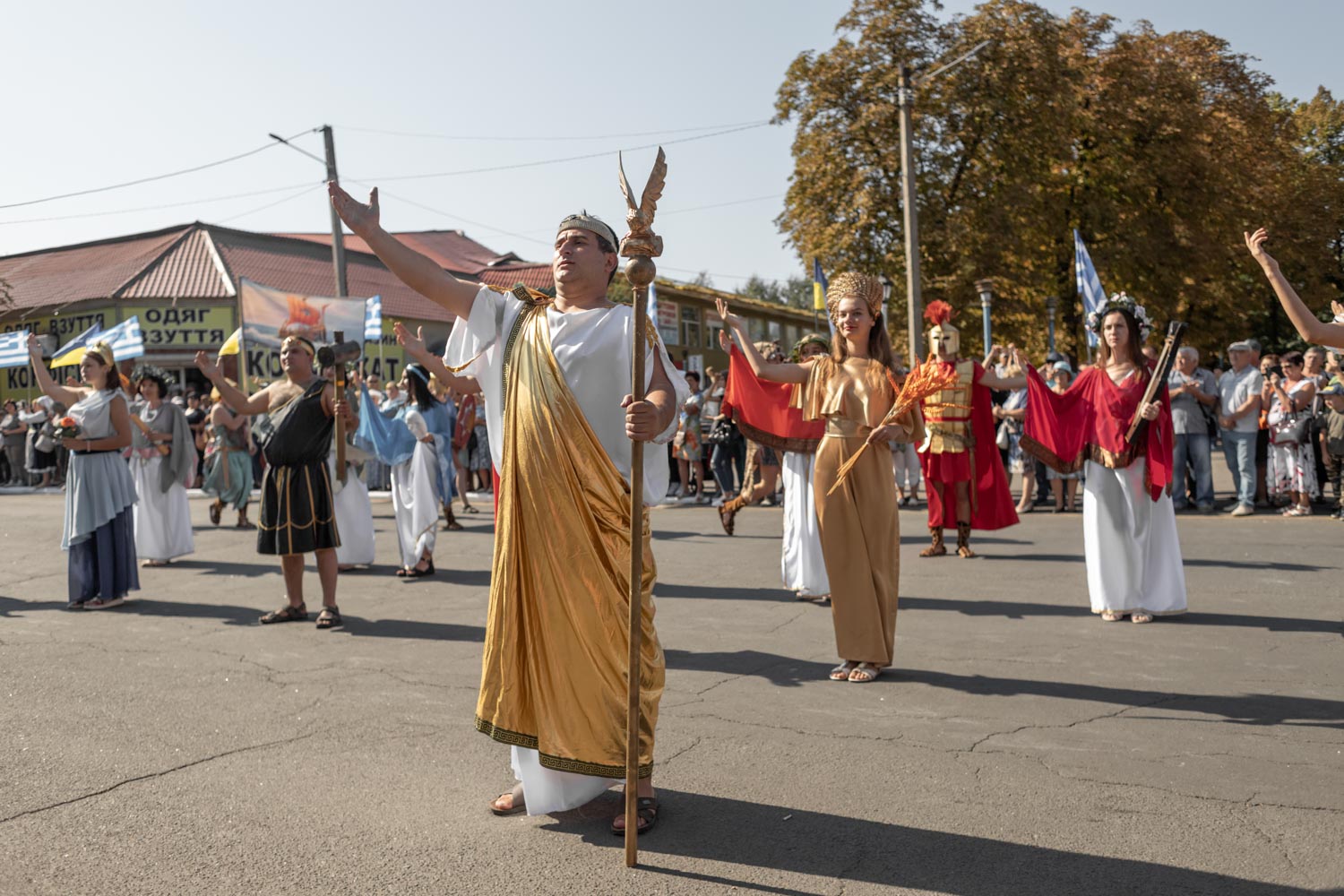
Carnival in the streets of the town of Volnovakha in Pryazovia during the festival of Greek culture “Méga Giortí” (“The Big Holiday”). 14 September 2019. Photo: Mykola Korol.
The festival Méga Giortí was first organized in 1988 by a Greek poet and composer Donat Patrycha from the Pryazovia village of Maloianysol, which was founded by Greek immigrants. The festival was supposed to unite not only the Greek community but also all other national minorities living in Pryazovia. The festival is held biannually (it used to be annual) every time in a different location in order to include all towns and villages in Ukraine which were founded or are currently populated by Greeks. Last year, Méga Giortí was held in Maloianysol, and this year it was in Volnovakha.
Story of the national minority of Greeks living in Ukraine.
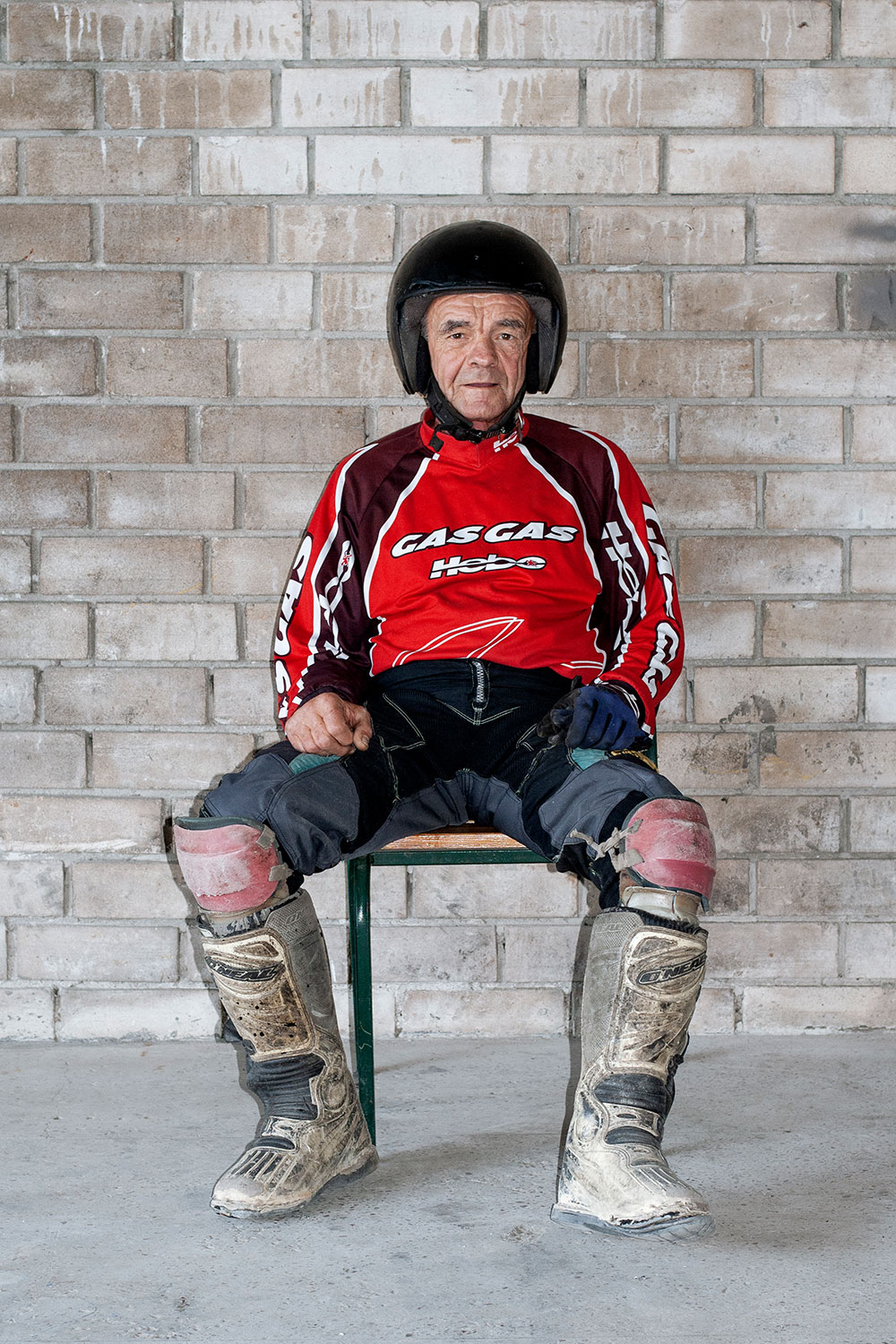
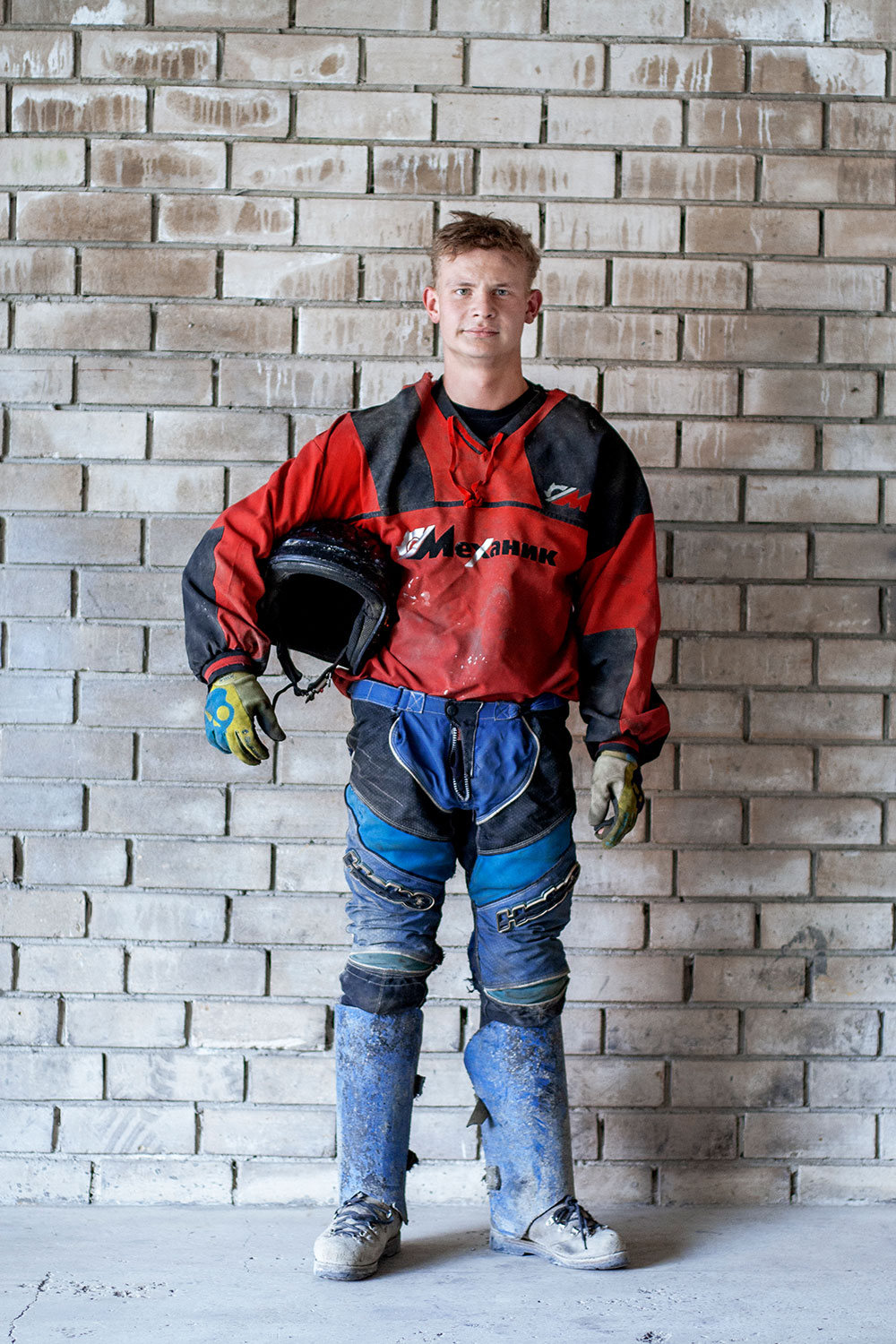
Portraits of motoballers of the “Podillia-Motor” team from Kamianets-Podilskyi. 20 September 2019. Photo: Anastasia Nekipelaya.
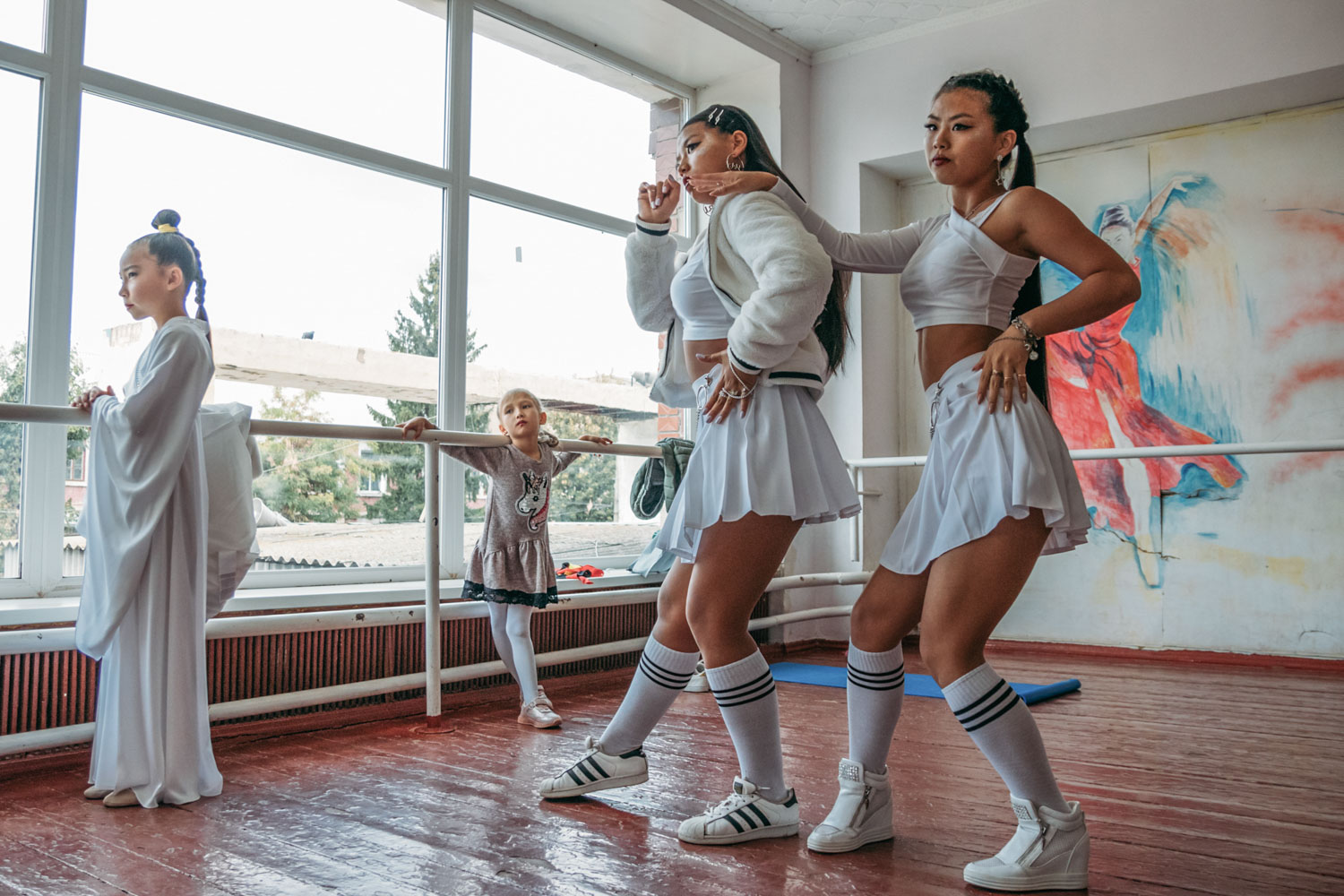
Rehearsal of a Korean traditional dance ensemble “Toradi”. 21 September 2019. Photo: Iryna Hromotska.
“Toradi” is considered the only ensemble in Ukraine to perform such a vast variety of traditional Korean dances. Amongst others in their repertoire, the ensemble has a range of dances performed to the beats of the traditional Korean drums. These dances date back to ancient shaman rituals, where every movement, along with the sound of the drums were full of meaning.
Story of the national minority of Koreans living in Ukraine.
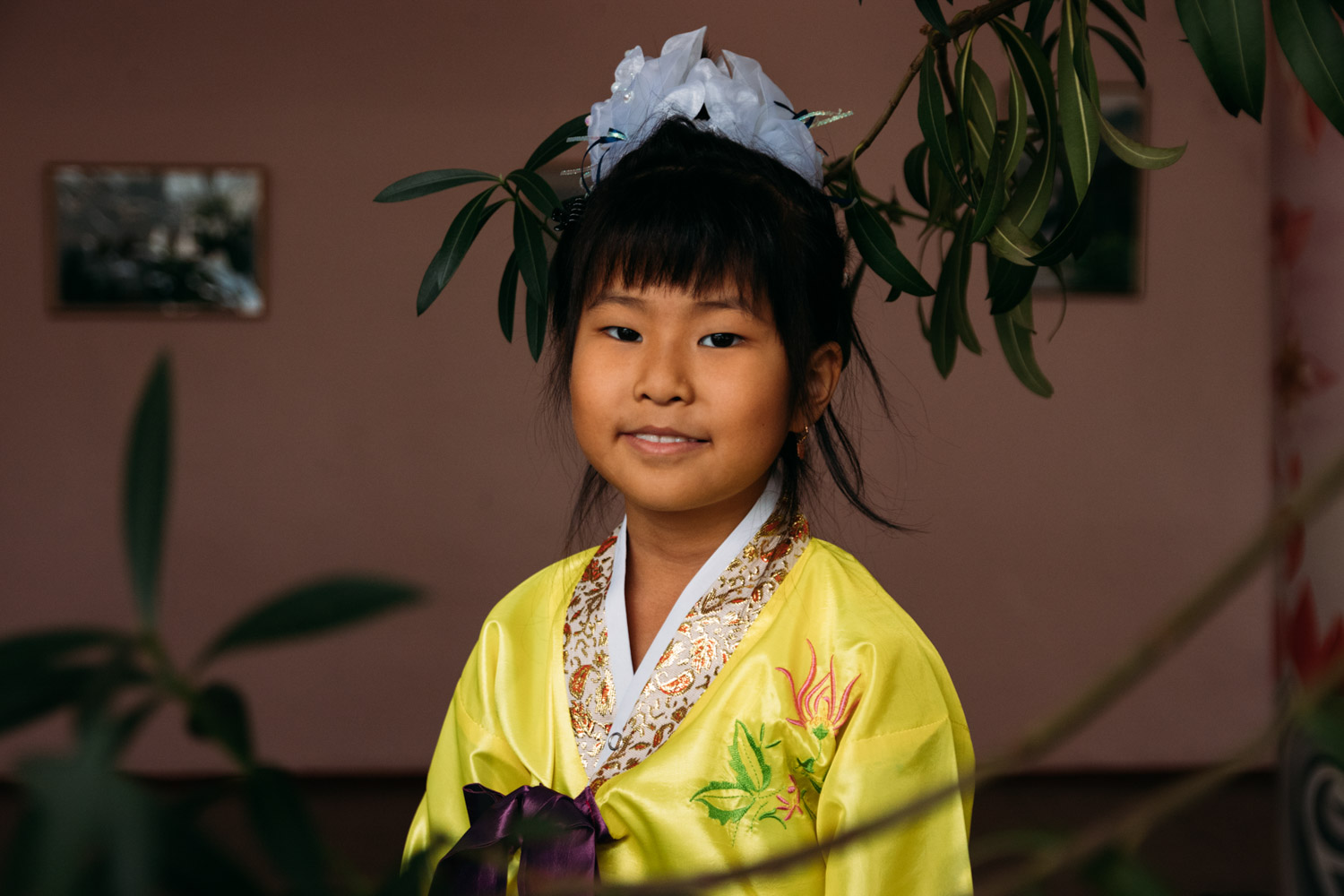
Portrait of a Korean girl dressed up in Korean national clothes for her performance at the “Koreada” festival, the only Korean culture festival in Ukraine moving around the country. 21 September 2019. Photo: Iryna Hromotska.
Koreans have lived in Ukraine since the beginning of the 20th century. Before they came here, they had to go through the exile by the Japanese authorities to Sakhalin, and later in 1937, they were deported by the Soviet authorities to Central Asia. In the 1960s, Koreans started coming to southern Ukraine to settle down and work on the land. Also, many Koreans came to big cities of Ukraine for higher education. At the moment, “Koreada” is the only Korean culture festival in contemporary Ukraine.
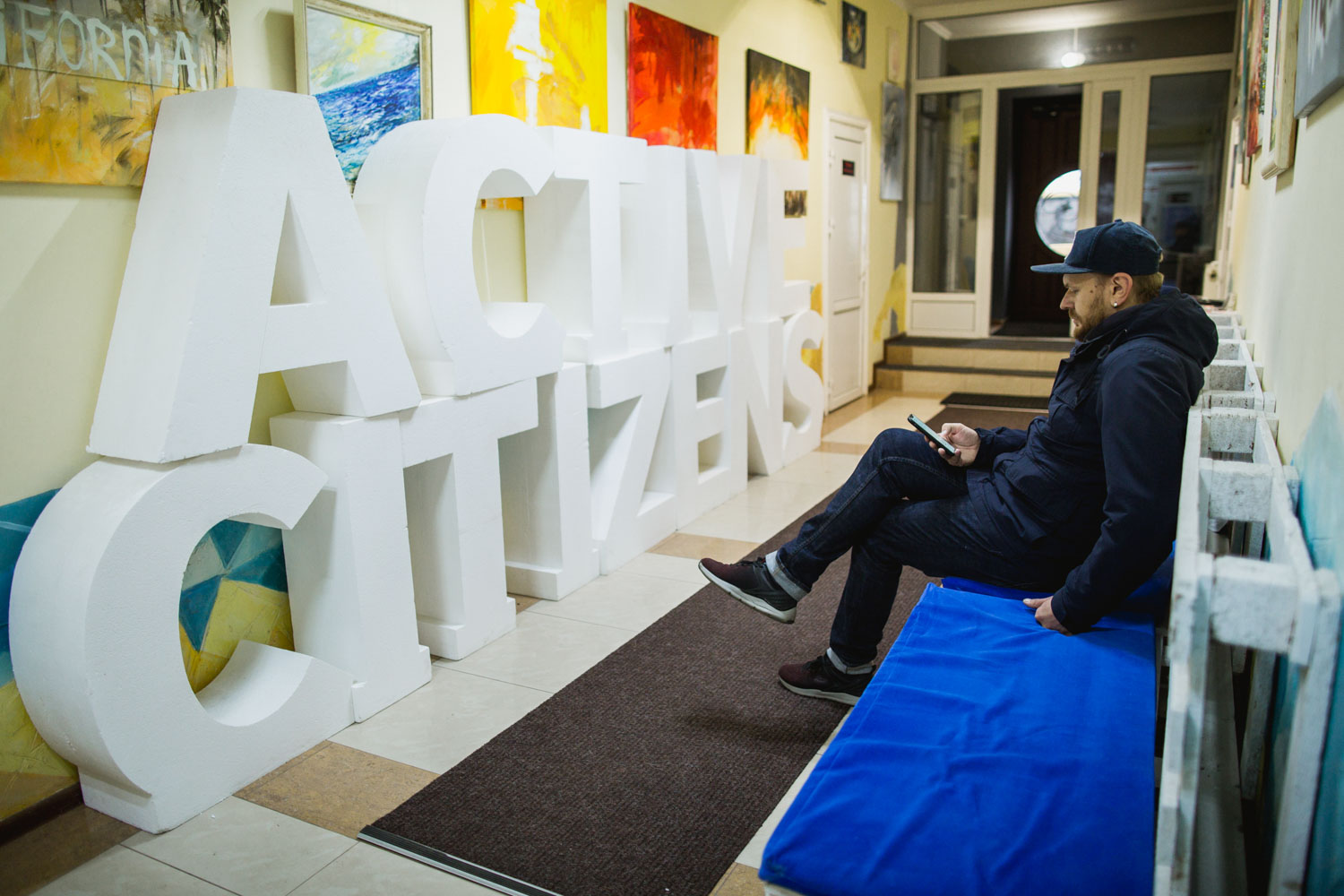
Sashko Polozhynskyi, the frontman of the bands Tartak and Buv’ye, takes a rest in the education and event hub “Volyn Youth Centre” in Lutsk. 26 September 2019. Photo: Oles Moskalchuk.
Sashko Polozhynskyi became the ambassador of Lutsk in the Ukraïner show.
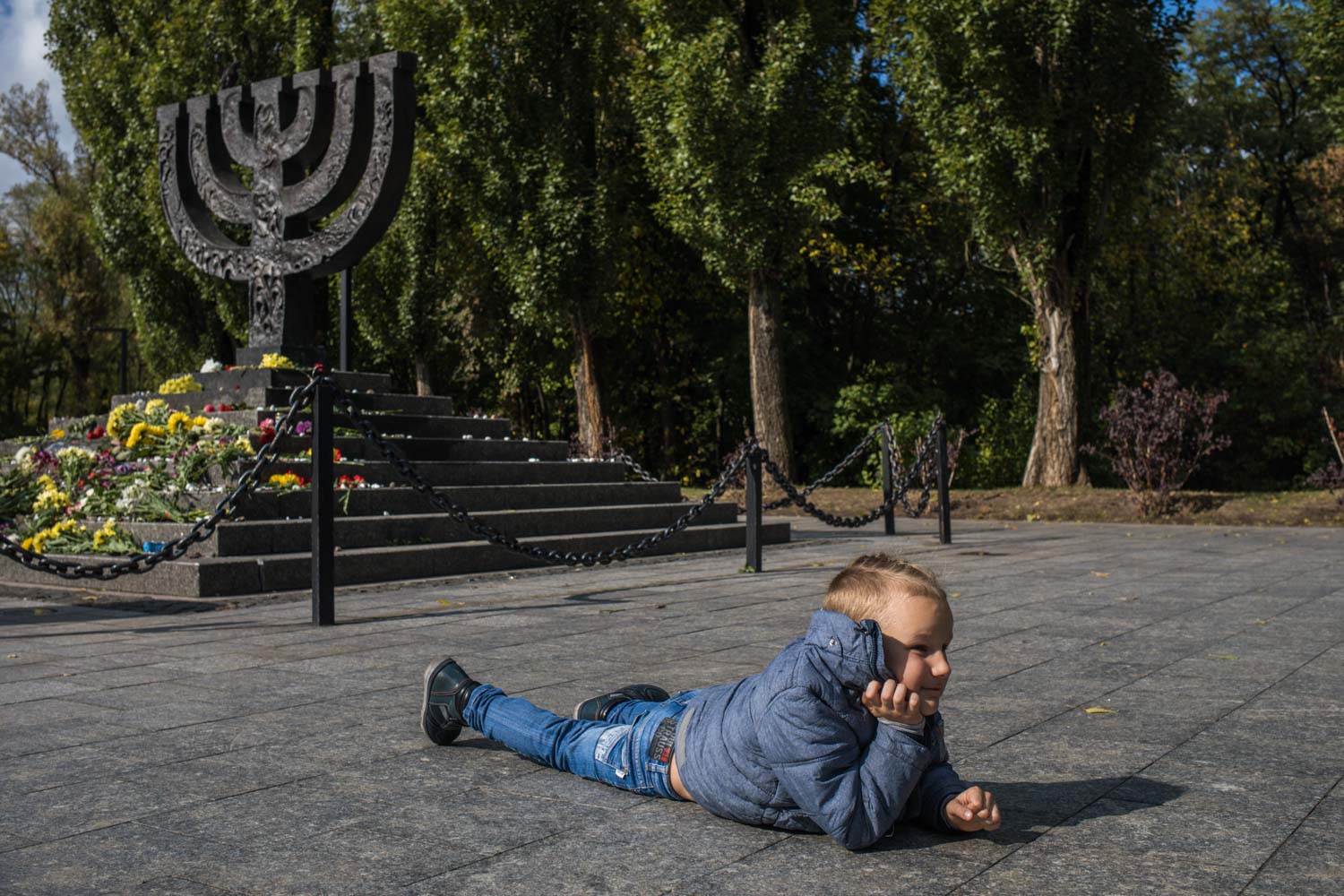
A boy lies near the “Menorah” monument in Babyn Yar after the ceremony of remembering the victims of the Holocaust killed here. 29 September 2019. Photo: Oleksandr Khomenko.
Story of the national minority of Jews living in Ukraine.
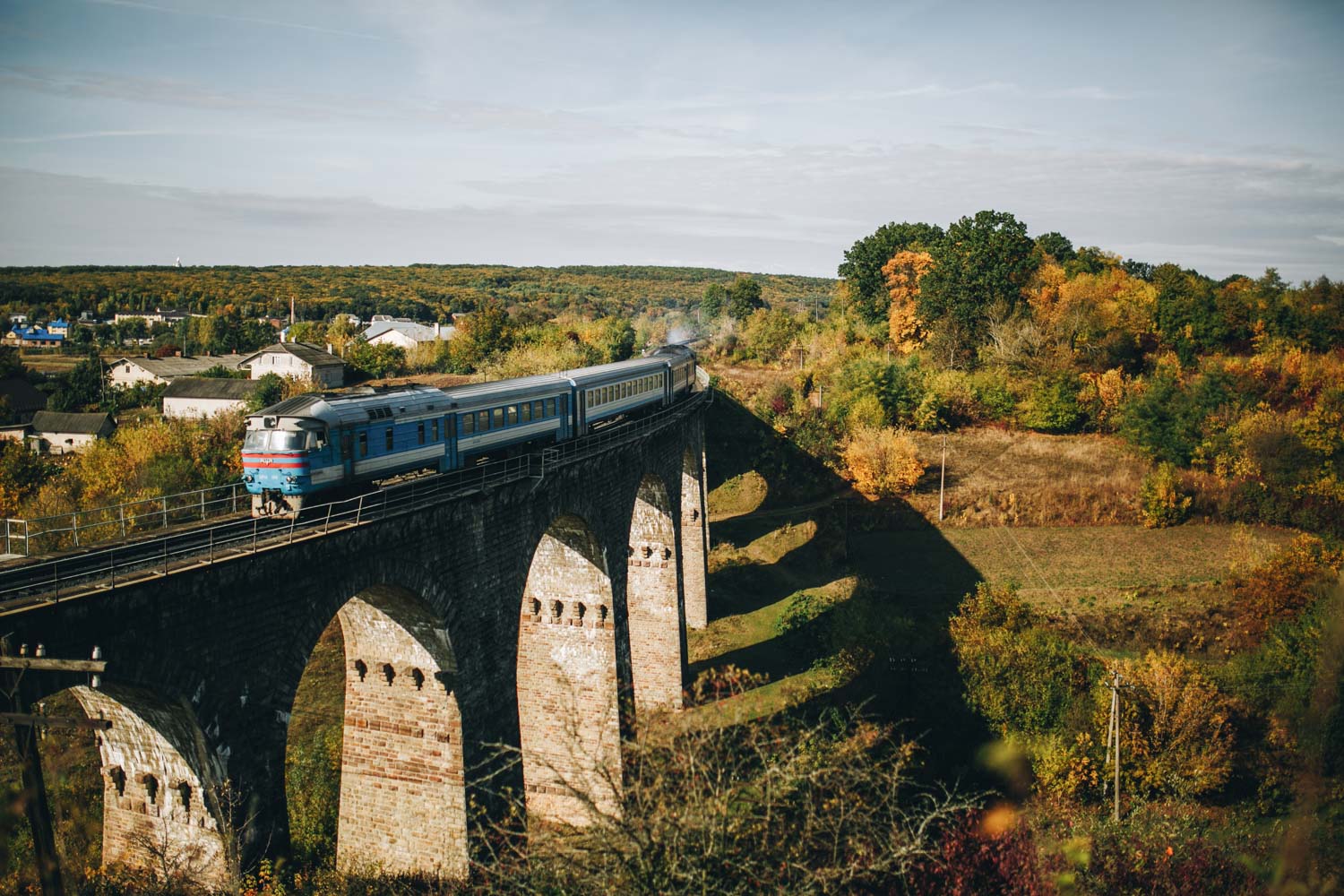
Train goes along the viaduct in the village of Plebanivka. 29 September 2019. Photo: Katya Akvarelna.
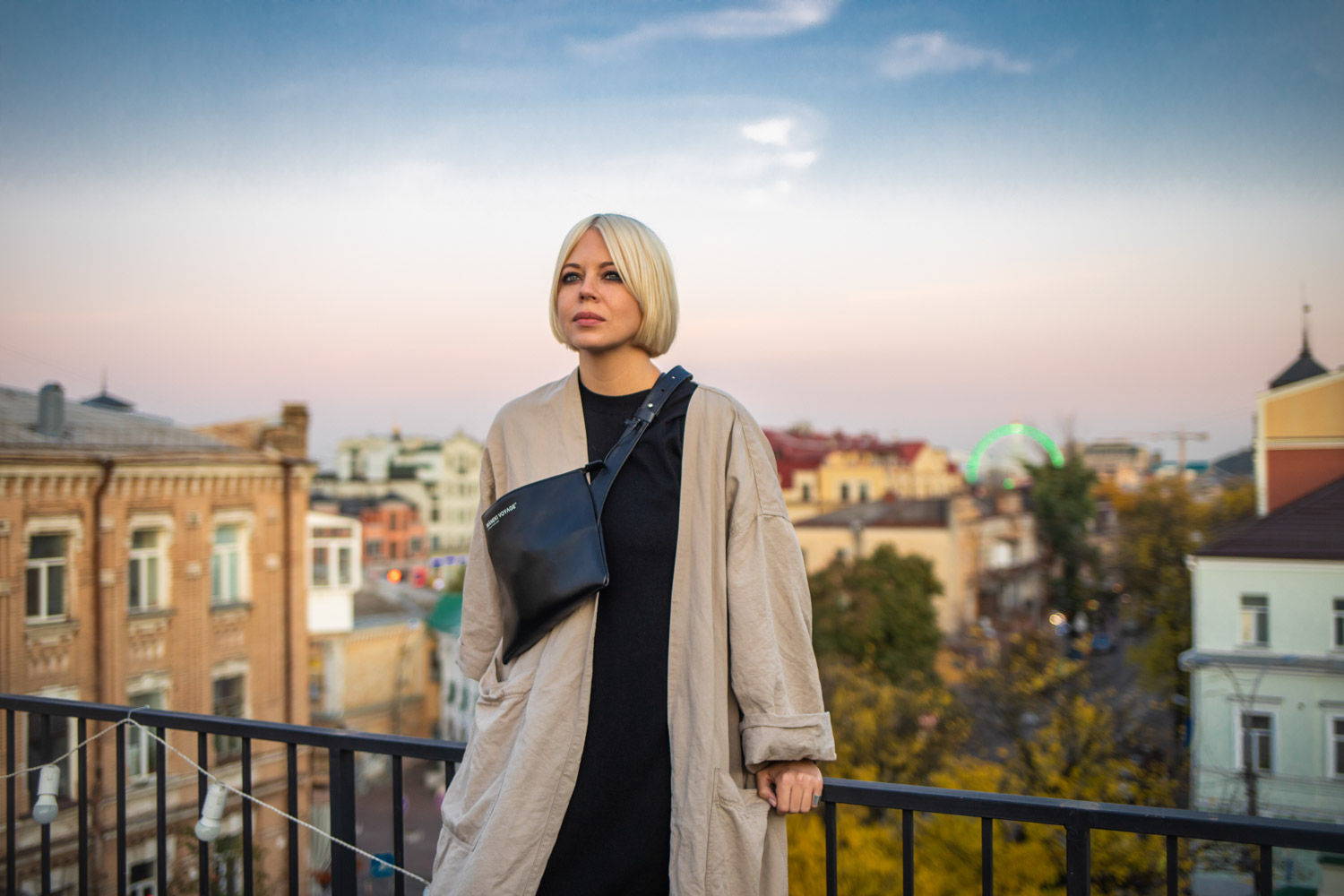
Nata Zhyzhchenko, frontwoman of the ONUKA band, poses for pictures at the observation deck on the roof of the Bursa hotel in Kyiv. In the background are Podil and Kontraktova Ploshcha. 2 October 2019. Photo: Oleksandr Khomenko.
Nata spoke about her Kyiv for the Ambassadors project.
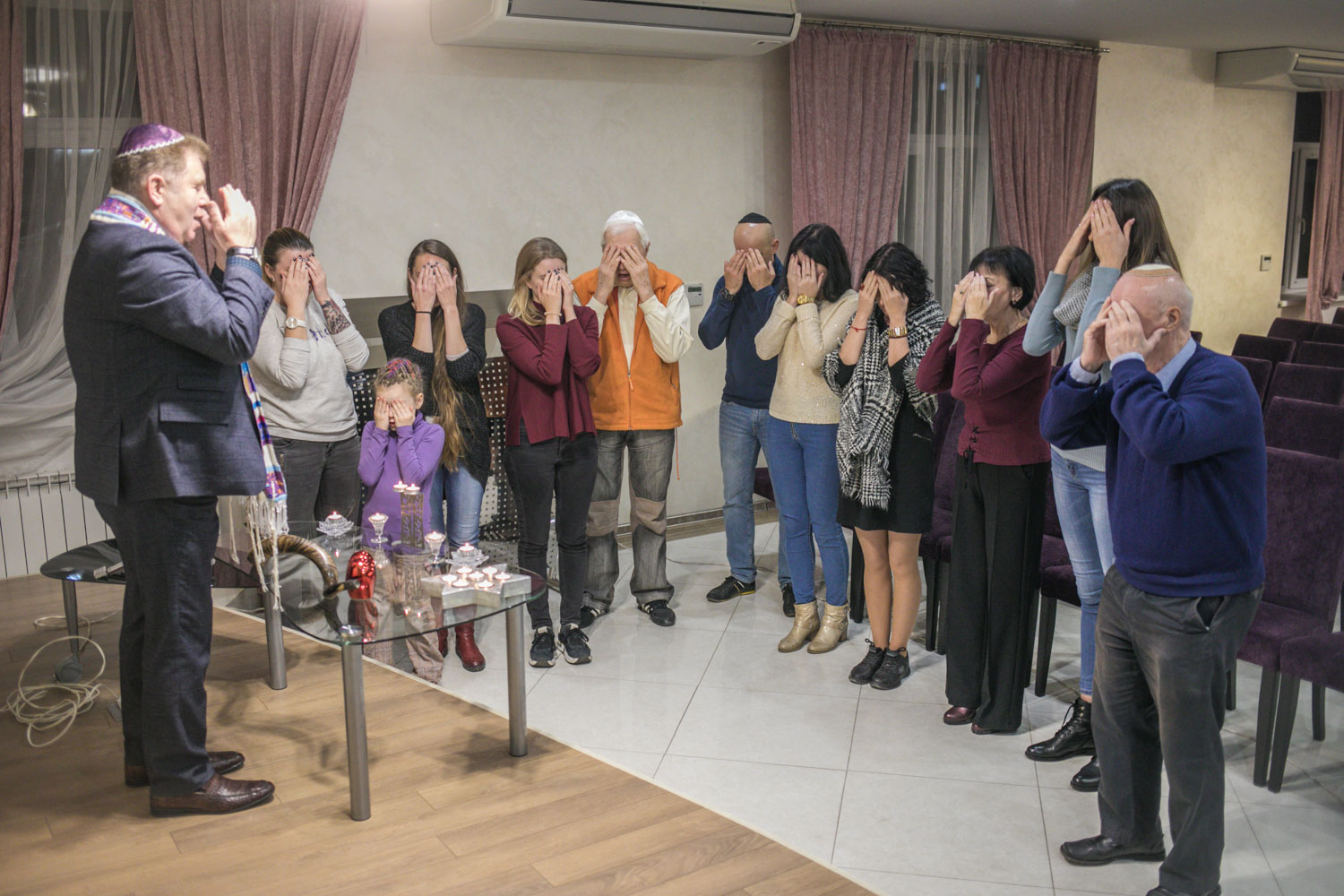
The community of progressive Judaism in Kyiv prays on the Shabbat holiday in their synagogue. The service is offered by Oleksandr Duhovnii, the chief rabbi of the communities of progressive Judaism in Kyiv and Ukraine. 4 October 2019. Photo: Oleksandr Khomenko.
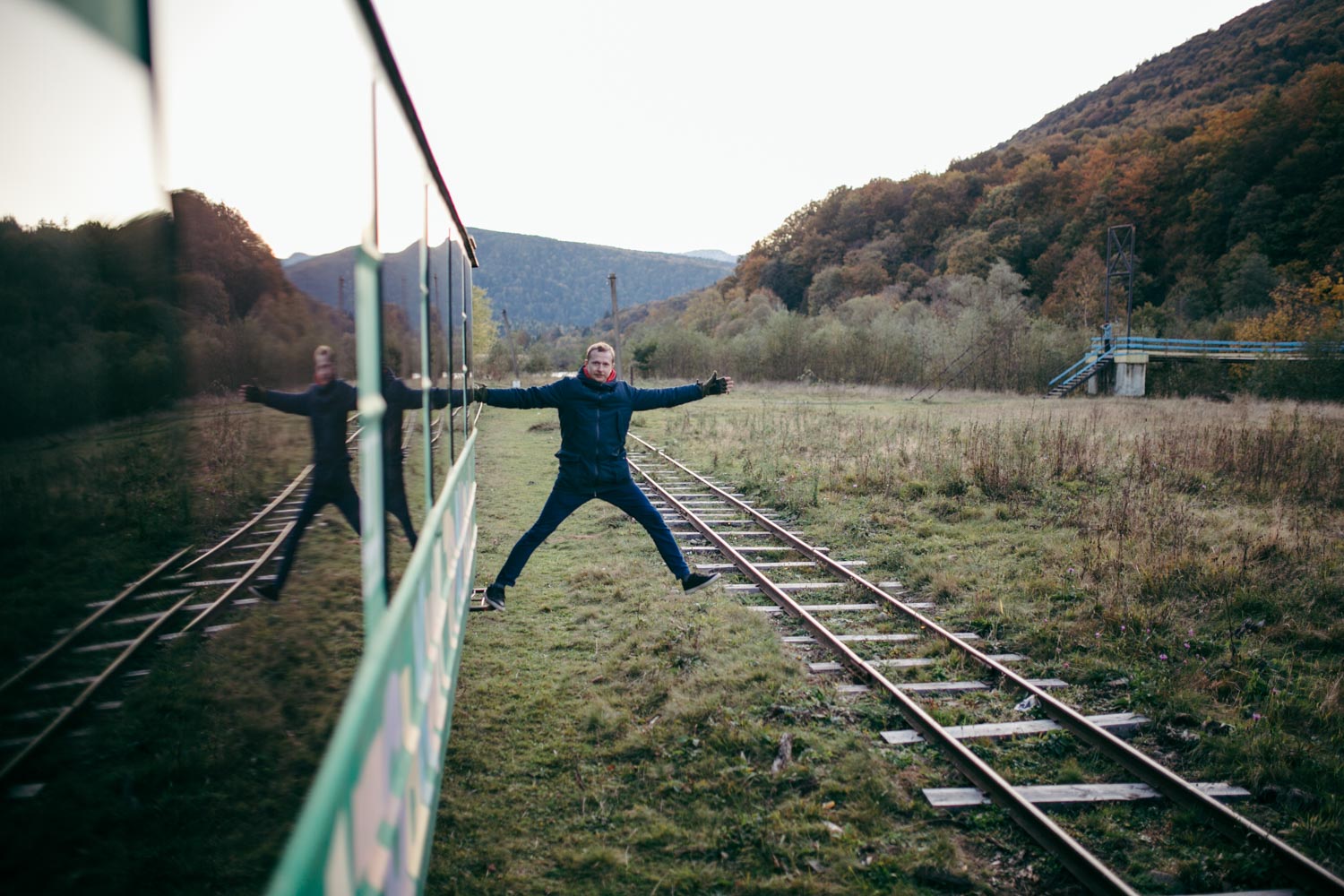
TV presenter Roman Vintoniv (a.k.a. Michael Shchur) poses for pictures holding the handrail of a train car at the Vyhoda narrow-gauge railway, which is also called the Carpathian Tram. 7 October 2019. Photo: Katya Akvarelna.
Vyhoda narrow-gauge railway is one of the four narrow-gauge railways preserved in Ukraine. Story of the Carpathian Tram.
Michael Shchur spoke about Ivano-Frankivsk, Dolyna, and the Carpathian region for the Ambassadors project.
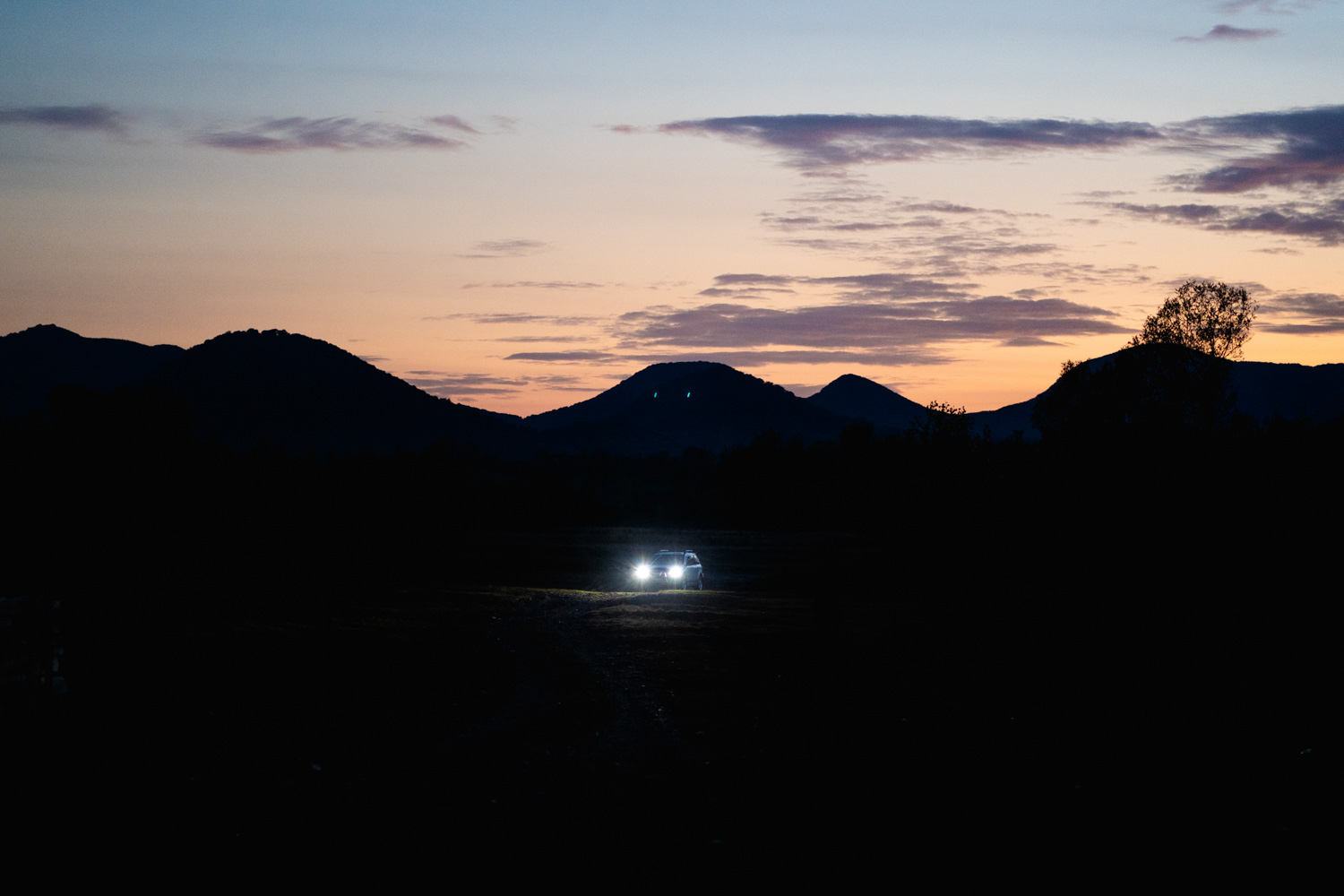
Car drives along the village road in the dusk near the village of Sokyrnytsia in Zakarpattia. 29 September 2019. Photo: Serhij Korovajnyj.
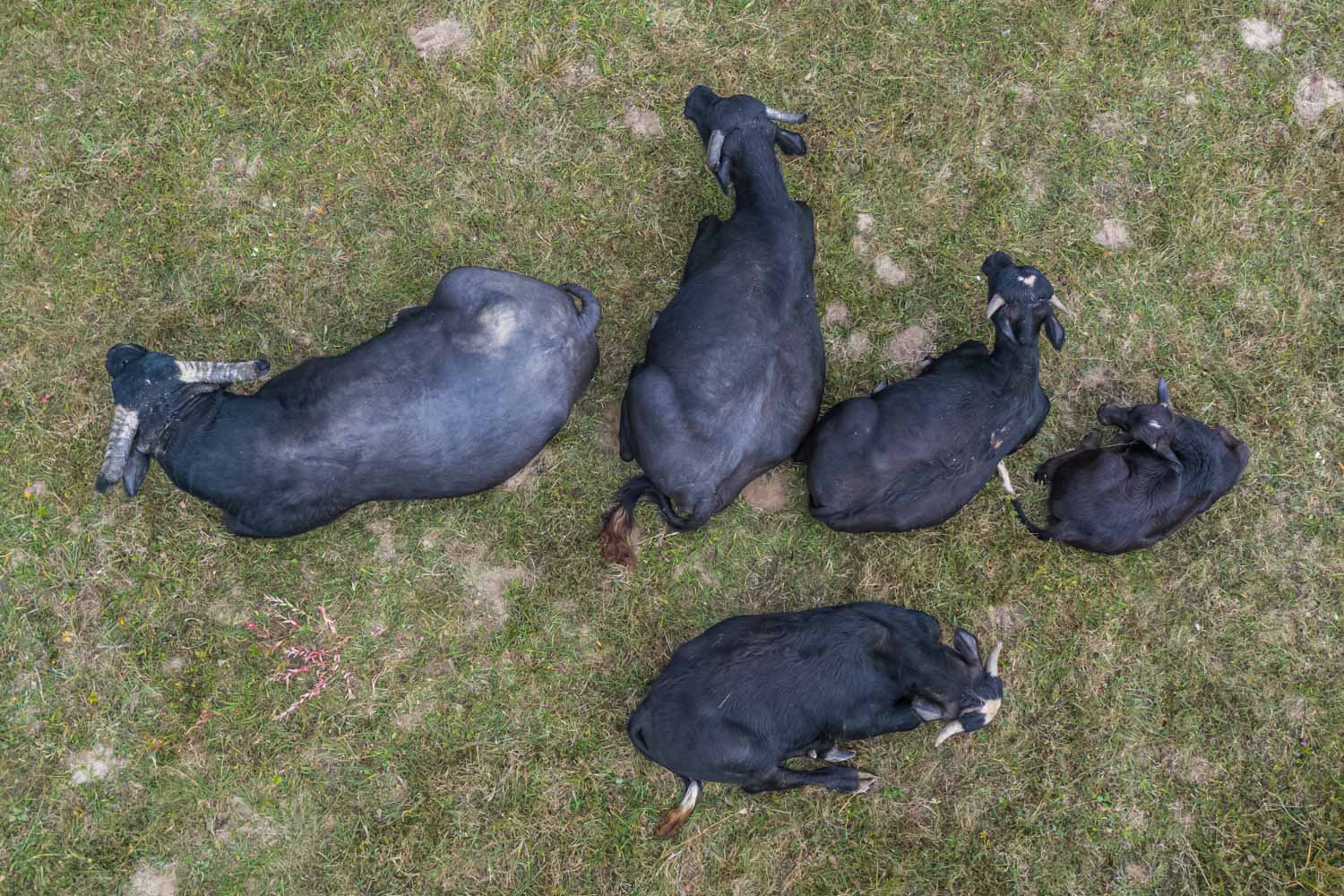
Buffaloes have a rest at a polonyna (‘montane meadow’ — tr.) near the village of Sokyrnytsia in Zakarpattia. 30 September 2019. Photo: Pavlo Pashko.
German ecologist Michel Jacobi breeds buffaloes in this region. Ukraïner published his story before.
Going on our new expedition in Zakarpattia this year, we decided to stay for a few days at Michel’s and film a story about how his farm developed over the recent time.
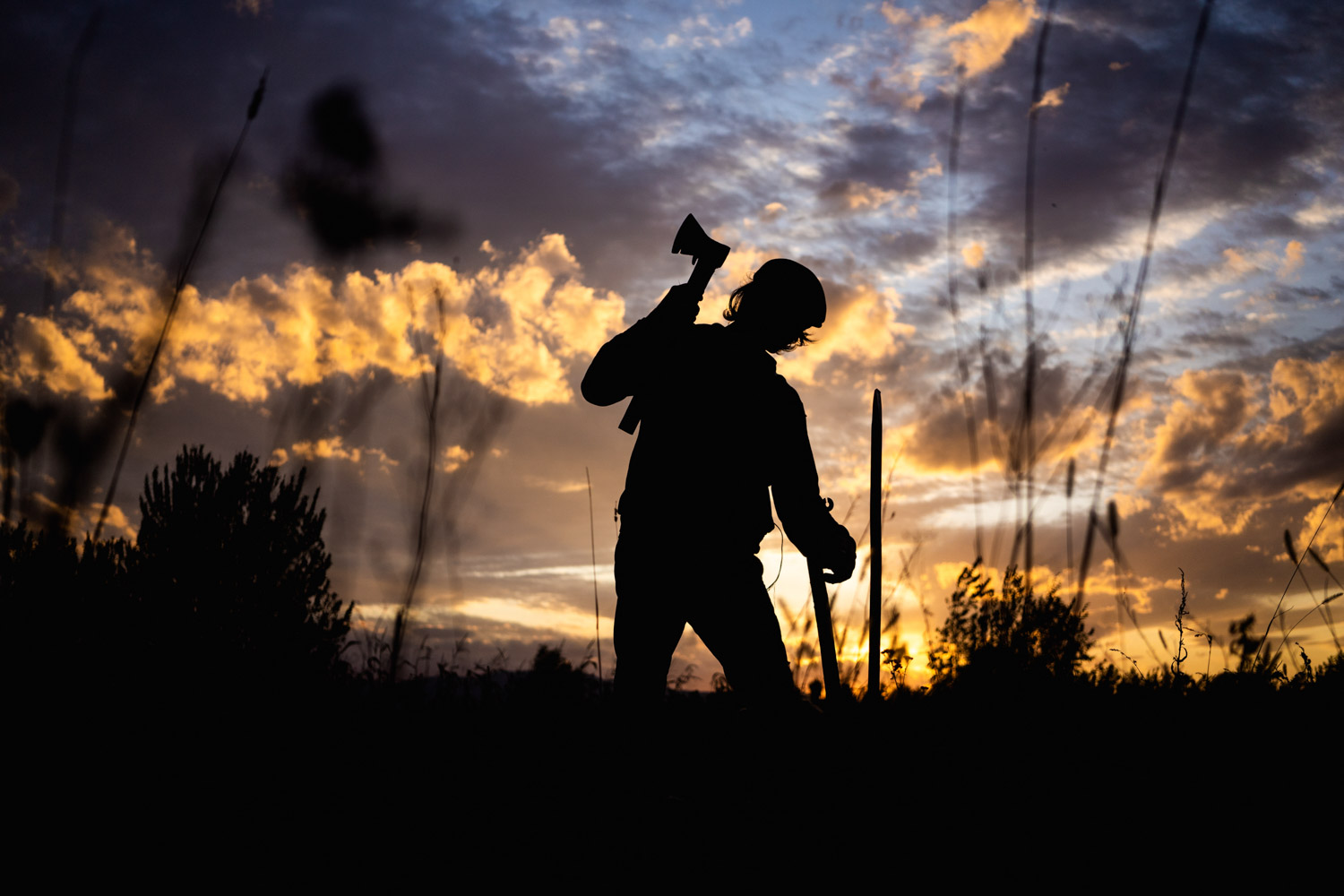
German ecologist Michel Jacobi installs an electric shepherd for his animals. 30 September 2019. Photo: Serhij Korovajnyj.
Story of Michel and his buffaloes.
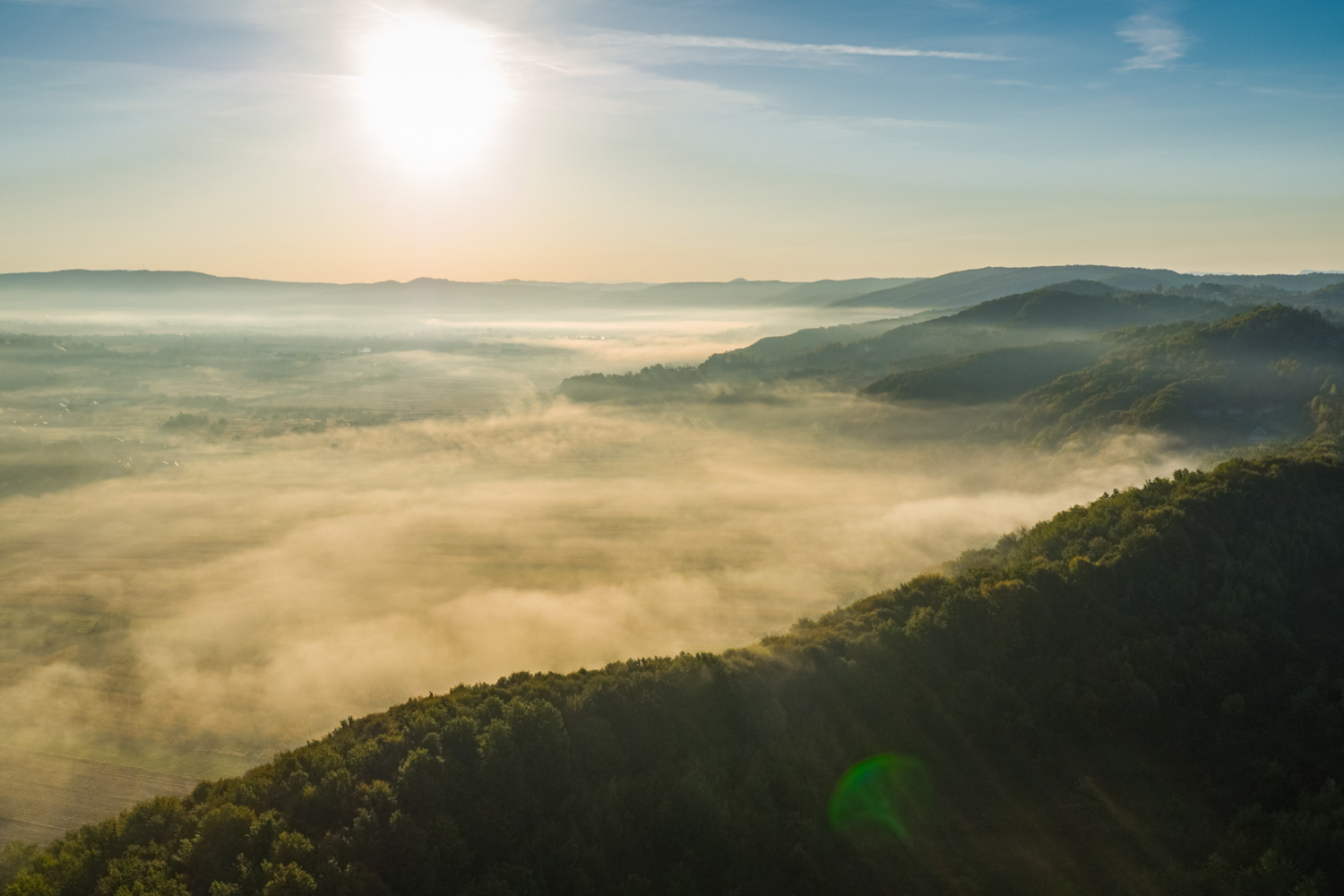
Morning near the Nyzhnie Selyshche in Zakarpattia. 2 October 2019. Photo: Pavlo Pashko.
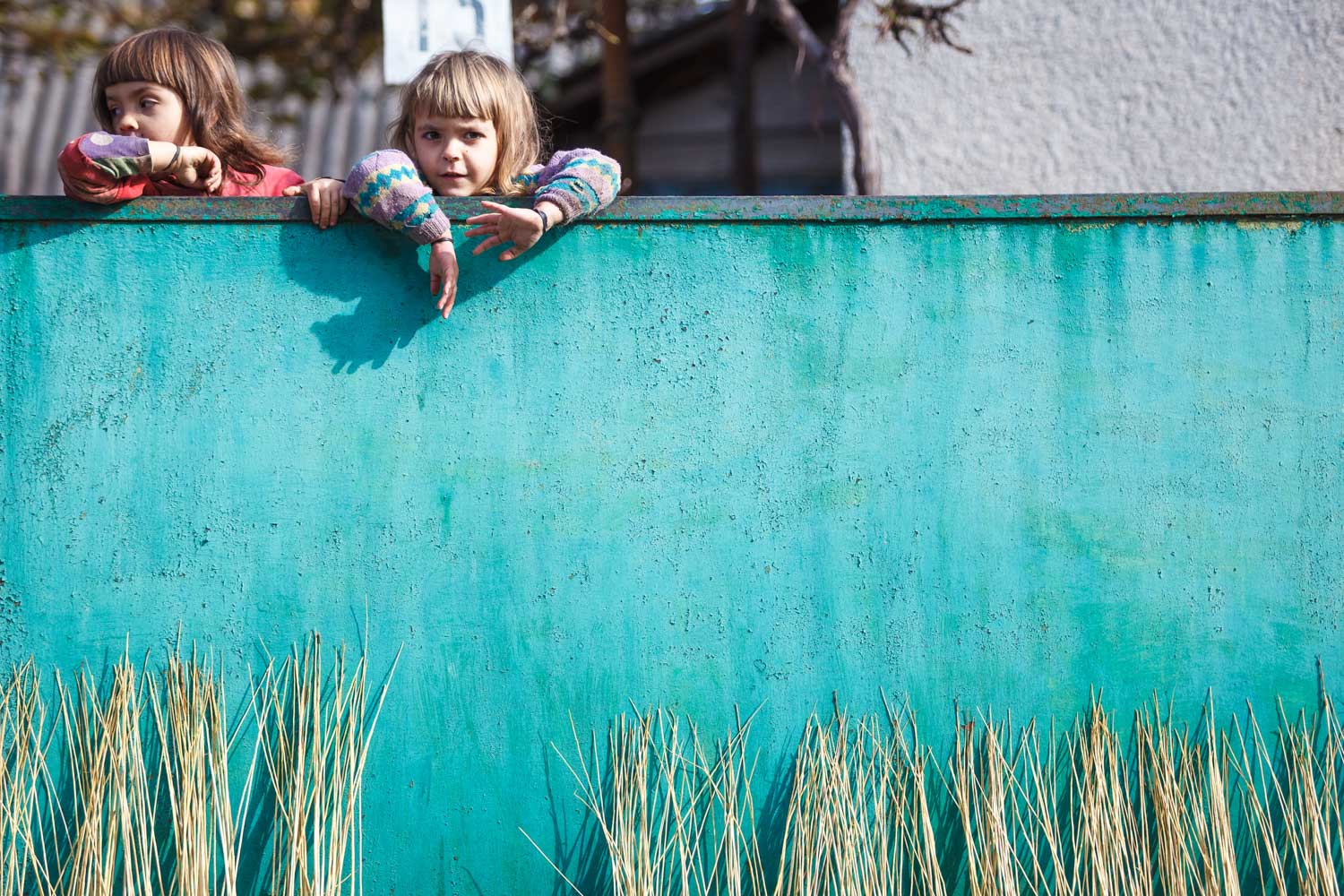
Children look out at the street from the yard of their house in the village of Iza in Zakarpattia. 4 October 2019. Photo: Juriy Stefanyak.
Near the fence the children are leaning on, there are sheaves of wicker drying in the sun. The village of Iza is well-known for the wickerwork craft developed here.
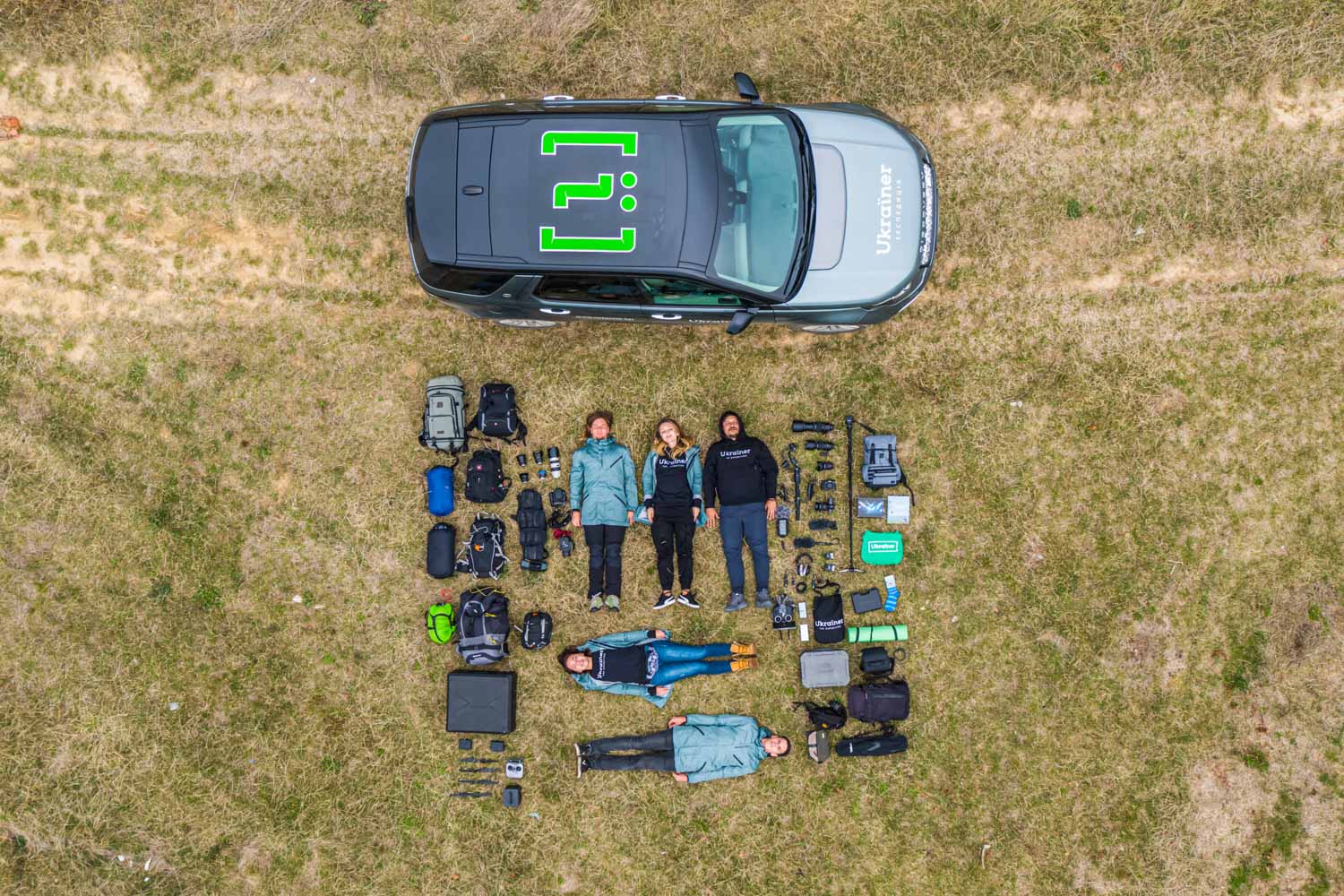
Expedition team of the Ukraïner project poses for pictures with all contents of the expedition car for the #tetrischallenge. 5 October 2019. Photo: Pavlo Pashko.
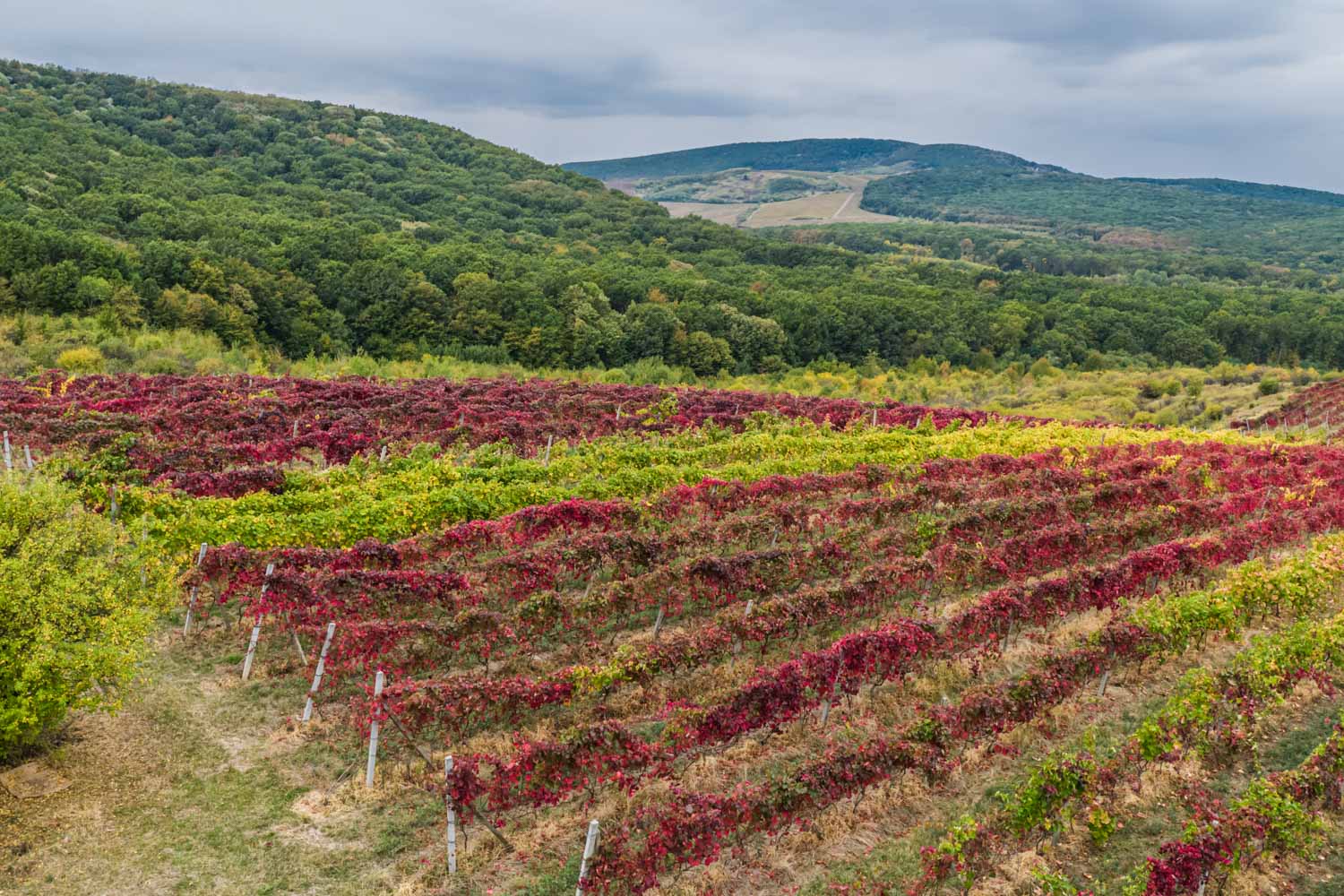
Vineyards near the town on Berehove in Zakarpattia. 5 October 2019. Photo: Pavlo Pashko.
This region of Zakarpattia is the most favourable for growing grapes and making wine.
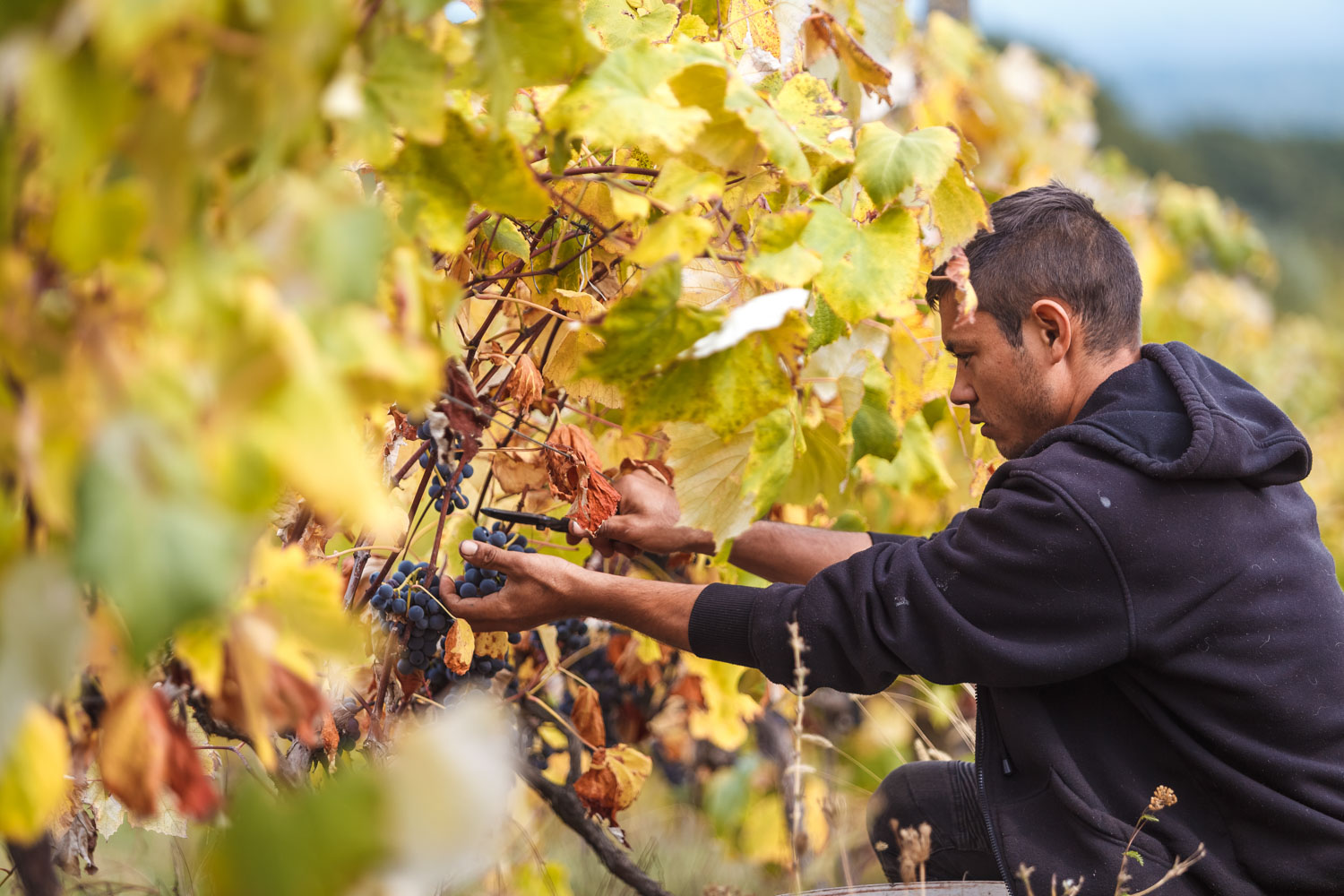
Man picks grapes in the vineyard near the town of Berehove in Zakarpattia. 5 October 2019. Photo: Juriy Stefanyak.
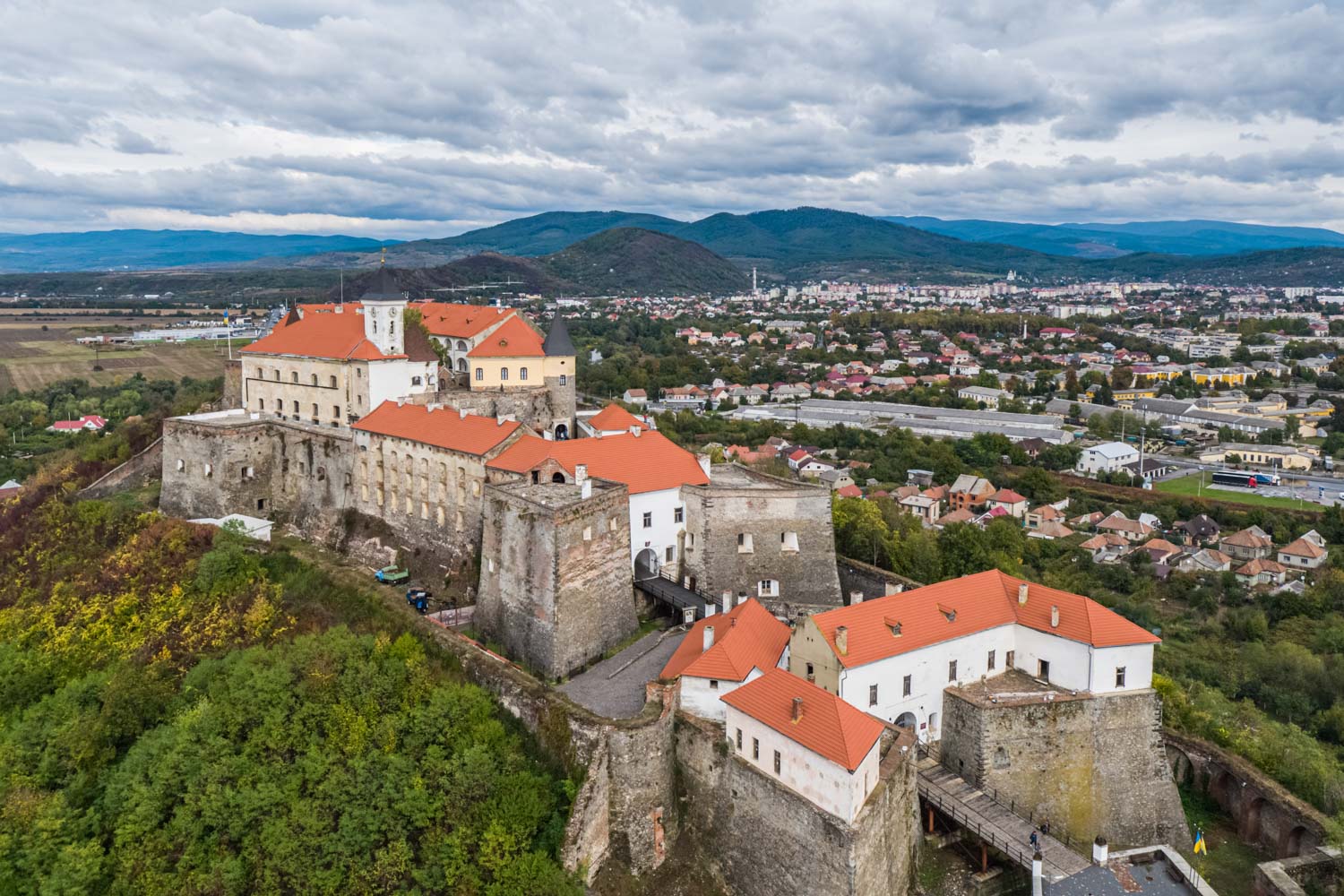
View of the Palanok castle in Mukachevo, a unique example of medieval fortification architecture. 6 October 2019. Photo: Pavlo Pashko.
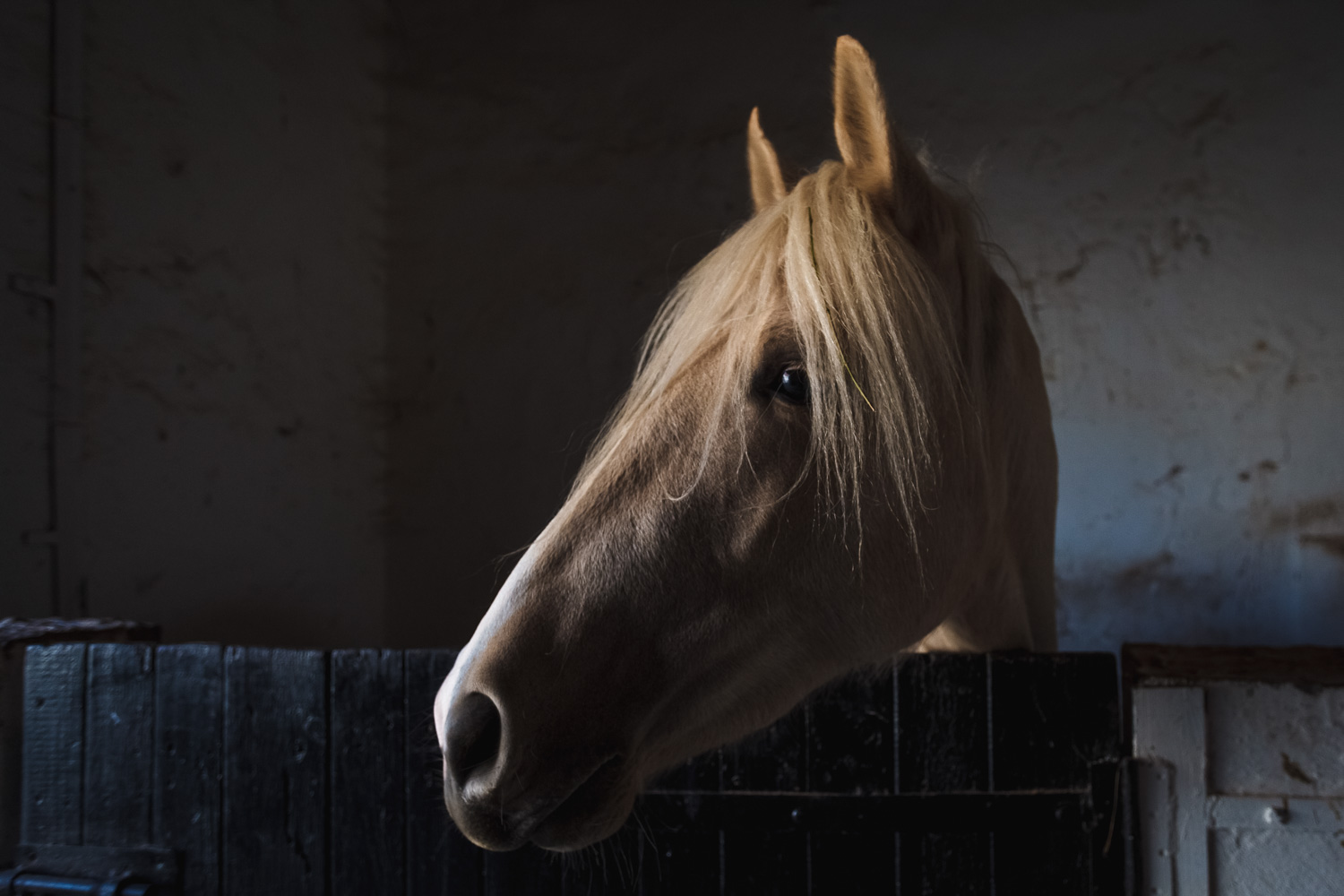
Horse takes a rest in the stables on the territory of the Saint Miklós castle in Chynadiyovo in Zakarpattia. 8 October 2019. Photo: Juriy Stefanyak.
Story of the Saint Miklós Castle in Zakarpattia was the first story by Ukraїner. We came to the castle for the second time and now we’re going to tell you about the changes and curious stories which took place in the castle over the last three years.
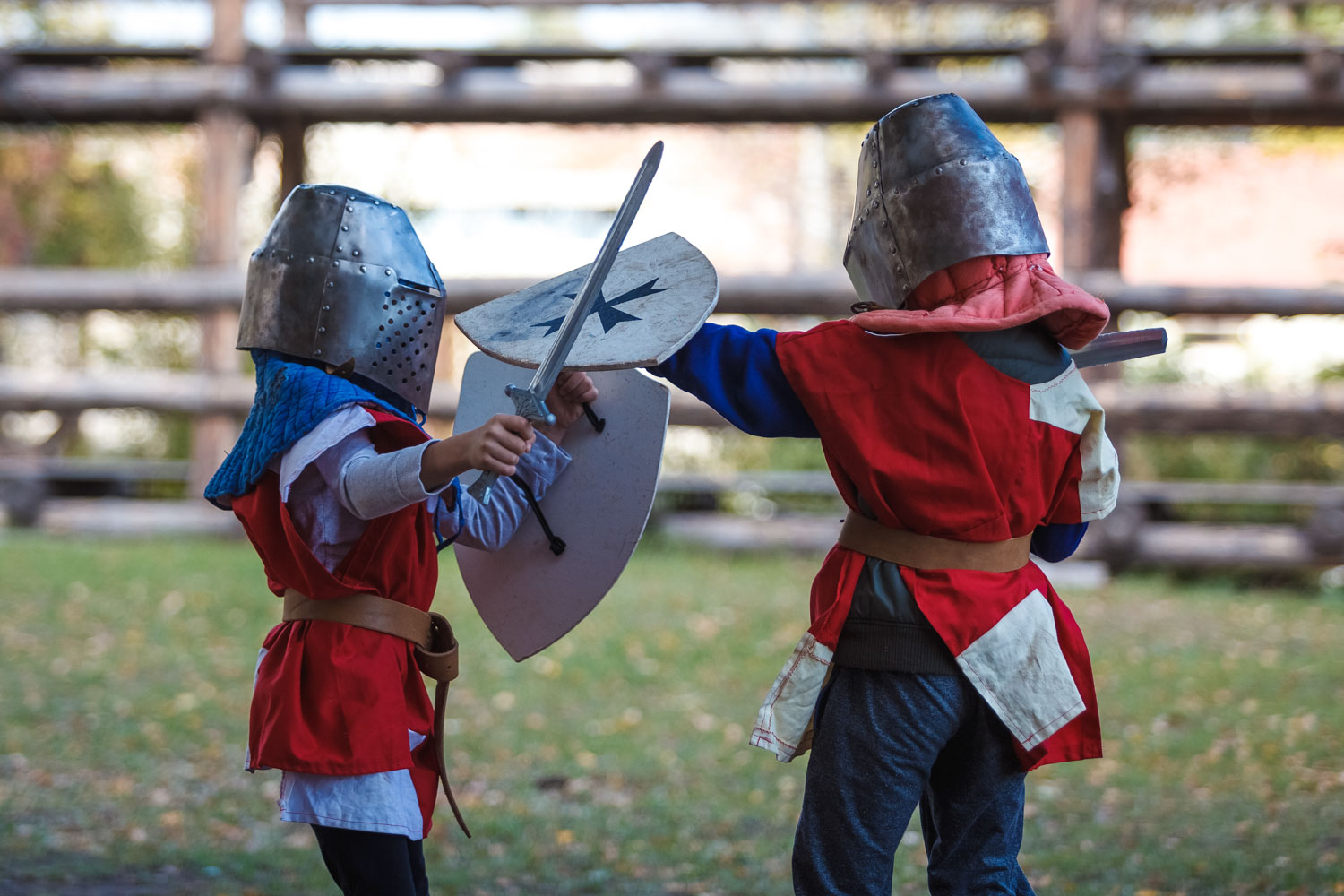
Children wearing the armour of the crusaders imitate a fight in the Saint Miklós castle in Chynadiyovo in Zakarpattia. 8 October 2019. Photo: Juriy Stefanyak.
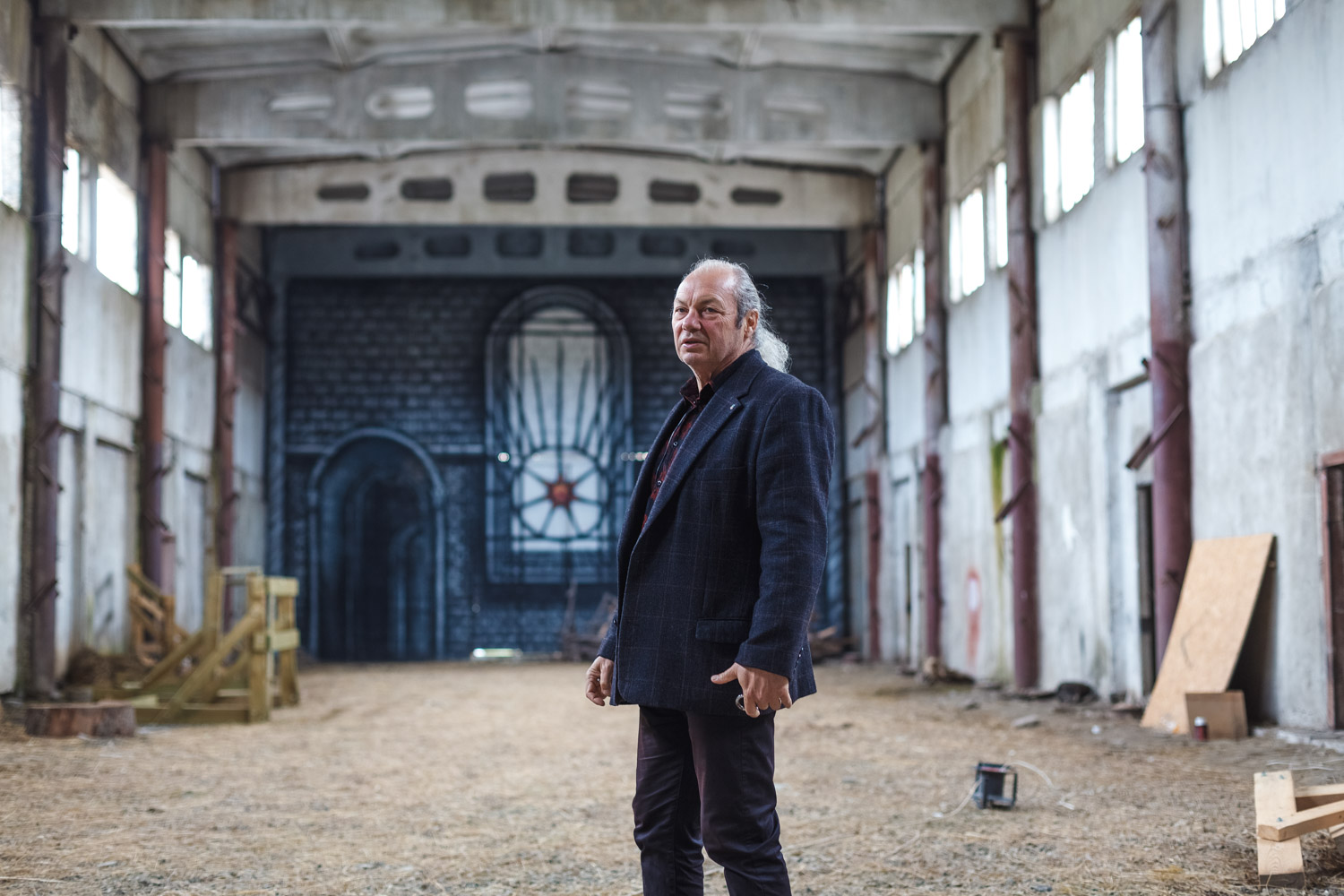
Jossyp Bartosz, the tenant of the Saint Miklós castle. 9 October 2019. Photo: Juriy Stefanyak.
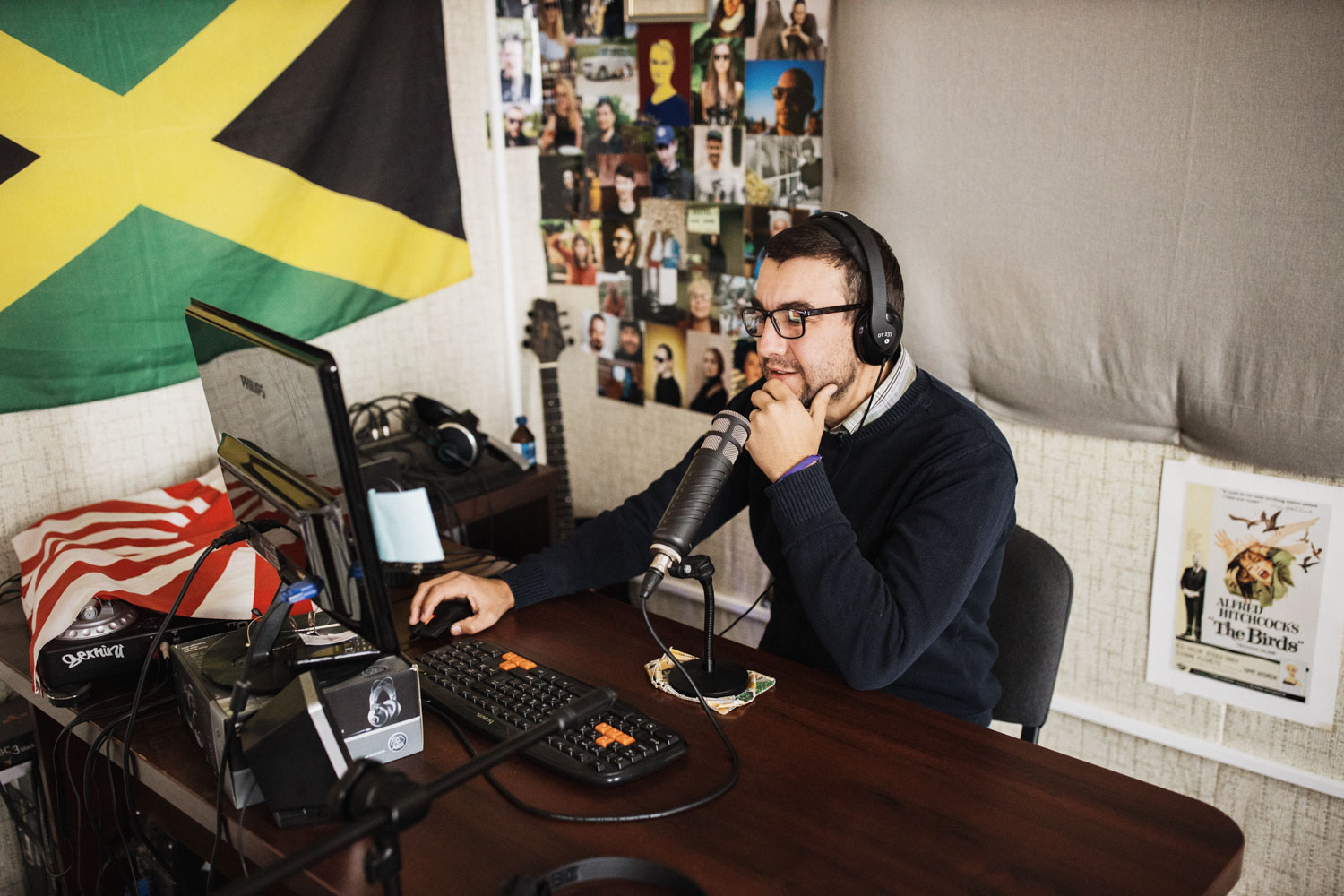
Portrait of Oleksii Umanskyi, a radio presenter and the founder of the radio “Yeden”. Uzhhorod, 10 October 2019. Photo: Hari Krishnan.
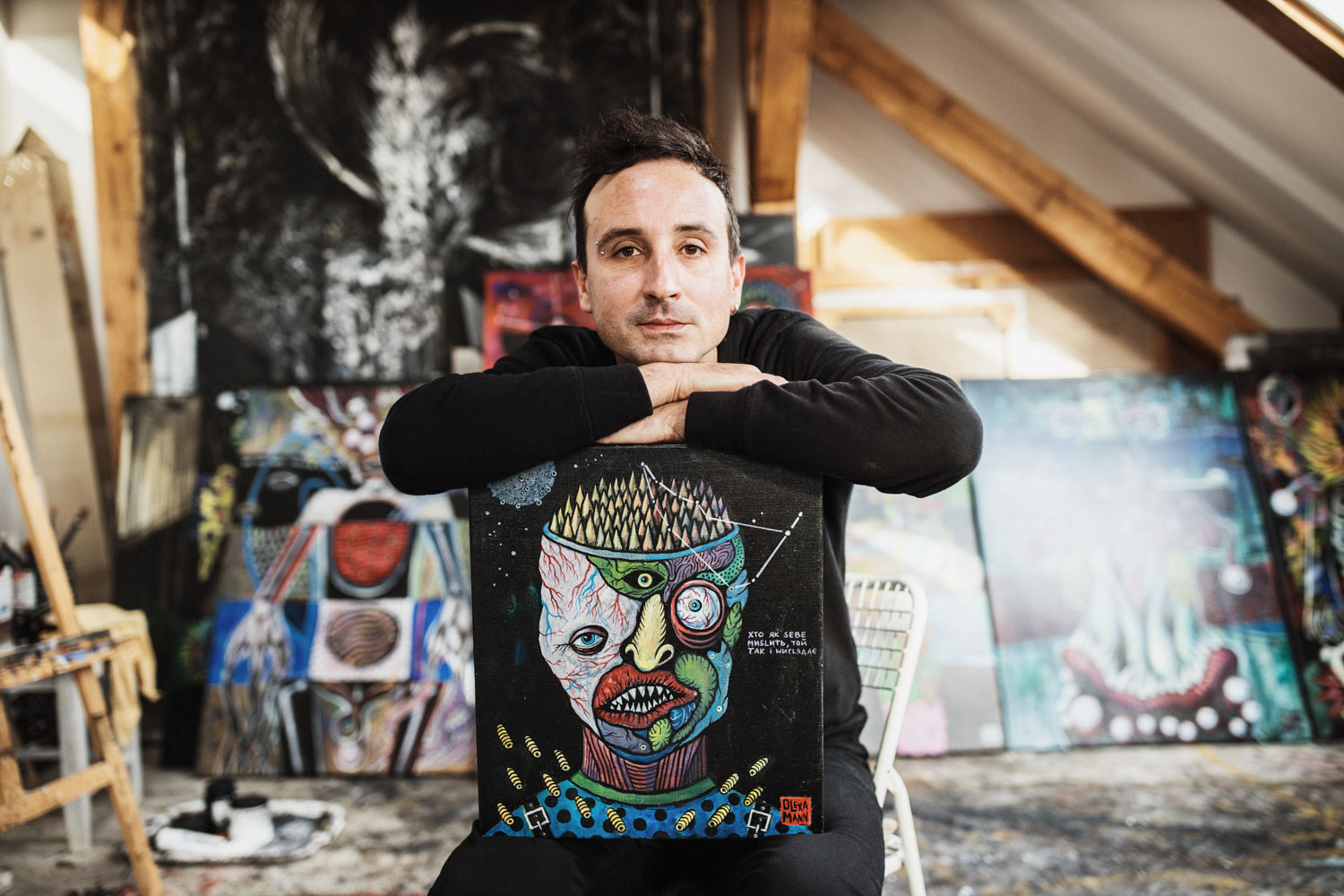
Portrait of an artist Oleksa Mann. Uzhhorod, 11 October 2019. Photo: Hari Krishnan.
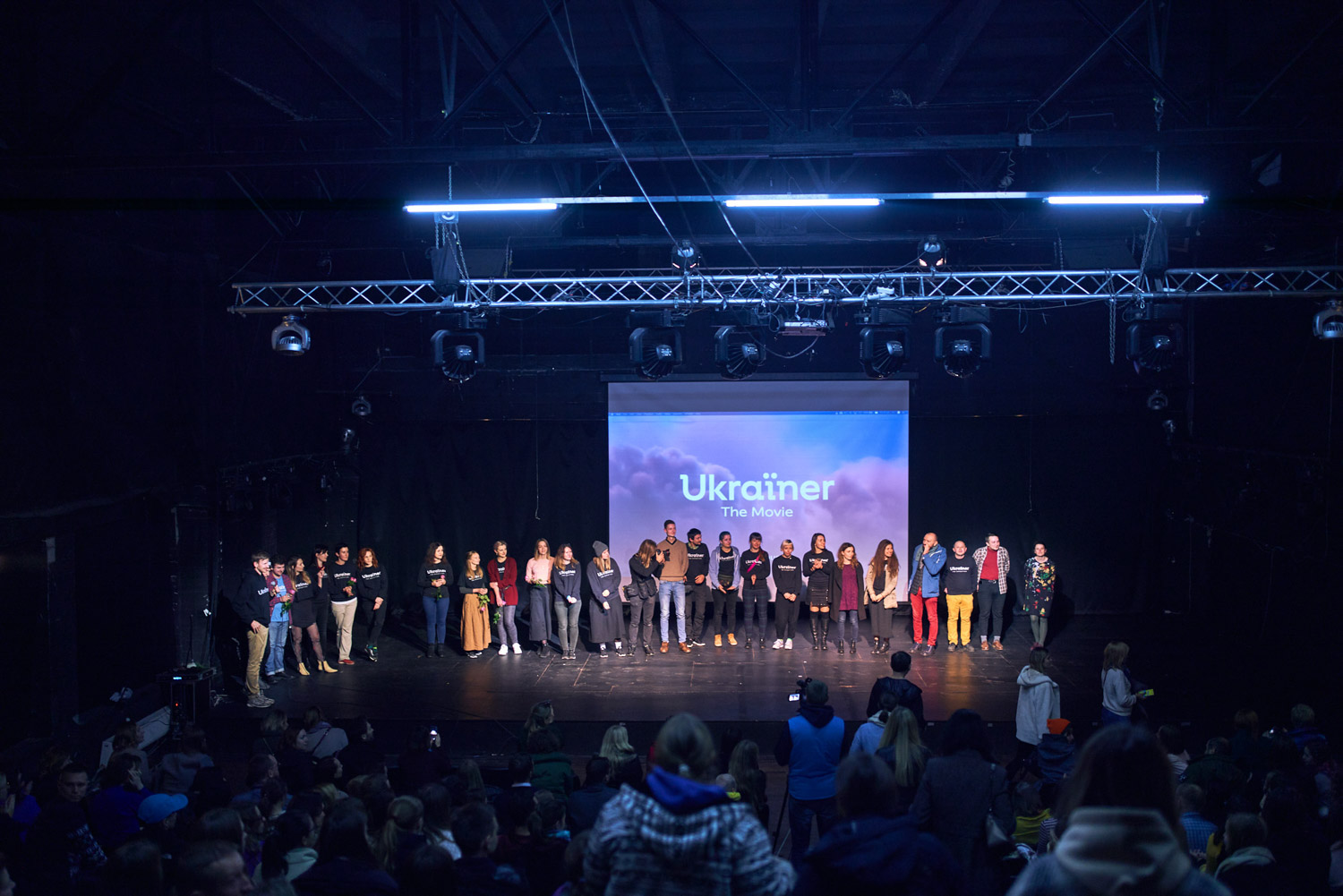
Group of creators of the documentary feature film “Ukrainer. The Movie” and volunteers of the Ukraїner project have come out on stage after the film’s presentation in Dovzhenko Centre in Kyiv. 1 November 2019. Photo: Nick Zavilinskyi.
The film was broadcast on 1 November 2019 simultaneously in 7 countries and over 60 cities. You can watch “Ukrainer. The Movie” on our YouTube channel.
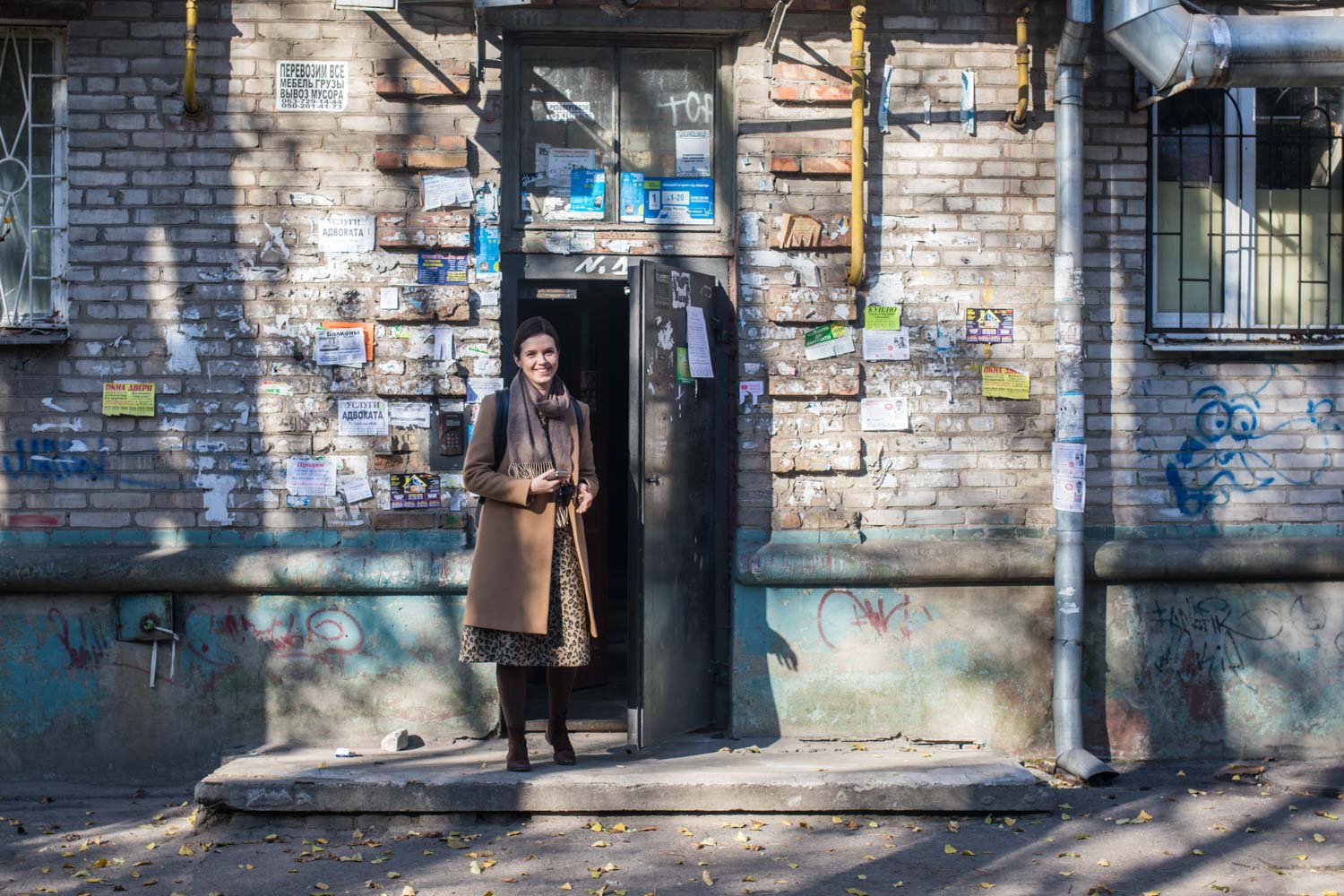
TV host and actor Yanina Sokolova comes out of the house in Zaporizhzhia where she grew up. 2 November 2019. Photo: Oleksandr Khomenko.
Yanina Sokolova spoke about her Zaporizhzhia for the Ambassadors project.
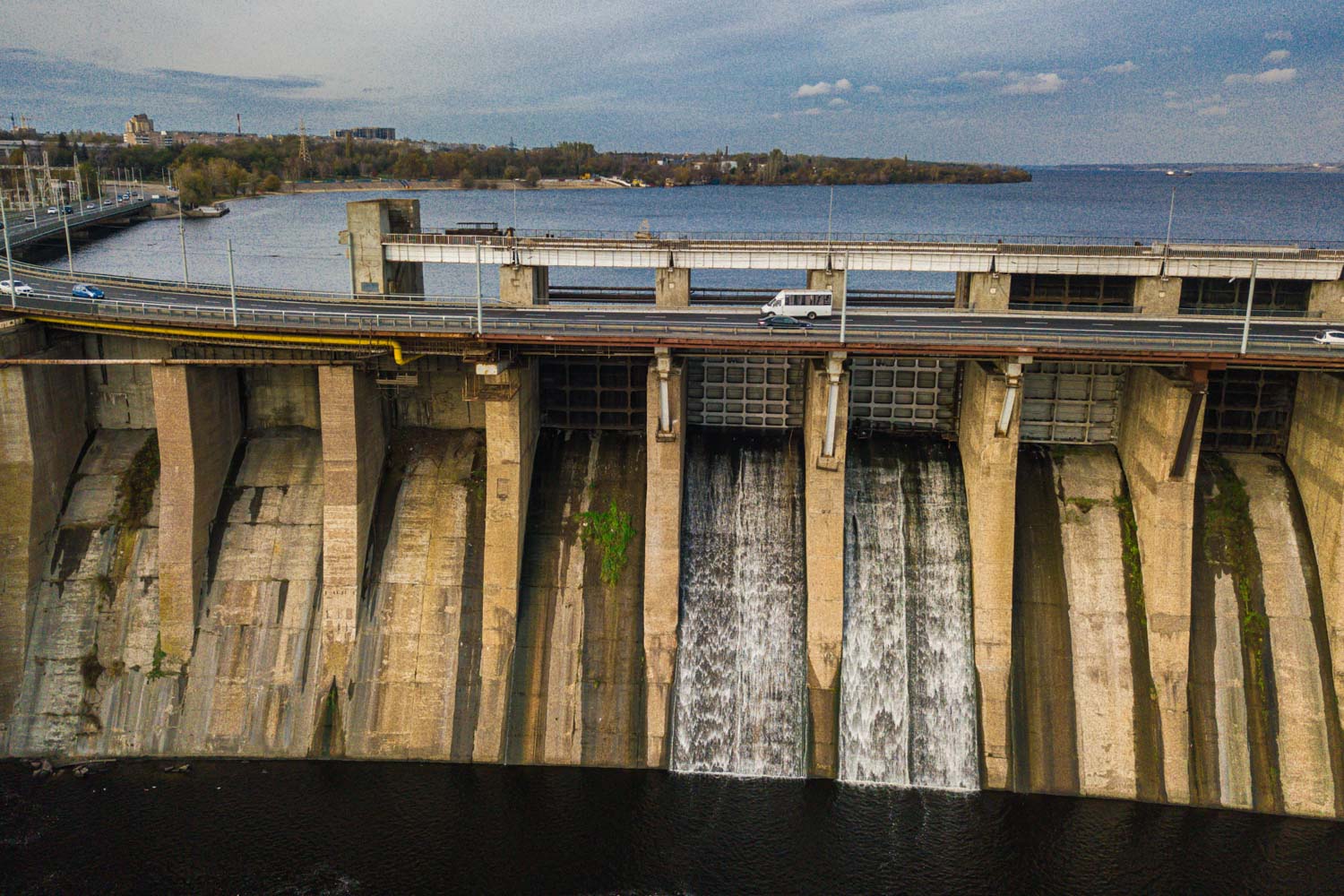
Bird’s-eye view of the Dnipro river dam in Zaporizhzhia. 3 November 2019. Photo: Oleksandr Khomenko.

Valerii Kharchyshyn, the frontman of the band Druha Rika, listens to music in the Museum of Space Exploration in Zhytomyr. 9 November 2019. Photo: Anastasia Nekipelaya.
Valerii Kharchyshyn spoke about his Zhytomyr for the Ambassadors project.
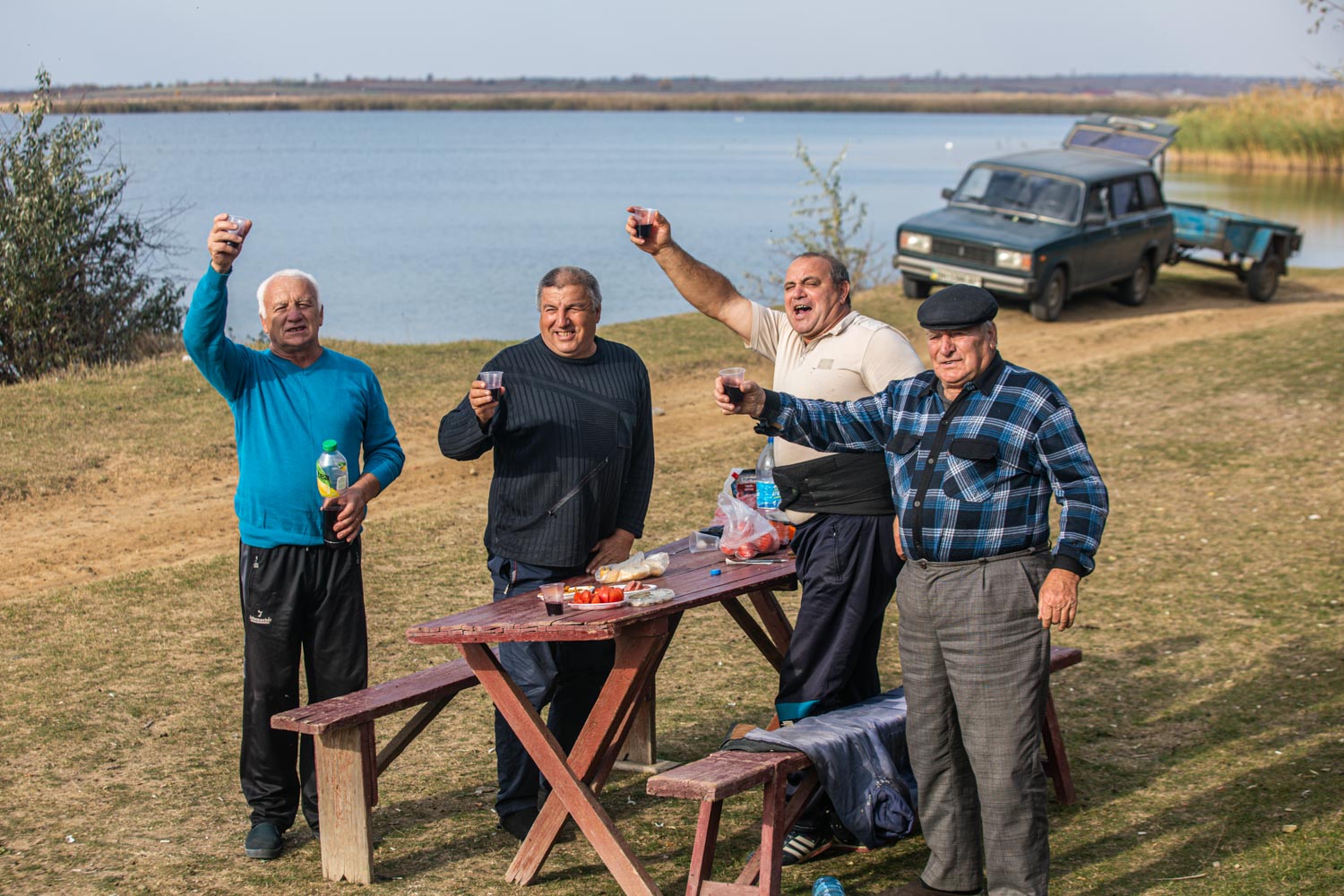
Men drink wine at Lake Yalpuh near the village of Krynychne. 8 November 2019. Photo: Oleksandr Khomenko.
In Bessarabia, there are many vineyards, so almost everybody here makes wine.
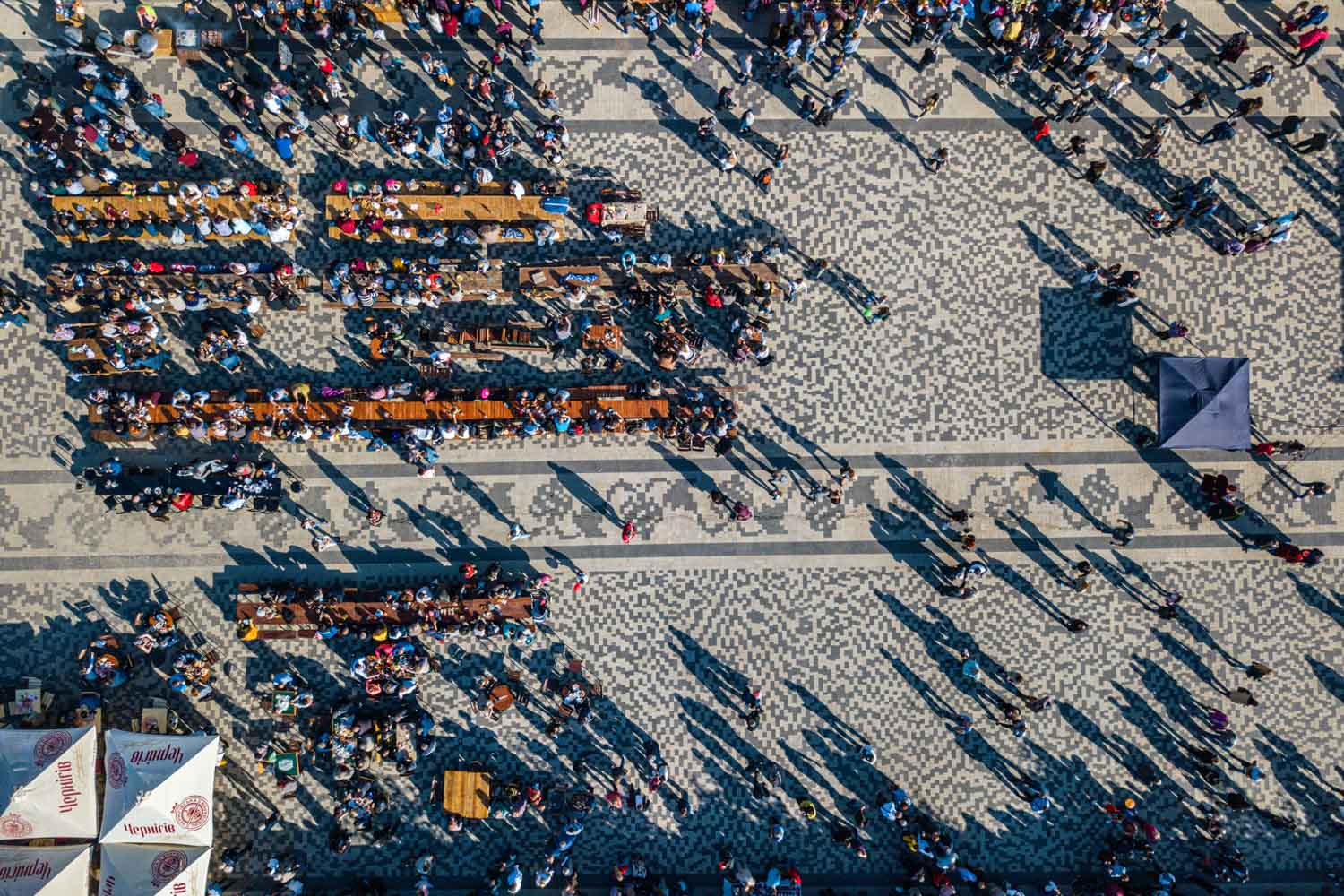
View of the central square in the town of Bolgrad where the annual festival Bolgrad Wine Fest takes place. 9 November 2019. Photo: Oleksandr Khomenko.
Story of the national minority of Bulgarians living in Ukraine.
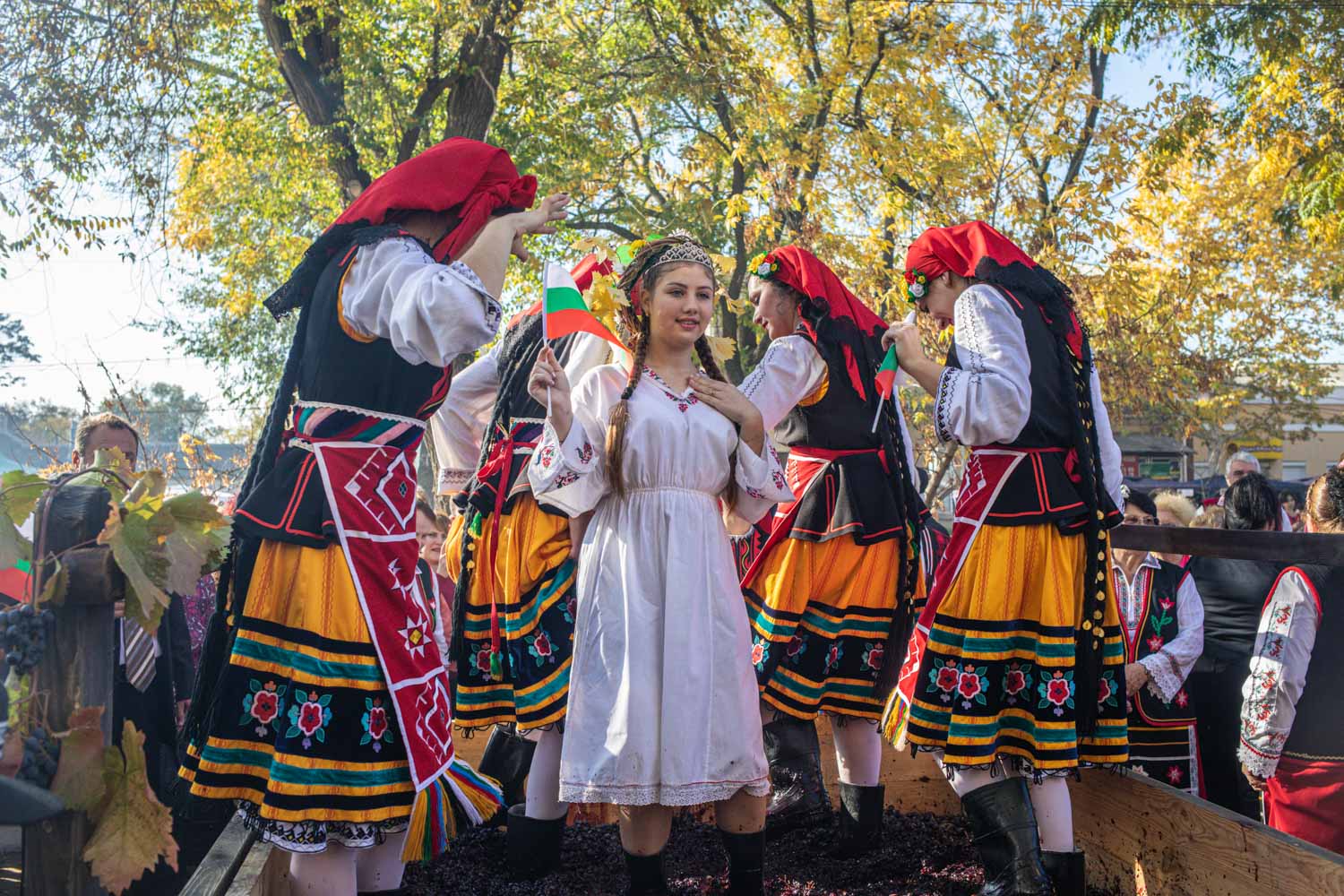
Bulgarians in the national clothes pose for pictures in a cart with grapes at Bolgrad wine festival. 9 November 2019. Photo: Oleksandr Khomenko.
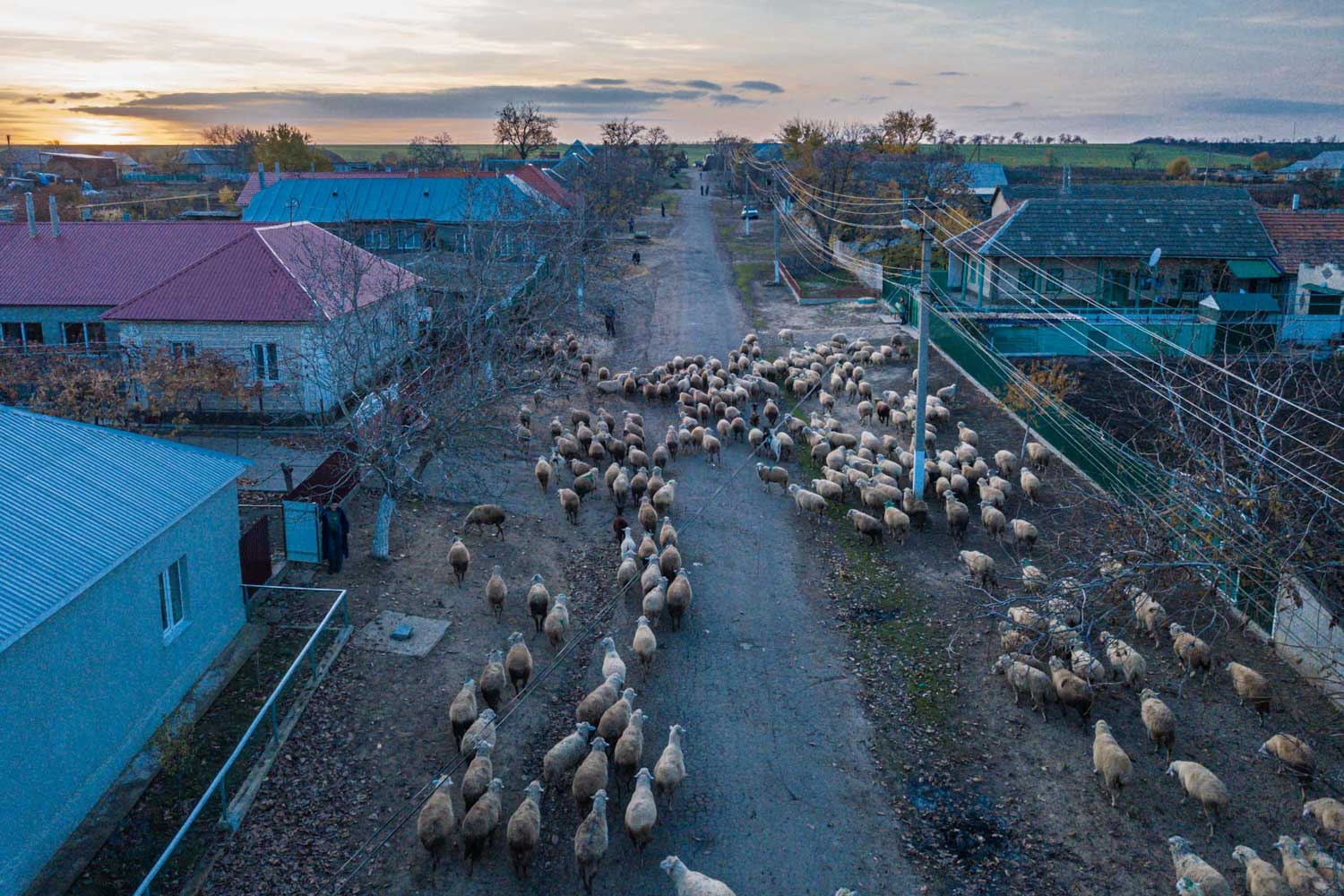
A herd of sheep comes home from the pasture in the village of Karakurt in Bessarabia. 9 November 2019. Photo: Oleksandr Khomenko.
Today, the inhabitants of Karakurt speak five languages: Albanian, Bulgarian, Gagauz, Ukrainian, and Russian. The locals say that when three people of different nationalities meet in the village, and one of them speaks Albanian as their mother tongue, then all three of them switch to Albanian as the basic language of international communication.
Story of the national minority of Albanians living in Ukraine.
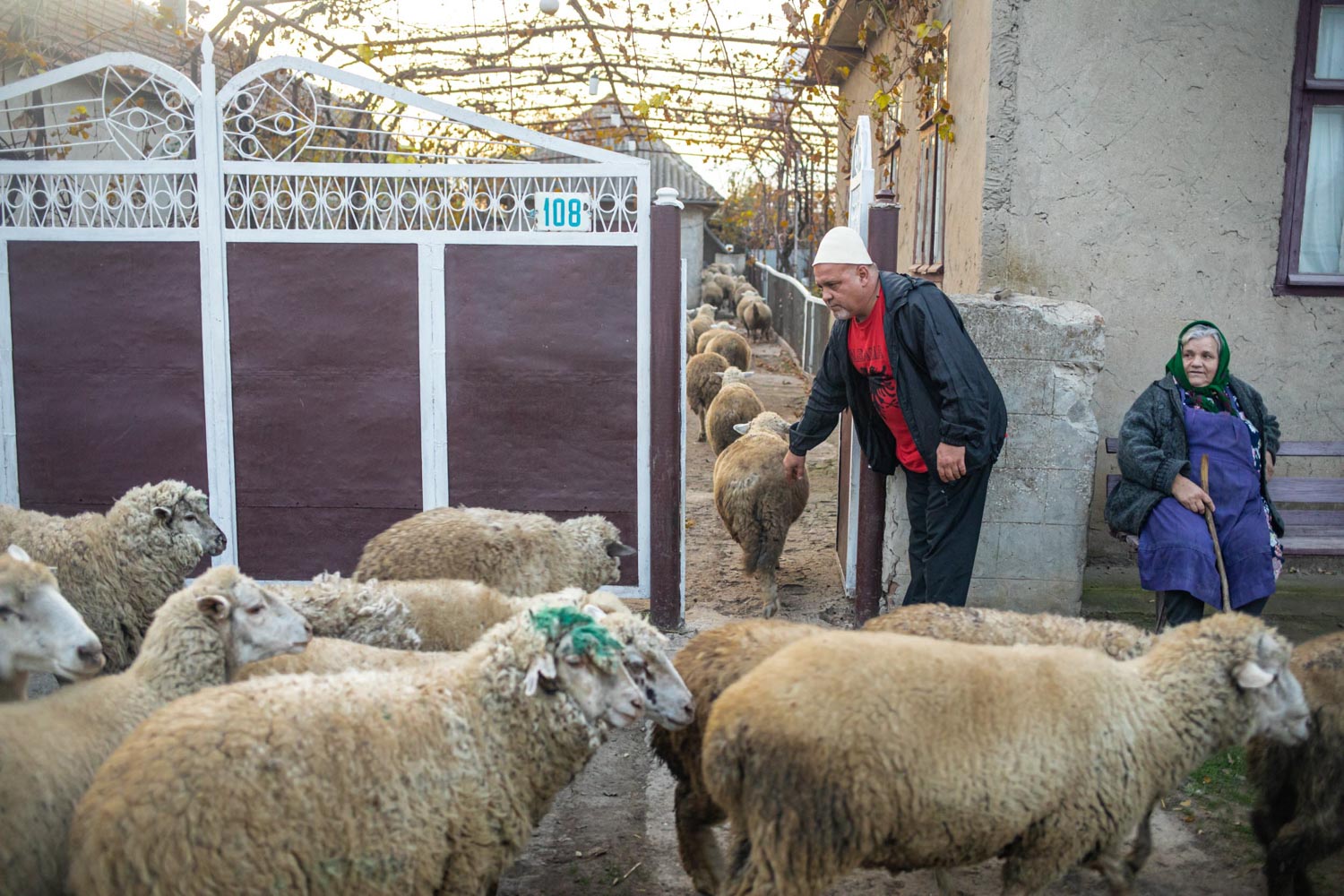
Rodion Pandar, head of the Albanian community “Rilindia”, leads the sheep to the yards of the inhabitants of Karakurt. 9 November 2019. Photo: Oleksandr Khomenko.
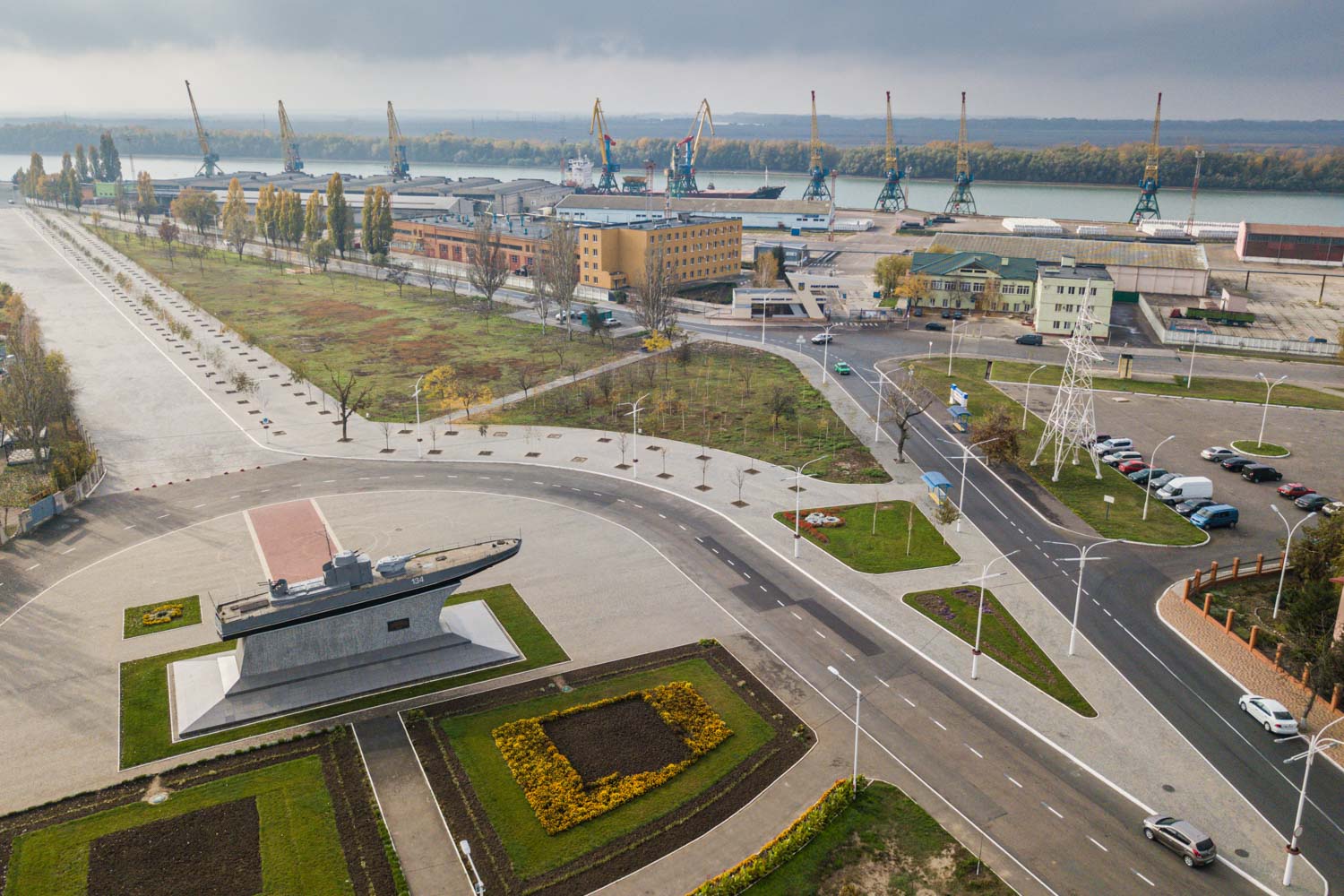
Bird’s-eye view of the Danube river and the quay of Izmail. Izmail is located on the border with Romania, and Danube serves as the borderline here. 10 November 2019. Photo: Oleksandr Khomenko.
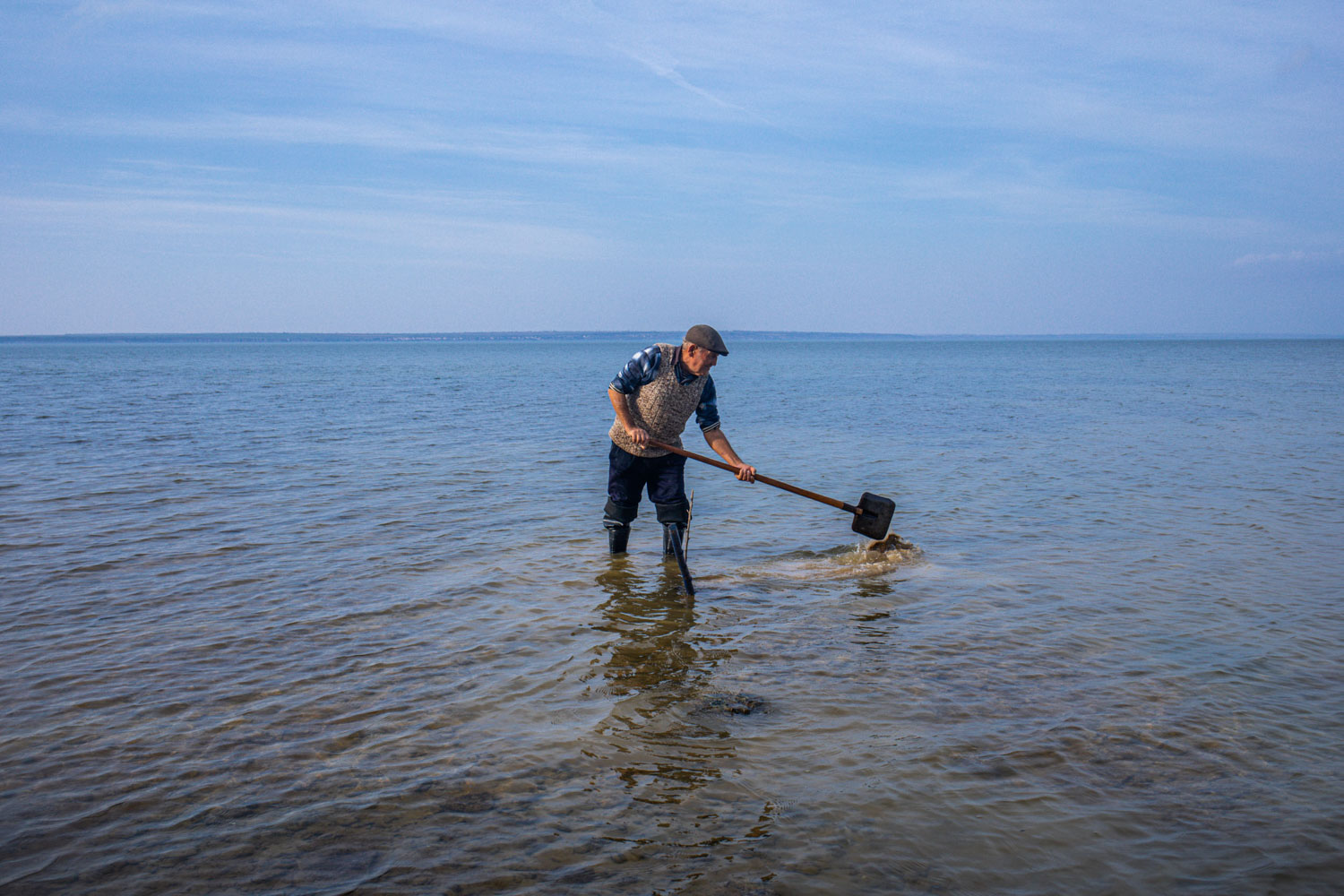
Man digs a hole in the bottom of Lake Yalpuh so that he can pump water from the lake in the village of Ozerne. 10 November 2019. Photo: Oleksandr Khomenko.
Ethnic Bulgarians, Romanians, Albanians, and Gagauzes are numerous in this part of Bessarabia. This man speaks neither Ukrainian nor Russian.
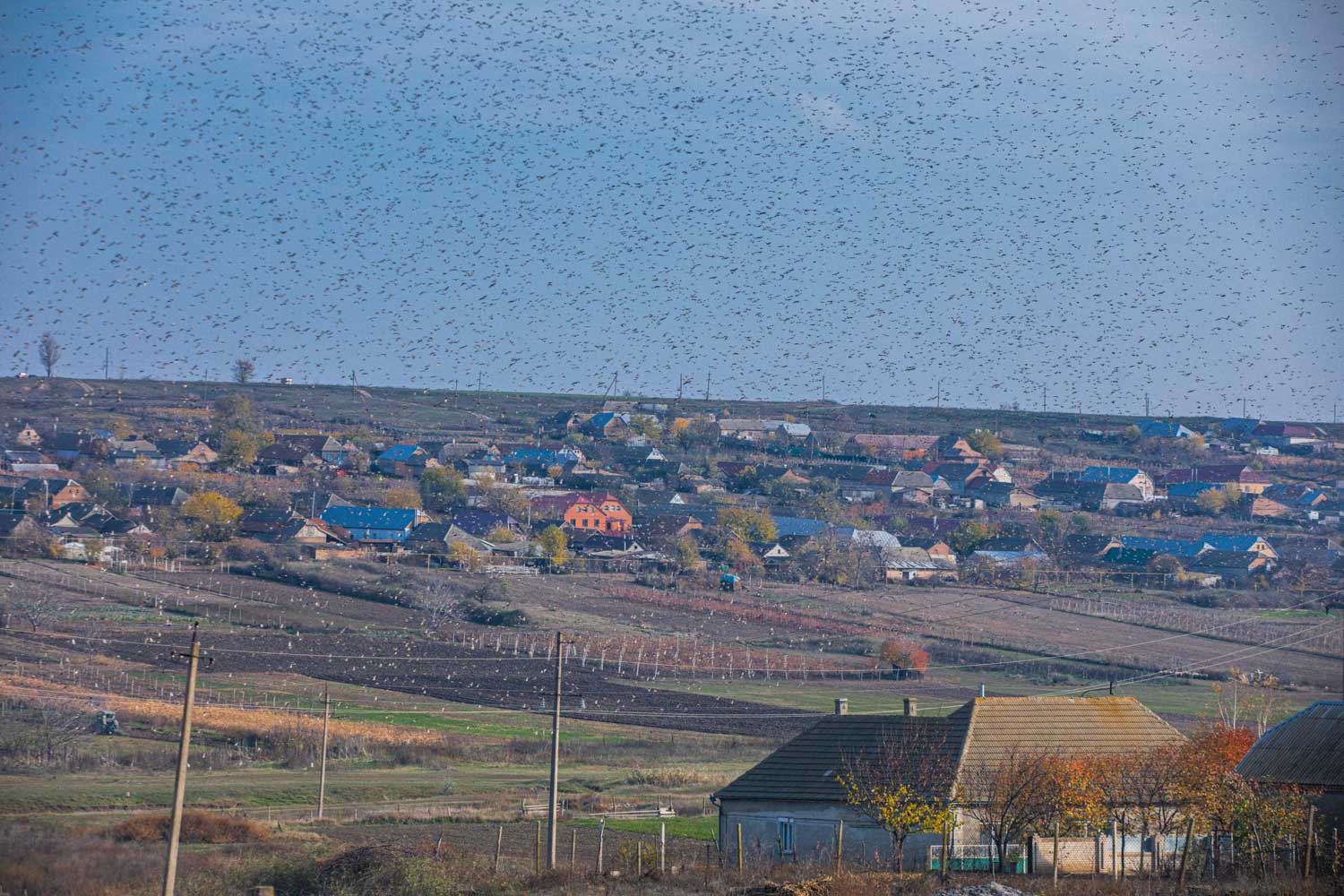
Flock of birds flies over the village of Ozerne in Bessarabia. 10 November 2019. Photo: Oleksandr Khomenko.
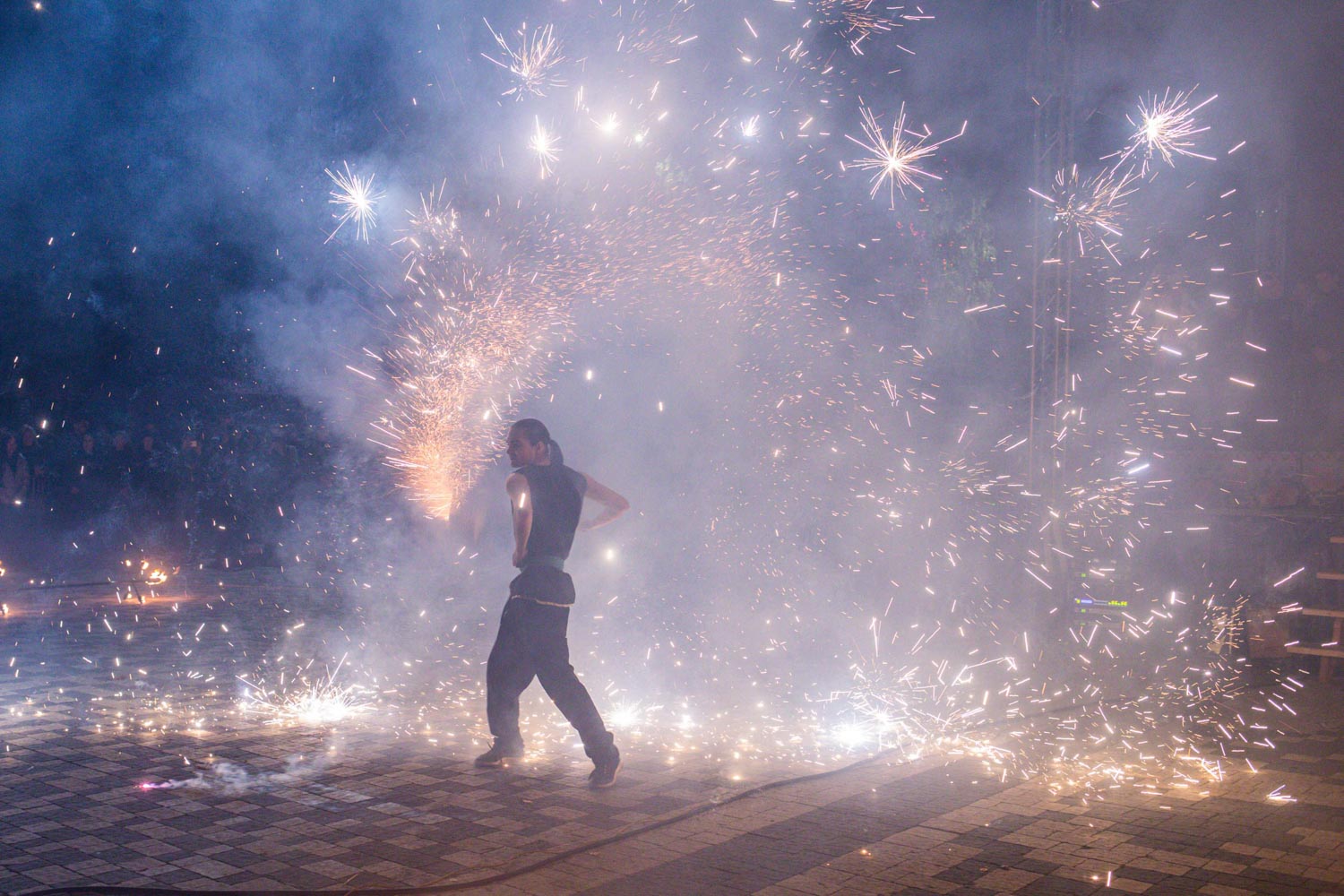
Fire-show at the wine festival in Bolgrad. 10 November 2019. Photo: Oleksandr Khomenko.
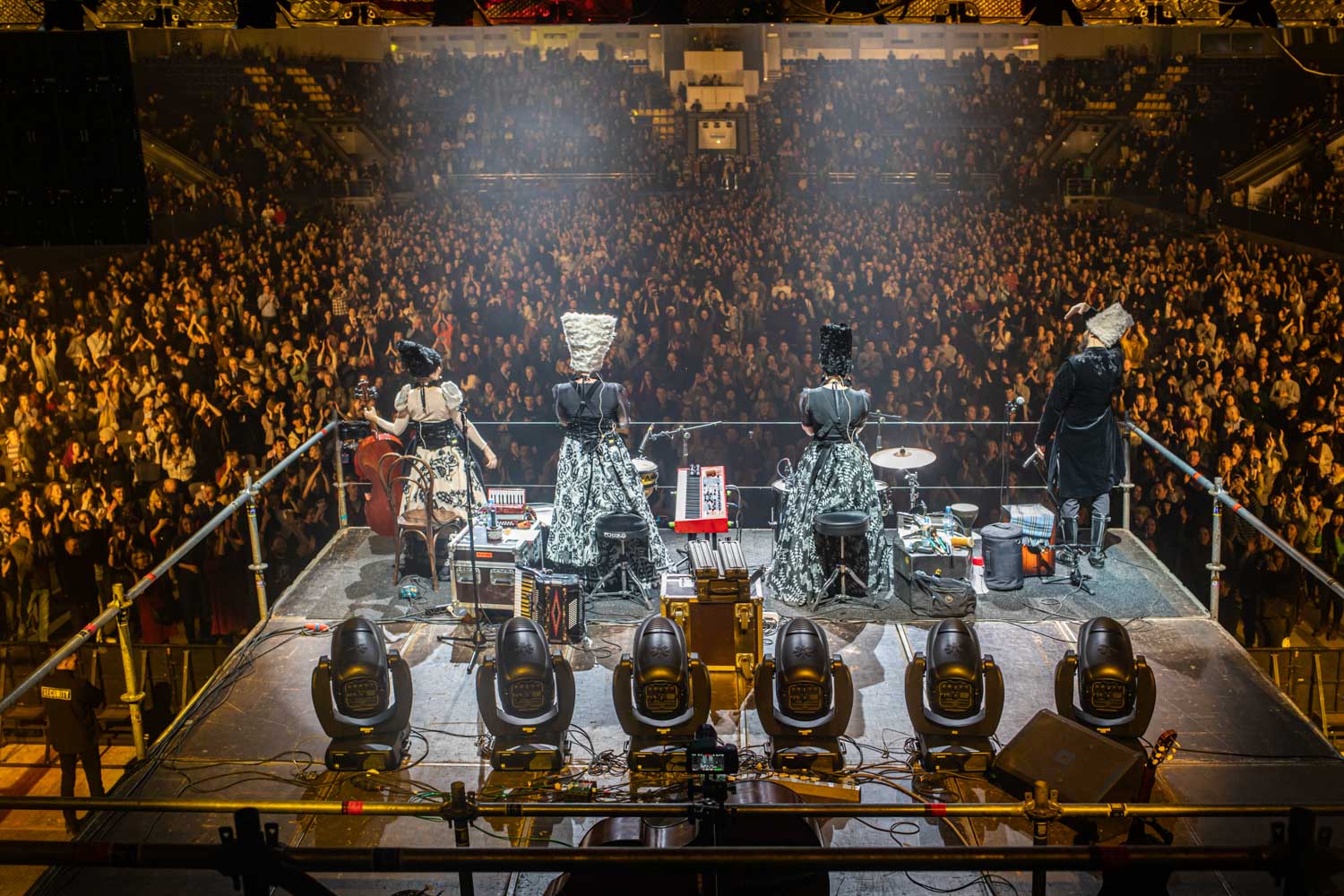
Spectators in the Palace of Sports in Kyiv cheer the musicians of DakhaBrakha near the end of their concert to celebrate the 15th anniversary of the band. 6 December 2019. Photo: Oleksandr Khomenko.
Members of the DakhaBrakha band spoke about their Kyiv for the Ambassadors project.
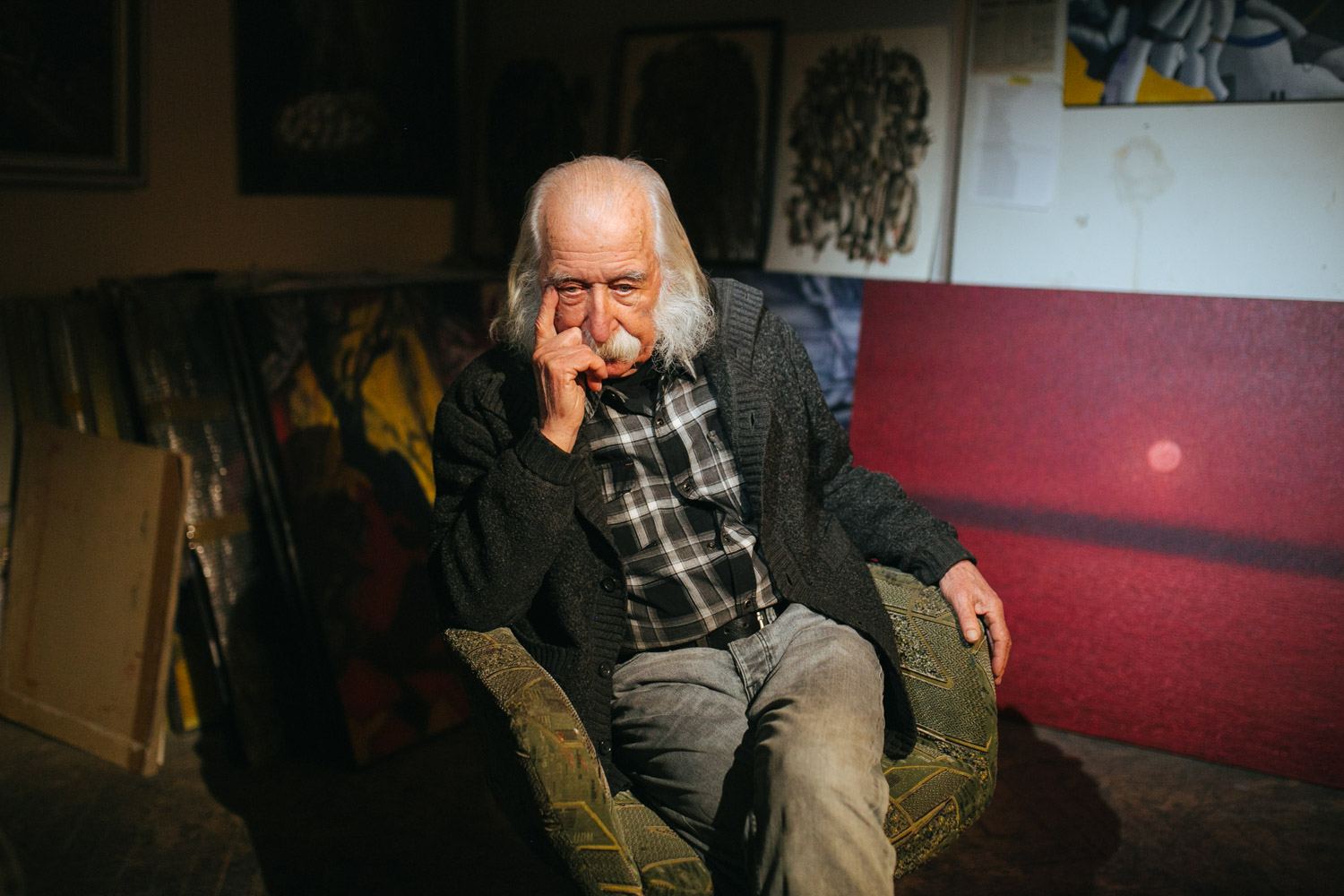
Artist Ivan Marchuk in his workshop in Kyiv. 11 December 2019. Photo: Khrystyna Kulakovska.
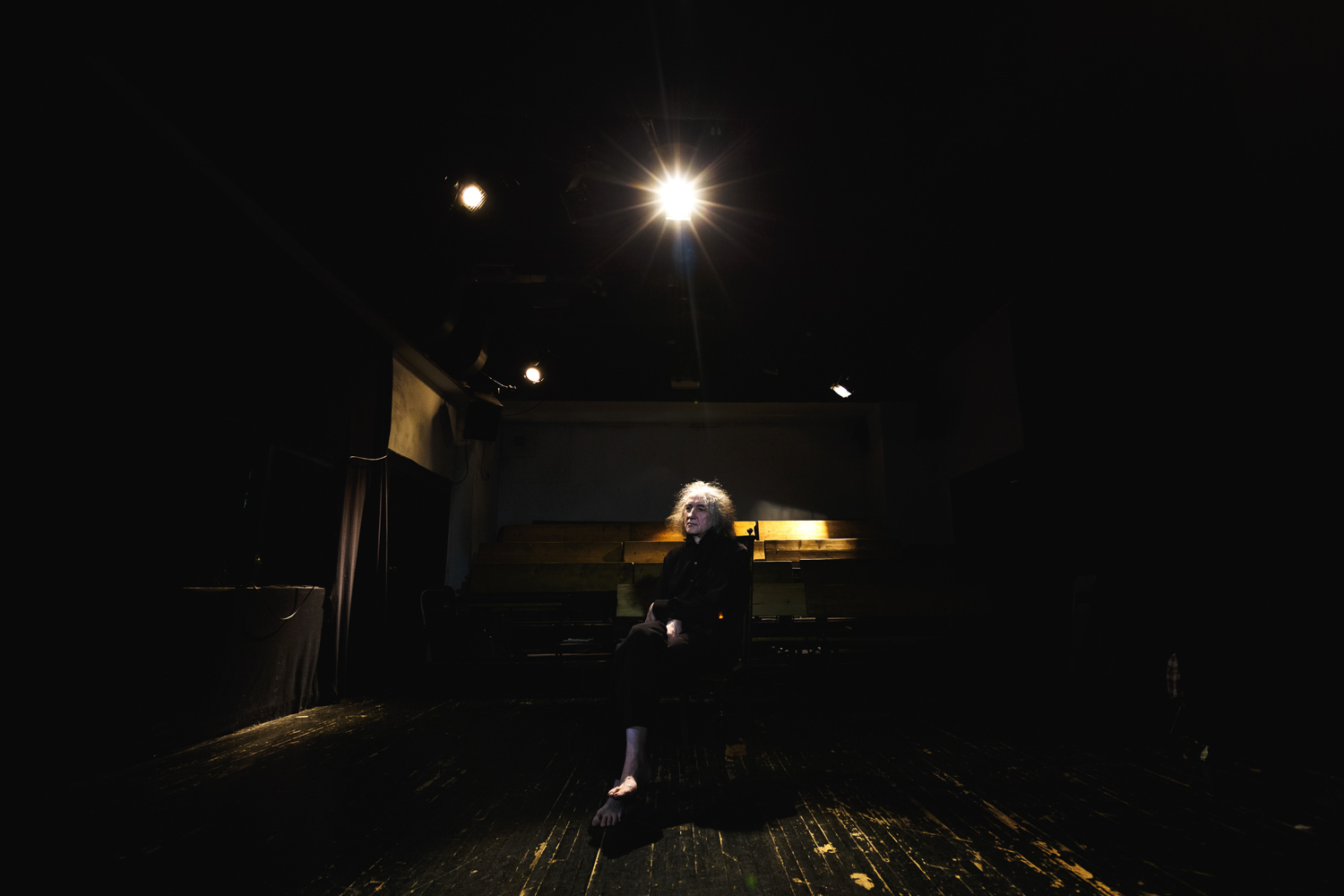
Volodymyr Klymenko (a.k.a. KLIM), a theatre director and playwright, sits in the auditorium of the DAKH theatre. 17 December 2019. Photo: Juriy Stefanyak.
