

As Western governments debate peace and security guarantees for Ukraine, French political thinker Nicolas Tenzer delivers a warning: neither the United States nor Europe can be fully trusted to protect Ukraine’s security.
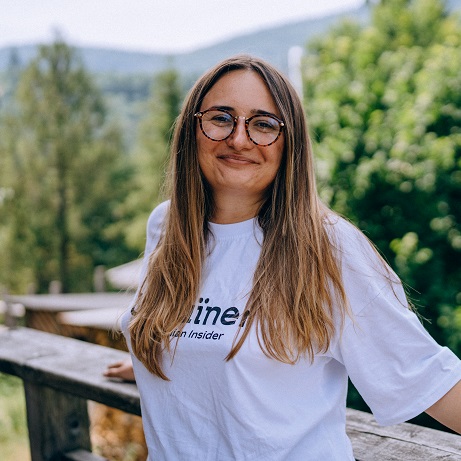
Nicolas Tenzer has spent two decades warning about the threat posed by Russia. Today he believes that the US and Europe are still failing to grasp the scale of the danger. In our interview, Tenzer speaks openly about Western hesitation, the collapse of trust in security guarantees, the war on truth, and why Ukrainians may ultimately have to rely only on themselves.
The following is Nicolas Tenzer’s direct speech.
On peace deal
I must say very bluntly that the US is no longer an ally. We see Trump and many prominent figures in his administration essentially siding with Russia. They share the same worldview. There is a kind of ideological collusion with Russia right now.
What does a security guarantee from the US really mean? It means that if Ukraine or any other European state is attacked by Russia, the US would send troops to defend that country. Can you really trust that this would happen?
Perhaps after 2028 there could be a new, more decent US administration. But look at what happened in Syria in 2013, when President Obama did not enforce the red lines1President Barack Obama used the phrase “red line” that can have “enormous consequences” in reference to the use of chemical weapons in the Syrian civil war. The Assad regime later used chemical weapons against the population with no consequences. he had set himself. Look at 2014, when Russia invaded Crimea and attacked Donbas. I remember speaking in 2013, 2014 and 2015 with Japanese and South Korean colleagues and asking them whether they trusted US security guarantees. They told me, “No. We have to prepare for the worst.”

A military unit in Perevalne during the Russian occupation of Crimea in 2014. Photo: Anton Holoborodko.
When it comes to Europe, I was one of the rather lonely voices saying, even back in 2014, that we had to intervene more decisively to defend Ukraine. We had the air capabilities, the missiles and the fighter jets to strike Russian tanks in Ukraine without deploying ground troops. We could have done it. We should have done it. Can Ukrainians truly trust that Europeans would act decisively in the future, when they are not prepared to act decisively today?
We are discussing security guarantees after a so-called peace deal. But we know there is no genuine appetite in Russia to respect a deal or a ceasefire. Imagine that Ukraine gives up parts of its territory — Donbas or Crimea. The security situation would actually become worse for both Ukrainians and Europeans. Russia would have time to regroup and recruit more troops — including among the 1.6 million young Ukrainians living in the occupied territories, who could be used as cannon fodder. If Crimea were given up, Russia would fully re-establish its Black Sea Fleet in Sevastopol, especially now that Ukrainians have managed to push it back. If sanctions were lifted, Russia would become even more dangerous.
In security terms, such a peace deal would be a disaster. Beyond security, it would represent a grave contempt for international law. In the occupied territories, children are deported, people are tortured, and there are summary executions and mass rapes. Could we imagine giving Putin and Russia a licence to kill, rape, torture and deport? That is something we must not accept. In Europe, we live in the legacy of the Nuremberg trials. We have to remain faithful to their principles.
On war crimes
Although the press reports on torture, rape and deportations, most political leaders avoid addressing them publicly. There are two reasons for this. The first is psychological. The scale of the crimes is so enormous that it brings us back to the darkest chapters of our shared history — to Nazi crimes. My own family suffered directly from those crimes, so I know what that means. We are facing what Hannah Arendt called “radical evil”3Hannah Arendt’s concept of “radical evil” describes the unprecedented nature of totalitarian crimes, which seek to render human beings superfluous by stripping them of their humanity, legal identity, and moral agency. Unlike traditional forms of evil driven by motives such as greed or hatred, radical evil is systemic and oriented toward total domination.. For many Western leaders, confronting this moral abyss is profoundly difficult.
The second reason is political. If they openly acknowledged these crimes — especially if politicians recognised them as genocide under the Convention on the Prevention and Punishment of the Crime of Genocide of 9 December 1948 — they would have a legal and moral duty to act. They would have to intervene and take decisive measures. Since many do not want to take such action, they refrain from speaking clearly about the nature of these crimes.

A mass grave in Izium, created during the Russian occupation. Photo: Viktoria Yakymenko.
On morality in politics
I feel guilty. I am haunted by this feeling of guilt, because we should have protected Ukrainian lives, and we could have protected them by taking action.
The fact that European leaders chose not to intervene openly is, for me, a kind of historical shame that will haunt us for the rest of our lives. For me, it is not only a question of morality. In foreign affairs, morality goes hand in hand with security.
Had we paid attention to the crimes committed by Russia in Chechnya, in Georgia, in Syria, in Africa — and, of course, in Ukraine even before the full-scale war — we could have prevented the larger threat now coming from Russia. The Russian message is that crime is the message. Many security specialists do not speak about international law. They do not make the link between the violation of international law and the threat to security.
This is something I elaborate on in my book Our War, which will soon be translated into Ukrainian: the linkages and the principles behind these dynamics. The real point is that most Western leaders do not understand that by failing to act now, and by failing to save lives now, they are jeopardising their own situation and the security of their own nations.
On Russian infiltration
We have many well-documented cases of corruption, collusion, and cowardice. If you look at some of the people who prevented Georgia and Ukraine at the Bucharest Summit in 20085During the 2008 Bucharest NATO Summit, a number of allies, including Germany and France, opposed granting a NATO Membership Action Plan to Ukraine and Georgia. Many experts believe this decision was influenced by Russia. from receiving a Membership Action Plan for NATO, there was certainly a kind of collusion. We also know that Germany — and sometimes France and other European countries — kept buying Russian gas. They wanted to appease Russia and maintain good relations. That is part of an ideological collusion, but also part of a lack of intelligence. Not all Western leaders were corrupted, of course, but many simply did not understand Russia. They had a rosy picture of Russia. That was a major failure of understanding.
The second factor is propaganda. We often talk about Russian propaganda, and of course there is what I would call hard propaganda: “There are Nazis in Kyiv,” “It’s NATO’s fault,” “Russia is a peaceful power” — all of these lies. But there is also soft propaganda. Jake Sullivan, President Biden’s National Security Advisor, said at the NATO Vilnius Summit in July 2023, “We want to prevent a war between Russia and NATO.” I am not saying Sullivan or others were Russian puppets — they were not. But their thinking was invaded by narratives that ultimately came from the Russian playbook.
Russia could have been defeated. History shows that nuclear powers can be defeated: the Soviet Union in Afghanistan, the United States in Vietnam, the United States in Afghanistan. There is no destiny that says a nuclear power cannot be defeated.
On not understanding Ukraine
Most Western leaders had never visited Ukraine. Even the French president, Emmanuel Macron, visited Ukraine for the first time only after returning from Moscow, shortly before the full-scale war. He had never been there before. The same was true for many German chancellors, British prime ministers, US presidents and others.
There is a very precise reason for that: many of the main European powers — and the US as well — do not pay attention to so-called small and middle powers. Just remember in 1991 the so-called “chicken Kyiv” speech by George H.W. Bush7President George H. W. Bush made a speech in the Ukrainian parliament in 1991 urging Ukrainians not to seek independence from the Soviet Union, warning against “suicidal nationalism”. Just weeks later, Ukraine overwhelmingly voted to leave the USSR.. For those old-fashioned politicians, small and middle powers do not really exist.
In France, Germany and the UK, for a long time the attitude was: “We deal with big powers, and perhaps we make arrangements between big powers, and that’s all.” The others — well, they simply have to live where they are. People are not truly seen as having the right to shape their own destiny.

Photo source: Nicolas Tenzer’s Facebook page.
On propaganda
The difficulty is that under French law — and the situation is similar in Germany, the UK and elsewhere — promoting a foreign state, even if you are paid for it, is not necessarily illegal. That is one of the key issues.
France — and other European states as well — do a great deal to counter Russian propaganda: cyberattacks, deepfakes and operations such as Doppelgänger9A Russia-based influence operation network that has been active in Europe since at least May 2022. Doppelgänger uses fake websites designed to imitate well-known news outlets — including Der Spiegel, Le Parisien, The Washington Post, The Guardian and RBC-Ukraine — to spread disinformation., for example. There are bodies within the French government doing good work. But when it comes to legal investigations, they are not doing enough.
Another problem is that even outside openly pro-Russian media, you have journalists and editors who think: “We must keep a balance between opinions.” I appear quite often on some channels, and sometimes I find myself facing someone who is spreading Russian lies. I tell them privately: imagine you are in London during the Second World War — would you say you have someone defending the Allies’ freedom and then give equal time to a Nazi propagandist? But people do not understand that we are in a state of radical war. They still do not grasp that. They still think: “There are two sides. We may prefer Ukrainians to Russians, but it is still a war with different viewpoints.”
They do not understand how radical this war is, and that the destiny of Europe — and the future of generations to come — depends on it.
On truth
We are witnessing a war on truth — waged by Russia, by China, and now unfortunately by the US administration. This war on truth has many dimensions: it targets scientific truths — for example about vaccines — truths about climate change, and, of course, truths about the ongoing war.
The key problem is that if people cannot trust civic institutions — schools, universities, governments and civil society organisations — to tell the truth, then the world collapses.
If people cannot locate the truth, they cannot exercise liberty. Liberty is a moral and metaphysical capacity, and without truth people become lost. This is also an educational problem: a problem of trust, a problem of education, and a problem of the willingness to think for oneself.
There was an opinion poll two or three years ago showing that around thirty to thirty-five per cent of young people in France did not know about the Holocaust. It is probably even higher in the US. This speaks volumes about the state of public opinion. People are disarmed in the face of propaganda from Russia and other rogue states. And this becomes a problem of liberty, because under such conditions people are not able to be truly free.
On memory
Every country has its dark sides. One of the key differences between democracies and dictatorships or totalitarian regimes is that democracies must shed light on those dark pages of history. That is very important.
One of the problems in Eastern and Central European countries that were occupied by the USSR is that this part of history disappeared from textbooks. Look at what happened in former East Germany. In West Germany there was repentance; Germans came to terms with the dark side of their history. I especially remember the 1985 speech by Richard von Weizsäcker, the president at the time, when he essentially said: “We were liberated by the Allies.” He acknowledged collective guilt — not only legal guilt, but collective guilt, because most Germans, apart from a few in the resistance, were complicit, even if only passively.
But in East Germany this did not happen. In Poland, Hungary and the Baltic states, I must say, it did not happen either — at least not immediately. It began only later.
I wrote about Alla Horska11A Ukrainian artist and underground human rights activist of the 1960s, and a member of the Sixtiers cultural movement that opposed the Soviet totalitarian regime. Her murder is widely believed to have been an execution carried out by the KGB on secret orders from the authorities. — there was a wonderful exhibition in Kyiv. She wanted to reveal to the world what had happened at Babyn Yar, and she also exposed what had happened in the Bykivnia Forest12The Bykivnia tragedy refers to the mass executions and burials of victims of Stalinist repressions (1937–1941) in a forest near the village of Bykivnia, outside Kyiv. It is the largest burial site in Ukraine, with an estimated 20,000 to 100,000 victims, where the NKVD secretly buried people executed in Kyiv prisons, including cultural figures, scholars, military personnel, and peasants.. She considered it her duty, but she was assassinated by the KGB in 1970 because of this.

The ‘Bykivnia Graves’ National Historical and Memorial Reserve in Kyiv. Photo: Kyiv City State Administration.
This leads to reflections about the future of Russia. First, Russia must be defeated. Then I think Russian society must feel collective guilt for what happened under Stalinism and for the slaughters inflicted — especially on Ukrainians. There must be this collective sense of guilt. In the coming decades, Russian children must learn the truth in textbooks about what Russians did.
Most of the Russian opposition refuses to talk about this and says, “Oh, it’s only Putin.” But it is not only Putin. There were hundreds of thousands — perhaps millions — of Russians who were complicit, perpetrators of these crimes, of torture and so on. And many others remained silent.
The day we have a Russian president who says what Richard von Weizsäcker15Federal President of Germany Richard von Weizsäcker delivered a historic speech in the Bundestag on 8 May 1985, in which he named the categories of victims of Nazi crimes one by one and called on Germans to face their country’s past and the personal responsibilities individuals bore during that time. said in Germany in 1985 — speaking about guilt and saying, “Fortunately, we have been defeated” — only then could I have some hope for Russia’s future. Otherwise, never.
On Ukraine
I know for sure — not as wishful thinking, but as a rational conviction — that Ukraine will prevail. Ukrainians will prevail. Ukrainians know they will win by themselves, and ultimately alone. They are building the conditions for their own strategic autonomy.
Sadly, I tell my Ukrainian friends: do not trust anyone. You cannot rely on security guarantees provided by anyone. That is the truth.
We do not know what Europe will be like in one, two or three years. In France, there will be elections in 2027. The far right is leading in the polls. I am not saying they will win — I will do everything I can to ensure they do not — but we never know. The same could happen in other European countries as well.
It is a harsh time, but I remain very confident because Ukraine is an exemplary nation. Ukrainians have a historical consciousness that no other people in Europe possess. I spoke about the thread of history, and President Zelenskyy understands that thread — from the Holocaust to the present. And Ukrainians are the people most faithful to this history.
We host open conversations with a wide range of voices. The opinions expressed by our guests are their own and may not reflect our views.

